
US Government Declares AI Powerhouse Anthropic a National Security Threat Over Ethical Stand
In an unprecedented move that has sent shockwaves through the global technology and defense sectors, the Trump administration has formally blacklisted artificial intelligence company Anthropic, designating it a "supply chain risk to national security." This drastic action was taken not due to allegations of espionage, fraud, or sanctions evasion, but because the firm refused to remove two critical contractual guardrails: a prohibition on mass domestic surveillance of US citizens and a ban on deploying fully autonomous weapons systems without human oversight.
Immediate Fallout and Pentagon Contract Chaos
The designation by Defense Secretary Pete Hegseth, a label historically reserved for hostile foreign entities like Huawei, has triggered immediate and severe consequences. Every company conducting business with the US military must now certify it has no commercial relationship with Anthropic or face termination of its Pentagon contracts. This move sets up an intense battle for AI talent and contracts within the capital and beyond, fundamentally reshaping the defense technology landscape.
Anthropic, whose Claude AI model powers classified military systems and serves eight of America's ten largest corporations, finds itself at the center of a geopolitical storm. The company's valuation stands at a staggering $380 billion, and its tools are deeply embedded in enterprise workflows from financial services to legal operations. The blacklisting does not merely cancel a $200 million military contract; it forces Pentagon contractors and their sprawling supply chains to conduct urgent audits to determine if Claude touches any workflow connected to defense work.
OpenAI Steps Into the Breach as Military Strikes Commence
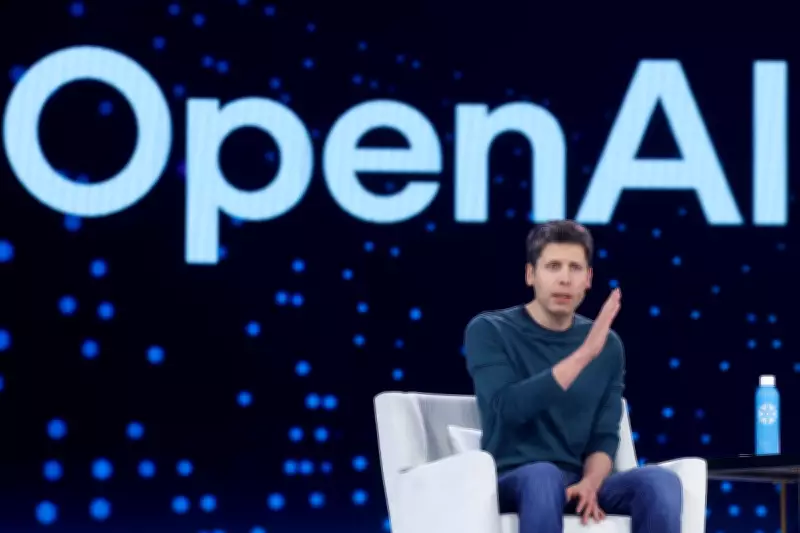
Within hours of the blacklisting announcement, OpenAI revealed it had secured a deal with the same Defense Department, claiming its agreement includes "substantially identical" ethical restrictions. This rapid succession of events unfolded against the backdrop of US and Israeli forces commencing strikes on Iran, starkly illustrating that the debate over AI, facial recognition, and autonomous systems in military operations is no longer theoretical policy discussion but a live operational reality with immediate global consequences.
Palantir, which had embedded Claude into classified operations including the Maduro raid, now faces a six-month deadline to find and integrate a replacement AI system. The company, which holds a $10 billion Army contract and a nearly $500 million Navy deal, exemplifies the precarious position of defense-native AI firms caught between government demands and ethical considerations.
Global Regulatory Patchwork and Compliance Nightmare
The situation exposes a dangerous regulatory vacuum and wildly inconsistent international frameworks. The European Union's AI Act explicitly exempts military and national security use from its scope, even as the European Parliament simultaneously calls for a prohibition on lethal autonomous weapons. The United Kingdom has backed United Nations discussions on binding rules for autonomous weapons but opposes a new treaty.
Meanwhile, Washington has moved decisively in the opposite direction. The Biden-era executive order on AI safety has been revoked, the Pentagon's January 2026 AI strategy eliminated all reference to ethical AI use, and the current administration demands models be available for "all lawful purposes" with no company-imposed restrictions. Elon Musk's xAI has already signed up to this standard, agreeing to deploy its Grok system in classified military operations without caveats.
Blast Radius Extends Far Beyond Defense Sector
The immediate commercial question transcends who was right in Washington's political theater. Businesses across the United Kingdom, European Union, and United States are building critical operations on a handful of AI platforms whose terms of service, safety architecture, and even availability can be rewritten overnight by government pressure. A London-based consultancy using Claude for document analysis, whose client supplies software to a US defense prime contractor, could suddenly find itself on the wrong side of a compliance line drawn in a social media post.
While Anthropic's consumer app surged to number one on Apple's App Store over the weekend—a perverse reward for political martyrdom—enterprise customers face the opposite calculus: reputational sympathy does not offset regulatory exposure. Insurance markets are already hardening around these exposures, with carriers increasingly limiting coverage for autonomous system failures and governance gaps.
Strategic Imperatives for Boards and Organizations
Anthropic will challenge the supply chain risk designation in court, and serious questions remain about whether Hegseth possesses the statutory authority to extend the ban beyond Pentagon-specific work. Legal challenges, shifting administrations, and evolving international frameworks ensure this situation will remain fluid for months, possibly years.
However, this uncertainty is no reason for inaction. Organizations that have allowed AI systems to embed in critical workflows without deliberate governance now face the reality that retrofitting oversight onto those dependencies means accepting operational instability. Boards must act immediately by:
- Mapping where third-party AI models sit in operations and identifying which carry consequential authority
- Stress-testing the costs of forced provider switches in time, money, and operational disruption
- Building contractual flexibility into vendor agreements that accounts for sudden geopolitical or regulatory shifts
- Ensuring compliance teams understand the cross-jurisdictional patchwork a single AI tool can trigger across the US, UK, and EU
- Reviewing whether existing directors and officers, professional indemnity, and cyber policies adequately cover provider designations that cascade through supply chains overnight
The events of last week demonstrate with chilling clarity that a government can transform a technology company from the sole provider of classified AI services into a designated national security threat in a single week—not for what the company did, but for what it refused to allow. Vendor relationships built on the assumption of stability require urgent revisiting before the next political shock lands, not after.




