Ukraine Ceasefire Efforts Falter Amid Mounting Casualties and US Doubts
As a ceasefire took hold in the Middle East, Ukrainian President Volodymyr Zelenskyy redirected global attention to the ongoing war in Europe, emphasizing Ukraine's persistent push for a truce in the conflict with Russia. However, peace negotiations have largely stalled since the Iran war began, with trilateral talks between Kyiv, Moscow, and Washington frozen since February 2026, yielding minimal progress. The war rages on, marked by relentless air attacks on Ukrainian cities and intense battlefield clashes as Russia launches a spring offensive.
Diplomatic Divisions and Security Concerns
A potential visit to Kyiv this month by White House envoy Steve Witkoff and Donald Trump's son-in-law, Jared Kushner—their first since negotiations commenced—could revive talks to end the conflict. Yet, the war in Iran has starkly exposed rifts between Washington and European allies, raising alarms in Europe about the depth of US commitment to any potential peace deal. One European official, speaking anonymously, noted, "You can see Trump's team is running out of patience in Ukraine and wants a quick solution."
For any tangible peace agreement to materialize, two critical issues must be addressed: the fate of Ukrainian-held territory in eastern Ukraine and the question of US security guarantees. Recent US rhetoric, including Trump's description of Ukraine as "not our war" and his open questioning of NATO support, risks convincing Moscow that Washington lacks serious long-term backing for Kyiv. The European official added, "Ukraine is rightfully questioning whether these American security guarantees really stand for anything."
Battlefield Dynamics and Drone Warfare
With warmer weather, Russia has initiated a spring offensive, according to military analysts and Ukrainian officials. Kyiv anticipates renewed pressure on fortified eastern cities like Slovyansk and Kramatorsk in the coming months. However, expectations of a Russian breakthrough remain low, as Moscow's forces struggle against Ukraine's dense network of drone defenses. Rob Lee, a senior fellow at the Foreign Policy Research Institute, stated, "The battlefield situation is better for Ukraine right now than it was in 2025."
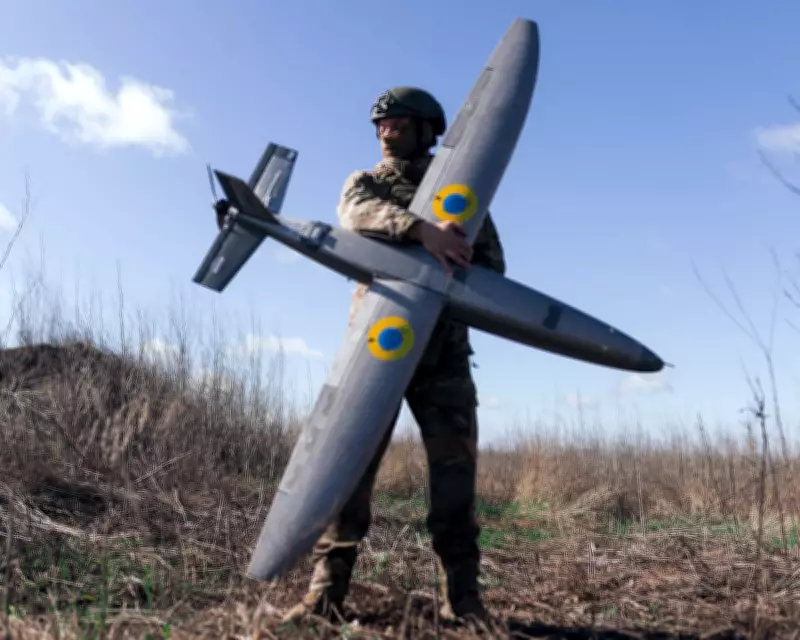
Across the frontline, both sides have transformed large stretches into "kill zones" saturated with drones and unmanned systems, where any movement is swiftly detected and attacked. Russian advances in early 2026 occurred at roughly half the pace compared to a year earlier, as reported by the Institute for the Study of War. Lee observed, "There are some signs that Russia's manpower advantage may be narrowing, and without it, their advances could slow."
Despite facing serious manpower shortages, Ukraine has significantly scaled up its mid-range drone capabilities, targeting Russian air defenses and command posts deep inside Russia. Earlier this year, Ukraine mounted a counteroffensive in the southern Zaporizhzhia region, recapturing approximately 100 square miles of territory. Lee predicted, "I wouldn't be surprised if we see additional Ukrainian offensives this year."
Human Toll and Strategic Pressures
For millions of Ukrainians, these developments offer little relief. Russia fired more drones at Ukraine in March than in any month since the full-scale invasion began, resulting in tragic incidents such as a strike in western Ukraine that killed a serviceman and his teenage daughter. Meanwhile, Vladimir Putin has signaled his willingness to maintain constant pressure, believing time is on Russia's side, with the war continuing until Moscow captures remaining parts of Donbas under Kyiv's control.
Ukraine, however, seeks to demonstrate its resilience. A source close to the Zelenskyy administration said, "We are still positive that our partner, the US, will help us. But we also need to show we are still in this fight." Zelenskyy claims Russia suffered over 35,000 troops killed or wounded in March alone, though these figures are unverified. Pro-war Russian bloggers have echoed concerns about mounting losses, with one noting, "We find ourselves in a situation where Ukrainians are killing more than 30,000 Russians per month, and we cannot replenish our army."
Ukraine has also increased strikes on Russian energy infrastructure, targeting ports and oil terminals to undermine Moscow's financial gains from higher oil prices. These attacks have temporarily halted up to 40% of export capacity, exposing weaknesses in Russia's air defenses. Yet, Ukraine pays a heavy price, with estimated losses roughly a third of Russia's—amounting to about 10,000 killed or wounded monthly, though Kyiv does not publish official casualty figures.
Recruitment and Financial Challenges
Recruitment challenges persist in Ukraine, with draft dodging and viral scenes of conscripts being forcibly taken to recruitment centers. In Lviv, a mobilization officer was recently stabbed to death while attempting to draft a man. Financially, Ukraine risks running out of funds to sustain its defense within months, highlighted by Hungary's veto of a €90 billion EU package, underscoring the fragility of Western support.
Despite the high costs for both sides, a European official warned that without a diplomatic breakthrough, the war is expected to continue into next year. "Both sides still have enough resources to keep going," they added, painting a grim outlook for peace in the near future.