
UK Military Explores Drone Deployment to Secure Strait of Hormuz
In response to escalating tensions in the Middle East, the UK government is actively considering the deployment of advanced drone systems to help secure the Strait of Hormuz, a critical global shipping lane. This move comes after former US President Donald Trump urged the UK and other allied nations to send warships to the region, following Iran's closure of the strait, which has caused a sharp spike in oil prices and threatened international trade routes.
Government and Military Response to the Crisis
The UK Ministry of Defence (MoD) has confirmed that discussions are underway with allies to explore a range of options aimed at ensuring maritime security in the region. In a statement to Sky News, the government emphasized its commitment to collaborative efforts, stating, "We are currently discussing with our allies and partners a range of options to ensure the security of shipping in the region." Energy Secretary Ed Miliband further highlighted the urgency, noting that the government is "intensively" examining measures to reopen the strait, including the potential use of autonomous mine-hunting equipment.
Types of Drones Under Consideration
The UK is evaluating two primary types of drones for potential deployment:
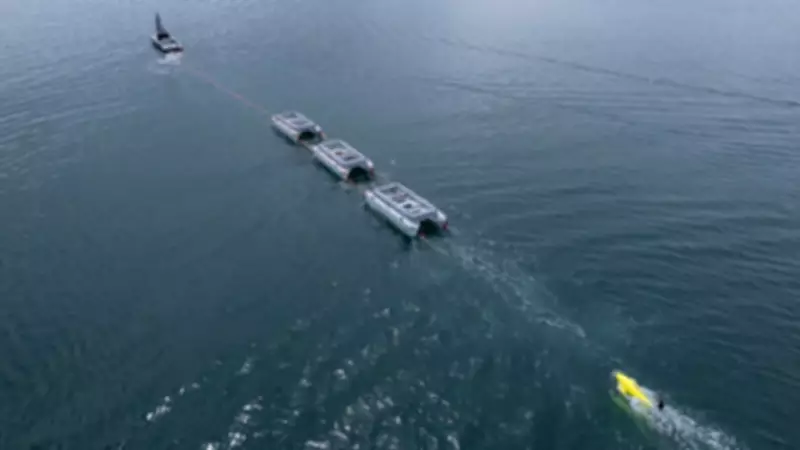
- Mine-Hunting Drones: These autonomous systems are designed to detect and neutralize underwater mines, a significant threat as several oil tankers have been attacked in the strait. Defence Secretary John Healey revealed that the Royal Navy has prepositioned autonomous mine-hunting systems in the region and is considering additional options. Key systems include the Sweep, SeaCat, MMCM, and Wilton systems, which use sonar technology to scan seabeds at depths up to 1,000 feet, keeping sailors safe by operating remotely.
- Interceptor Drones: Modeled after the Octopus drones developed with British support for Ukraine, these drones are cost-effective and highly effective at destroying aerial threats like Iran's Shahed-type drones. An MoD spokesperson indicated that while production is currently focused on aiding Ukraine, the technology's success has prompted exploration for future use by UK armed forces in the Middle East.
Challenges and Implications of Deployment
Military analyst Michael Clarke pointed out that while the Sweep mine-hunting system shows promise, it has "never been tested in combat," making a potential deployment a significant first test. Additionally, the UK lacks traditional minesweeper ships, with the last one, HMS Middleton, recently withdrawn from service. For interceptor drones, Clarke warned that diverting resources from Ukraine could leave that country short of critical defense capabilities, as Ukraine relies heavily on these drones to counter Russian aerial assaults.
How These Drones Operate
Mine-hunting drones work by using sonar to identify explosive threats on the seabed, often mimicking ship signatures to trigger mines safely from a distance. Interceptor drones, such as the Octopus, can reach speeds of 186 mph and altitudes up to 14,800 feet, using radar data to collide with or detonate near enemy drones. Equipped with rotors, cameras, and automatic targeting, they offer a rapid-response solution to aerial threats.
As the situation evolves, the UK's potential drone deployment underscores a shift towards modern, technology-driven defense strategies in global hotspots, balancing immediate security needs with long-term alliances and resource allocation.




