
UK Bolsters Military Presence in Middle East with Additional Fighter Jets and Helicopters
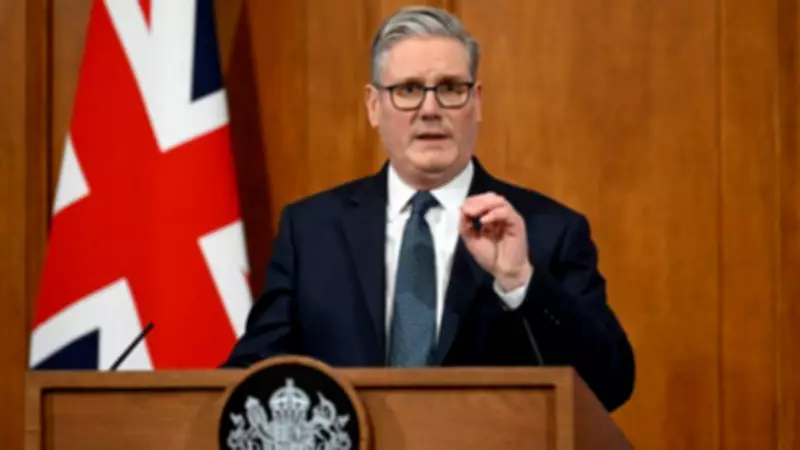
Prime Minister Sir Keir Starmer has announced a significant escalation of the United Kingdom's military involvement in the ongoing conflict with Iran, confirming the deployment of additional fighter aircraft and specialized helicopters to the region. The move comes as hostilities continue to intensify following initial strikes by the United States and Israel against Iranian targets last Saturday.
Enhanced Air Power Deployment
Speaking during a detailed briefing on Thursday, March 5, 2026, the Prime Minister revealed that four additional Typhoon fighter jets will be dispatched to reinforce the existing Royal Air Force squadron stationed in Qatar. These advanced multi-role combat aircraft are specifically intended to strengthen defensive operations throughout the Gulf region.
"We are responding to requests from allies in the region for further help," Sir Keir stated. "I can announce today that we're sending four additional Typhoon jets to join our squadron in Qatar to strengthen our defensive operations in Qatar and across the region."
Specialized Anti-Drone Capabilities
In a parallel deployment, two Wildcat helicopters equipped with anti-drone weaponry are scheduled to arrive at the RAF base in Cyprus on Friday. This deployment follows recent attacks on the Cyprus facility by Iranian forces, highlighting the growing threat posed by unmanned aerial systems in the conflict.
The Prime Minister emphasized that these specialized helicopters carry drone-busting missiles specifically designed to counter the increasing use of unmanned aircraft in regional hostilities.
Evacuation Efforts and Citizen Safety
Sir Keir provided updates on evacuation efforts for British citizens in the region, confirming that the first charter flight from Oman to the UK departed on Thursday afternoon after a one-day delay. More than 140,000 British citizens have registered their presence in the Middle East through Foreign Office channels, with rapid deployment teams operating in Oman and Saudi Arabia to facilitate evacuations.
"My absolute priority is the safety of our citizens," the Prime Minister told Sky News. "That has been the focus behind all the decisions I have made over the war. We are doing everything we can to de-escalate this."
Commercial flights from the United Arab Emirates have already returned more than 4,000 people to the UK, with seven additional evacuation flights scheduled for Thursday.
Diplomatic and Strategic Considerations
The Prime Minister defended his decision-making process regarding US requests to utilize UK military bases, revealing that Washington only made the formal request on Saturday afternoon—hours after initiating strikes against Iran that morning. After detailed consultations throughout Sunday, ministers reached a unanimous decision to permit US forces to use RAF Akrotiri in Cyprus, RAF Fairford in Gloucestershire, and the Diego Garcia base for defensive operations.
"While the region has been plunged into chaos, my focus is providing calm, level-headed leadership in the national interest," Sir Keir asserted. "That means deploying our military and diplomatic strength to protect our people, and it means having the strength to stand firm by our values and our principles. No matter the pressure to do otherwise."
Political Context and Criticism
The announcement comes amid criticism from former US President Donald Trump, Conservative Party members, and Reform UK representatives who have questioned the government's approach to the conflict. Some have specifically criticized the Prime Minister for not granting broader access to UK bases for US offensive operations.
Sir Keir maintained that his administration would continue to prioritize de-escalation while protecting British interests, acknowledging that "ultimately, this will have to be a matter of negotiation when it comes to some of the core issues, like nuclear capability."
The enhanced military deployment represents the UK's most significant reinforcement in the region since the conflict began, signaling both increased operational capability and continued commitment to regional stability efforts.




