
Operation Epic Fury: A Turning Point in US-Iran Conflict
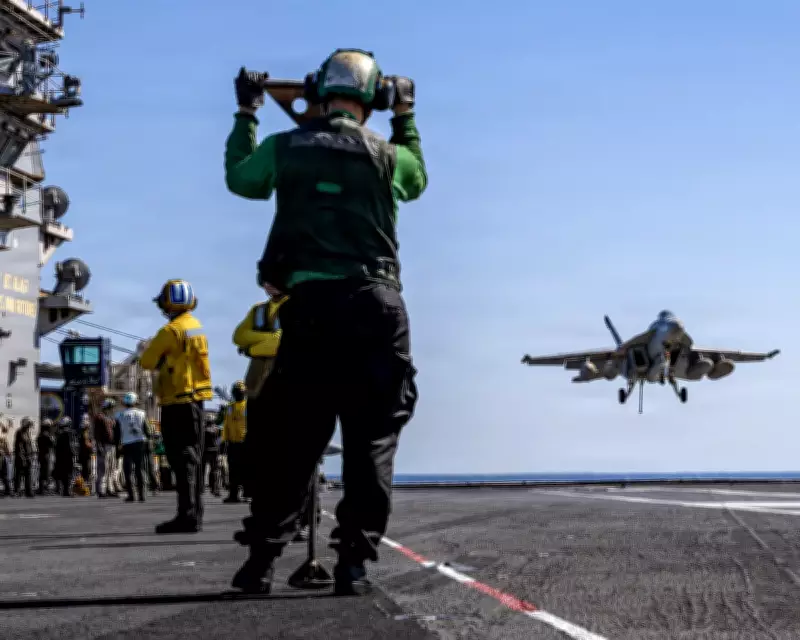
On March 8, 2026, a US F/A-18E Super Hornet aircraft approached the flight deck of the world's largest aircraft carrier, USS Gerald R Ford, as part of Operation Epic Fury. This dramatic moment underscores the escalating tensions between the United States and Iran, with implications that stretch far beyond the Middle East.
The Peril of Escalation: Trump and Netanyahu's Dangerous Game
This conflict, driven by a deranged US president and an Israeli prime minister facing prosecution, risks becoming the stupidest war of the 21st century. Israel's recent strike on Iran's South Pars gas field was clearly designed to provoke a massive Iranian retaliation, ensuring a ferocious response from Donald Trump. Such actions threaten to transform a regional skirmish into a global conflagration.
The only viable solution is for Trump and Benjamin Netanyahu to cease bombing Iran immediately. However, both leaders appear trapped by their own rhetoric and political pressures. Trump, having prematurely declared victory, now seeks moral support from allies, despite amassing the largest aggressive force in modern times. He started this war and must confront the personal and political costs of ending it.
Britain's Role: A Cautionary Tale from History
Britain's security is not remotely threatened by Iran, and military intervention is neither a justified response nor an effective strategy against modern terrorism. Yet, Keir Starmer is sending senior military planners to Washington to assist in reopening the Strait of Hormuz, assuming no peaceful agreement with Iran. This move, coupled with providing British bases for US bombers under the guise of purely defensive purposes, mirrors the strategic seduction that ensnared Tony Blair in Afghanistan and Iraq.
Starmer must resist this path, which led to over 400 British deaths in Helmand. The prime minister should learn from history, particularly the Suez fiasco of 1956, where Britain's imperial overreach ended in humiliation after Washington intervened. Today, Britain still spends millions on defense in the Indian Ocean and Mediterranean, clinging to imperial memorials and a misguided desire to punch above our weight.
The Fallacy of National Security and Special Relationships
Trump's claim that Britain owes a debt for US nuclear deterrence under NATO highlights the incoherent jargon of international defense, where national security justifies disproportionate acts. His assertion that Iran posed an imminent nuclear threat is as false as George W. Bush's weapons of mass destruction claims about Iraq. Military rhetoric, beloved by right-wing politicians and macho commentators, obscures the reality of collateral damage and innocent lives lost.
Starmer finds himself in a predicament where he equivocates instead of condemning Trump's illegal acts, driven by a hankering for the special relationship with the White House. This war is now open-ended, with no planned outcome in sight, making it imperative for Britain to step back.
A Call for Diplomatic Prudence and Moral Clarity
The bombing must stop, and for now, nothing else matters. Britain should not participate in a conflict that serves only military establishments, defense lobbyists, and populist demagogues. Even the king's state visit to Washington should be reconsidered, as shaking hands with a man of such violence undermines moral authority.
In conclusion, Keir Starmer must prioritize diplomatic solutions and avoid entanglement in a war that is not Britain's to fight. The lessons of Iraq and Suez are clear: intervention without just cause leads to tragedy and disgrace.




