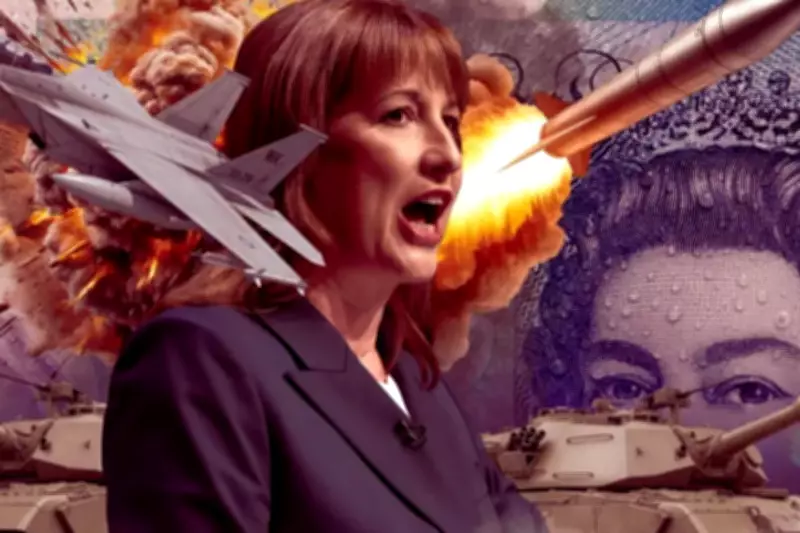
Defence Spending Crisis Casts Shadow Over Downing Street
The political landscape surrounding UK defence expenditure has become increasingly fraught, with military officials expressing deep concern over funding shortfalls that threaten national security capabilities. Chancellor Rachel Reeves faces mounting pressure as defence spending emerges as one of the most significant challenges confronting the government, with economic constraints colliding with international obligations.
The Stark Choices Confronting Leadership
Prime Minister Sir Keir Starmer's administration has made ambitious commitments to increase defence spending, pledging to raise expenditure to 2.6 percent of GDP from 2027 through the next General Election. The government has further outlined aspirations to reach three percent between 2029 and 2034, with an even more ambitious target of 3.5 percent by 2035, including additional resources for resilience and security measures.
However, the Treasury has intervened with significant caution, insisting that the three percent target will only be achieved "when economic and fiscal conditions allow" while avoiding commentary on the feasibility of reaching 3.5 percent. This tension between political ambition and fiscal reality has created a substantial rift within government circles.
Mounting Financial Pressures and Delayed Planning
The situation has been exacerbated by the delayed publication of the Defence Investment Plan (DIP), postponed by more than six months. This critical strategy document would outline funding for defence projects and armed forces design, but Starmer has acknowledged needing to understand "where the money's coming from" before proceeding.
Military officials have reportedly warned of a staggering £28 billion funding shortfall for armed forces and security services over the next four years, attributed to spiralling costs and insufficient budgetary allocations. The Office for Budget Responsibility has indicated that maintaining a linear path to 3.5 percent defence spending by 2035 would require an additional £6 billion in the financial year ending 2029.
NATO Context and International Comparisons
The geopolitical landscape adds complexity to the UK's defence spending dilemma. With the potential return of Donald Trump to the White House and his repeated threats regarding NATO commitments, European allies face increased pressure to bolster their defence capabilities independently.
Current NATO estimates suggest the United States accounts for approximately 60 percent of total expenditure across the alliance's 32 members. Without American participation, the UK would become NATO's second-largest spender behind Germany, altering the balance of power within the alliance.
International comparisons reveal concerning trends. Germany has committed to reaching the 3.5 percent defence spending target by 2029, having spent just 1.2 percent of GDP as recently as 2018. Poland has similarly increased defence expenditure from around 2.2 percent post-pandemic to 2.8 percent in 2024. Meanwhile, the UK struggles to keep pace with these accelerating commitments.
Structural Challenges in Defence Expenditure
The Ministry of Defence's budgetary structure presents unique challenges, with greater emphasis on capital expenditure compared to other government departments. Approximately 33 percent of UK defence spending goes toward equipment, significantly exceeding NATO's 20 percent target, largely due to nuclear weapons programs.
The Defence Nuclear Enterprise alone accounts for one-sixth of the MoD's £60 billion budget, managing the UK's ultimate deterrent. Discussions about building independent nuclear missile infrastructure to reduce dependence on the United States have gained traction, though historical precedent suggests such initiatives have consistently proven financially unfeasible.
Economic Implications and Growth Considerations
Government strategists have attempted to frame defence expenditure as a pro-growth measure, establishing taskforces and implementing recommendations to support British businesses. However, economists remain skeptical about the growth benefits of defence spending.
According to analysis from the Centre for Economics and Business Research, every £1 in defence spending brings an average return of just 83p to GDP, significantly less than the benefits derived from infrastructure investment. The growth potential appears more promising in research and development spending, which could generate spillover effects across non-military sectors.
Global Competitors and Strategic Realities
Russia's defence expenditure as a share of GDP has consistently outpaced the UK's since 2014, while China's defence budget has grown to virtually unreachable levels despite representing a lower percentage of its economy. These developments underscore the shifting global balance of military power.
Research incorporating military purchasing power parity reveals additional concerns, suggesting that if Russia wanted to build a drone, it would cost the UK five times as much to produce an equivalent model. This cost disparity highlights structural inefficiencies within the UK defence sector.
Political and Strategic Imperatives
Former Defence Secretary Penny Mordaunt has argued for increased spending to secure "foundational capabilities" of the UK economy, protecting businesses from cyber attacks and ensuring critical infrastructure security. She suggested that only a real-world trigger, such as the death of British citizens or soldiers, might compel the government to address defence funding adequately.
As the head of the UK's armed forces, Sir Richard Knighton, has warned that the country is "not as ready as we need to be for the kind of full-scale conflict we might face" due to inadequate funding. He emphasized that ministers would need to make "difficult trade-offs" to address these deficiencies.
Starmer has vowed that following the conclusion of the Iran war, there will be no return to "business as usual," committing to making Britain "a fairer and more secure country." However, fulfilling this promise while addressing the substantial defence spending shortfall represents one of the most significant challenges facing his government and NATO allies in the coming years.