
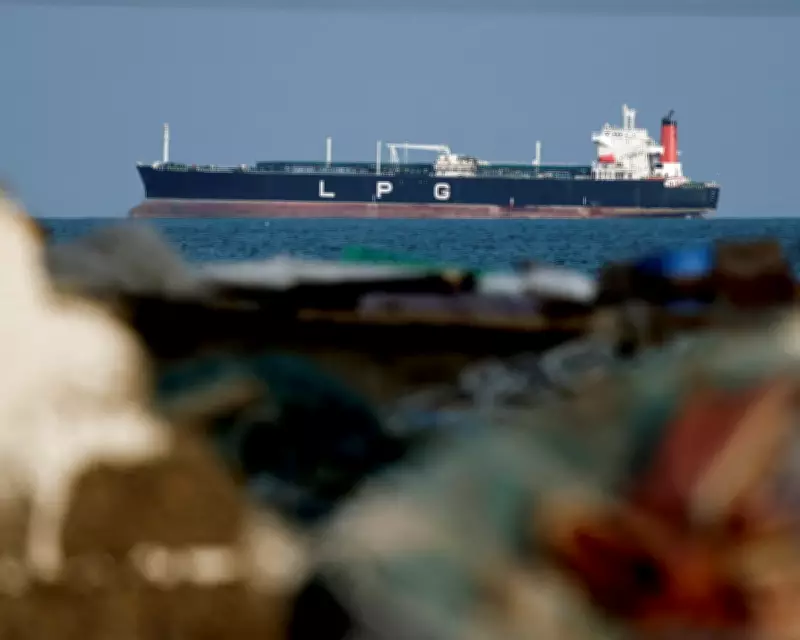
Trump Urges Global Naval Deployment to Hormuz Amid Iran Blockade
Former US President Donald Trump has publicly called on allied nations to deploy warships to the Strait of Hormuz, the world's busiest shipping route, which is currently under a violent blockade by Iran. In posts on his Truth Social platform, Trump specifically urged the United Kingdom, China, France, Japan, South Korea, and other countries to send naval vessels to secure the waterway.
Trump asserted that many nations affected by Iran's attempted closure of the strait would be sending warships in conjunction with the United States to maintain openness and safety. He later expanded his appeal to all countries that receive oil through the Hormuz Strait, emphasizing the critical nature of global energy security.
Catastrophic Impact on Global Energy Markets
The effective closure of the Strait of Hormuz by Tehran, implemented in retaliation for US and Israeli airstrikes, has created catastrophic disruptions to global energy and trade flows. This blockade represents the largest oil supply disruption in recorded history, causing global oil prices to soar dramatically and creating significant economic instability worldwide.
Iran has declared that any oil tanker heading for the United States, Israel, or their allies constitutes a legitimate wartime target and will be "immediately destroyed." Since the conflict began in late February, sixteen tankers have been attacked in the strategic waterway, with Iran threatening to deploy explosive mines throughout the area. Notably, the United States has not yet deployed its own navy ships to escort tankers through the dangerous passage.
International Responses Range from Cautious to Dismissive
The international response to Trump's call for warship deployment has been characterized by vague statements and clear reluctance, with nations unwilling to commit to a military response that could prove treacherous for their naval forces.
The United Kingdom's Ministry of Defense stated it is engaged in discussions with allies regarding "a range of options to ensure the security of shipping in the region." Energy Secretary Ed Miliband told the BBC that the UK has been discussing with the United States and other allies how to keep the strait open, mentioning that mine-hunting drones were among the options being considered.
Japan's response came from Takayuki Kobayashi, chair of the ruling Liberal Democratic Party's policy research council, who told NHK TV that while Japan would not rule out sending warships to secure the shipping lane, the threshold for such action remained "very high." Kobayashi emphasized the need for cautious judgment given the continuing dispute.
South Korea, which depends heavily on energy flows through the strait, acknowledged Trump's comments but stated it would communicate closely with the United States and review the situation before making any decisions regarding securing the shipping route. The South Korean foreign ministry emphasized they were "exploring various measures from multiple angles" to protect citizens and ensure energy transport safety.
European Nations Express Clear Reservations
France had already established its position prior to Trump's comments, with Defense Minister Catherine Vautrin stating unequivocally that France would not be sending warships to the Strait of Hormuz while the conflict continued to escalate. Vautrin emphasized France's "purely defensive position" and confirmed there were no current plans to deploy the French navy's flagship Charles de Gaulle aircraft carrier from the eastern Mediterranean.
French President Emmanuel Macron, speaking in Cyprus last week, indicated that France and its allies were preparing a "purely defensive" mission to escort vessels through the strait, but only after the "most intense phase" of the US-Israeli war on Iran had concluded. Macron described this as a strictly escort mission involving both European and non-European countries.
According to reports from the Financial Times, European Union foreign affairs ministers are considering expanding the scope of the EU's Aspides naval mission, currently providing protection to ships in Yemen from Houthi rebel attacks, to include the Strait of Hormuz. The current Aspides mission comprises three ships from France, Italy, and Greece.
Germany's Foreign Minister Johann Wadephul expressed skepticism about potentially widening the operation, telling German broadcaster ARD that the EU mission was "not effective" and that he remained "very sceptical that extending Aspides to the strait of Hormuz would provide greater security."
China's Diplomatic Approach and Global Implications
China, an ally of Iran that also depends heavily on crude oil imports through the strait, made no mention of military intervention in its response. Reports indicate Beijing is engaged in talks with the Iranian regime about allowing oil tankers to pass through from the Gulf, though no definitive agreement has been reached.
The Chinese embassy in Washington stated over the weekend that Beijing would work to strengthen "communication with relevant parties" in the Middle East and "play a constructive role for deescalation and restoration of peace."
US Energy Secretary Chris Wright told NBC on Sunday that he had been "in dialogue" with several unnamed countries and expressed expectation that China would be "a constructive partner" in reopening the strait, through which approximately one-fifth of global oil exports normally pass.
The collective international response demonstrates significant caution and reluctance to engage militarily in the volatile Strait of Hormuz situation, despite the severe economic consequences of the ongoing blockade on global energy markets and trade flows.




