
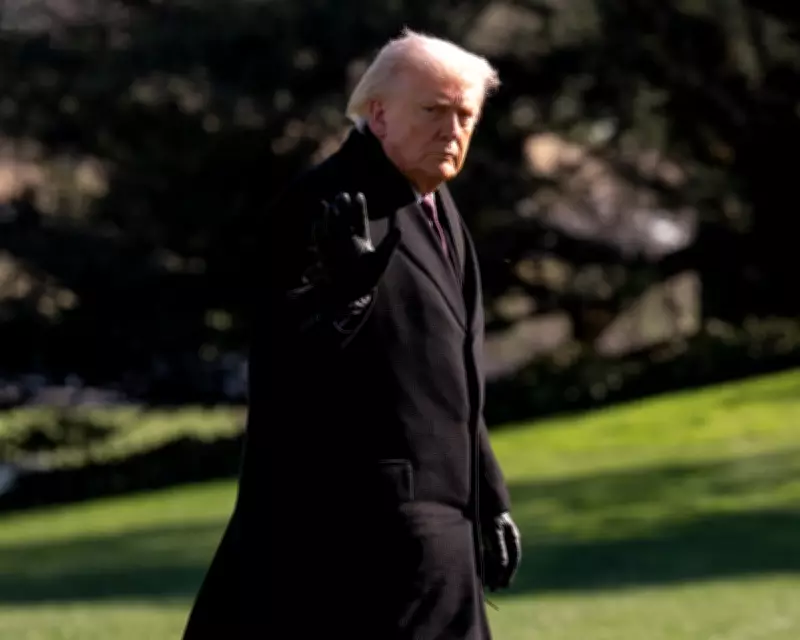
Donald Trump returned to the White House on March 18, 2026, after attending a dignified transfer for US Air Force members killed in Iraq, but behind the presidential facade, a deepening crisis looms. The conflict in the Middle East, sparked by Trump's abrupt plunge into all-out war with Iran, is spiraling in unforeseen ways that threaten to slip from his control. At the heart of this turmoil is Israeli Prime Minister Benjamin Netanyahu, whose lifelong obsession with eradicating Iranian threats reportedly influenced Trump's decision to abandon indirect talks with Iran that were close to success in Geneva.
Netanyahu's Unchecked Aggression
Netanyahu ridicules claims that he dragged the US into war, asserting that Trump "didn't need any convincing." However, Oman's foreign minister flatly contradicts this, stating that Netanyahu's opposition convinced Trump to abandon the Geneva talks. Since joint US-Israeli operations began on February 28, 2026, Israel's campaign has rapidly expanded, targeting military and civilian sites across Iran and Lebanon. A significant escalation occurred with Israel's bombing of Iran's South Pars gas field, which spiked global energy prices and triggered fierce Iranian retaliatory strikes against Gulf oil facilities.
Trump disowned the South Pars attack, claiming no prior knowledge, but anonymous US and Israeli officials contradicted this. The episode highlighted diverging war aims: Netanyahu seeks to collapse Iran's regime entirely, while Trump has indicated openness to a Venezuela-type deal if new cooperative leaders emerge in Tehran. Netanyahu, now placating Trump by promising no repeat of South Pars-style attacks, is nonetheless discussing ground troop deployments—a potential huge expansion that Trump has not ruled out.
The Role of US Power and Diplomacy
Despite wielding great power, Trump has often deferred to Netanyahu's aggressive policies, consulting him extensively before the war. Secretary of State Marco Rubio suggested to Congress that the US was "hustled into action" by Israel's determination. The war's timing was dictated by intelligence that Iran's Supreme Leader Ali Khamenei would meet officials on February 28; his assassination by Israeli missiles escalated the conflict from the start.
Evidence suggests a credible US-Iran nuclear deal was within reach just days before the war, with UK National Security Adviser Jonathan Powell noting "surprising" Iranian concessions in Geneva. However, Trump and his negotiators, Steve Witkoff and Jared Kushner, unconvinced by Netanyahu's opposition and lacking technical advice, abandoned diplomacy, launching the war without warning.
Consequences and Global Impact
Netanyahu's bellicosity, likened to that of Russia's Vladimir Putin, has failed to improve Israel's security. His campaigns in Gaza, Lebanon, and Iran have resulted in massive civilian casualties and displacement, with over 70,000 Palestinians dead in Gaza alone. In Lebanon, heavy-handed operations against Hezbollah have killed hundreds and displaced over a million, yet claims of eliminating terror threats "once and for all" are risible. Iran's surviving leaders may now be more inclined to pursue nuclear weapons, a risk past US leaders like Joe Biden sought to mitigate by restraining Israel.
Trump's behavior has been abominable, even by his standards: misleading the public about Iranian threats, boasting amid crises, and insulting allies like Keir Starmer. He fiddles with golf balls while oil terminals burn and flirts with disastrous plans to seize Iran's uranium stockpile. Meanwhile, he failed to anticipate Iran's move to close the Strait of Hormuz, widening the war in the Gulf.
Looking Ahead: Can Trump Regain Control?
Three weeks into the conflict, key realities emerge: Iran's regime remains standing and fighting back, with no popular uprising in sight; Khamenei's plan to spread war costs across the region is working; and Trump sees falling stock markets and rising energy prices as bigger threats than Iranian bombs. For these reasons, he belatedly moved to rein in Netanyahu this week.
The bigger question is whether Trump can extricate the US before the situation worsens. If he calls a halt, will Iran or Israel listen? As the Middle East burns, Trump's ability to control the war he helped start is in serious doubt, with global stability hanging in the balance.




