Trump's Dismissal of Iran's Uranium Stockpiles Sparks Security Concerns
In a statement that has sent shockwaves through international security circles, former US President Donald Trump declared he does not care about Iran's stockpile of highly enriched uranium (HEU), arguing it is deep underground and can be monitored by satellite. This remark, made during an interview with Reuters, directly contradicts one of the primary justifications for the US-Israeli offensive against Iran that began on 28 February, raising serious questions about the war's rationale and its aftermath.
Experts Warn of Heightened Nuclear Risks
Nuclear proliferation experts have expressed alarm, stating that if the conflict concludes with Iran retaining control of its 440kg HEU stockpile, the Tehran regime would be significantly closer to developing nuclear warheads than before the war started. This scenario is deemed more perilous than the potential negotiated settlement that was under discussion in Geneva just days prior to the military escalation. Emma Belcher, president of the Ploughshares foundation, emphasized, "We are actually less secure now from the nuclear threat than we were before he started the war, because they still have the material and we still have no greater insight into what they might do with it."
Background of Failed Diplomacy
The current crisis traces back to Trump's 2018 decision to withdraw from the multilateral nuclear deal, which had limited Iran's uranium enrichment. Following the collapse of that agreement, Iran began producing 60% enriched HEU. In late February, negotiations in Geneva saw Iranian officials propose diluting the HEU stockpile to low-enriched levels and agreeing to a multiyear enrichment pause, coupled with enhanced UN monitoring. UK national security adviser Jonathan Powell, present at the talks, judged a deal was within reach, but the US-Israel attack preempted further discussions.
Military Options and Trump's Calculated Risk
According to reports, Trump was briefed on a Pentagon plan to extract the HEU, involving a high-risk operation with hundreds of troops excavating deep shafts in Iran's mountainous terrain. His recent comments suggest he has rejected this approach, opting instead for satellite surveillance and the threat of missile strikes if Iran attempts to move the uranium. Belcher criticized this stance, noting, "The comment that you can just not worry about the material because you can see it from satellites fundamentally misunderstands how to manage nuclear risk."
Implications for Regional and Global Security
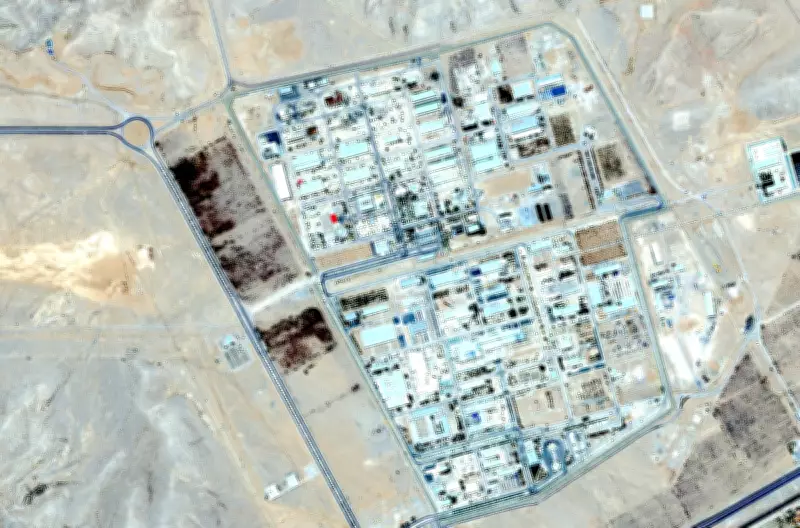
The situation leaves a volatile legacy, with Iran's HEU stockpile—enough for about a dozen warheads—remaining a flashpoint. Experts fear that the war may have incentivized Iran to pursue nuclear weapons more aggressively as a deterrent. As the conflict continues, the international community watches closely, with the IAEA monitoring the stockpile's location near Isfahan. The unfolding events underscore the complex interplay between diplomacy, military action, and nuclear proliferation in the Middle East.