Global Audiences Watch in Horror as Trump Addresses Iran Conflict
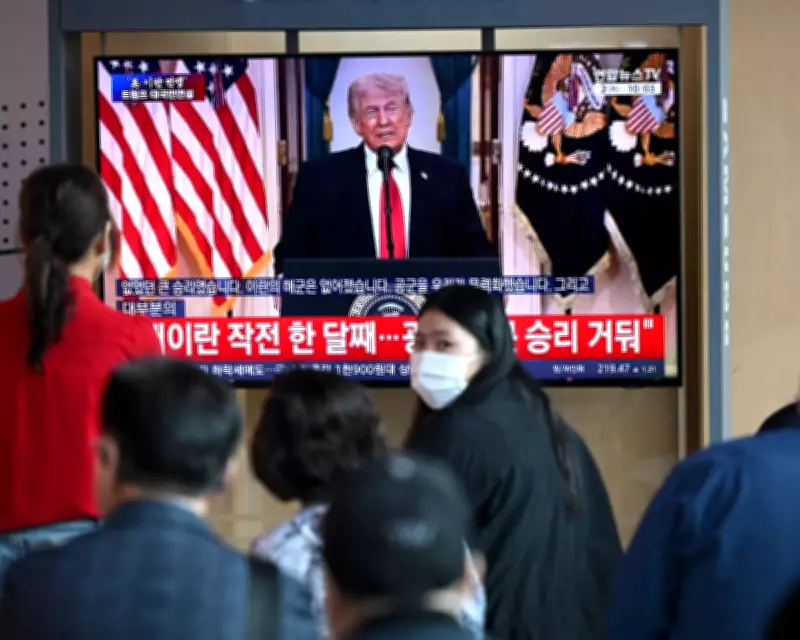
In train stations across Seoul, South Korea, commuters gathered on April 2nd to watch live broadcasts of US President Donald Trump delivering a critical address about the escalating war with Iran. The scene captured by photographer Jung Yeon-Je revealed a world collectively holding its breath as another Middle East crisis unfolded in real-time.
The Return of That Unnamed Feeling
For many around the globe, a familiar sensation has returned - that same mixture of dread, horror, and captivation that characterized the early days of the COVID-19 pandemic. This unnamed feeling involves absorbing events that once seemed unimaginable, watching history unfold through smartphone screens, and experiencing the vertigo of living through highly dynamic times.
It manifests as waking at 3am to check news feeds, wondering if nuclear threats have been casually posted on social media platforms. It's the disorienting realization that we're only in April while global events accelerate at unprecedented speed.
When Leadership Fails to Reassure
The current crisis has revealed what many suspected: the so-called adults in the room appear either insane, powerless, or just as bewildered as ordinary citizens. From inflammatory Easter Sunday social media posts to apocalyptic warnings about civilizations disappearing, the rhetoric has escalated beyond traditional diplomatic boundaries.
Even conservative commentator Tucker Carlson found rare agreement with critics when he stated, "No decent person mocks other people's religions," highlighting how traditional political alignments have been disrupted by the current administration's approach.
Economic and Human Costs Multiply
The strategic importance of the Strait of Hormuz has become common knowledge overnight, with people now understanding that this narrow shipping lane carries 20% of the world's oil and up to 30% of internationally traded fertilizers. This economic reality translates directly to rising fuel prices, increased grocery costs, and building material inflation that will disproportionately affect the world's poorest populations.
Meanwhile, the human toll continues to mount with disturbing reports from the conflict zones. On the first day of hostilities, 168 people including more than 100 children died when a US missile struck a school in Minab. In Lebanon, hundreds of civilians became casualties during intensive bombing campaigns. Gaza continues to experience violence despite ceasefire agreements, with civilians facing starvation and malnutrition.
The Cascade of Existential Threats
What makes this moment particularly overwhelming is how the Iran conflict has pushed other existential threats into secondary positions. The climate crisis, strong El Niño patterns, AI-driven job displacement, and revelations from the Epstein files - all of which would have dominated global attention just months ago - now compete for mental space with immediate war concerns.
Friends and colleagues increasingly express the sentiment: "Can someone please turn the history machine off? I need a break from all the huge events we're living through." This represents a widespread desire to protect mental health amid cascading global catastrophes.
Why This Crisis Feels Different
Several factors distinguish the current situation from previous international crises. This represents the closest the world has come to potential global conflict since the Cold War era. Economically, the effects ripple across continents, affecting billions who have no direct connection to the Middle East but feel the consequences through fuel prices and supply chain disruptions.
The collective global horror at civilian casualties has reached new intensity, while the fraying of US moral authority and alliance agreements has made the world feel significantly less stable. In Australia, already financially stretched households face additional pressure from sharp price increases across essential categories.
Living Through The Chaos Era
The current experience most closely resembles the early pandemic days, but with crucial differences. Today's threats are more diffuse and Hydra-headed, requiring solutions beyond scientific breakthroughs. The 3am wakings, constant browser refreshing, and doomscrolling reflect a global population struggling to process rapid historical acceleration.
As therapy offices fill with patients experiencing war-related anxiety and ordinary citizens worldwide calculate how conflict half a world away affects their daily lives, the need for informed engagement has never been more critical. The challenge lies in balancing necessary awareness with psychological sustainability during what some are calling The Chaos Era.