Trump Launches Blockade of Iranian Ports Amid Strait of Hormuz Confusion
Former President Donald Trump has announced that the American military has commenced a blockade of Iranian ports, aiming to pressure Iran into reopening the Strait of Hormuz and accepting a diplomatic deal. This move, which began at 10 am Washington, D.C. time yesterday, has triggered immediate threats from Iran targeting all ports in the Persian Gulf and Gulf of Oman, with a focus on US-allied nations.
Contradictory Claims Over Strait's Accessibility
Despite the ceasefire agreement, Iran and the United States are embroiled in a dispute regarding the actual status of the Strait of Hormuz. Just before the blockade was set to start, the United Kingdom Maritime Trade Operations agency issued a notice clarifying that restrictions apply to the entire Iranian coastline, including ports and energy infrastructure. However, the agency noted that transit through the strait to or from non-Iranian destinations is not currently impeded, though ships may encounter increased military presence.
Iran's effective closure of this critical waterway, which typically handles 20% of global traded oil, has caused oil prices to surge dramatically. This spike has elevated costs for petrol, food, and other essential goods far beyond the Middle East, raising concerns about economic stability worldwide.
Expert Analysis on the Strait's Ambiguous Status
Dr. Bamo Nouri, a senior lecturer in International Relations at the University of West London, provided insight into the contradictory nature of the situation. He explained that the Strait of Hormuz is technically open but not operating freely. The US portrays it as open to calm markets, while Iran maintains control by allowing passage under strict conditions, monitoring, and implicit threats against non-compliant vessels.
'Shipping can move, but with heightened risk, reduced traffic, and rising costs,' Dr. Nouri stated. 'Iran doesn't need to fully close the strait to exert leverage. By creating uncertainty and imposing conditions, it can disrupt global energy flows and demonstrate strategic power, which is why markets remain tense despite the ceasefire.'
How Iran Exerts Control Over the Vital Waterway
Iran's ability to dominate the Strait of Hormuz stems from several key factors:
- The strait's narrow geography, with a width of just 24 miles at its narrowest point, allows Iran to target vessels from its coastline using anti-ship missiles without deploying naval ships.
- Iran employs unconventional weaponry, such as underwater mines and inexpensive drones, to attack unauthorized vessels.
- Under UN regulations, countries can control territorial seas up to 13.8 miles from their coastlines. Since portions of the strait fall within Iranian and Omani territorial waters, both nations have the legal right to defend their territories if necessary.
Ceasefire Agreement in Jeopardy
US-Iran negotiations in Pakistan are ongoing, but the ceasefire is under strain due to differing interpretations of its terms. Originally, a two-week ceasefire agreed upon by Iran, Israel, and the United States included a condition to reopen the Strait of Hormuz for maritime traffic. The recent blockade has cast doubt on this agreement.
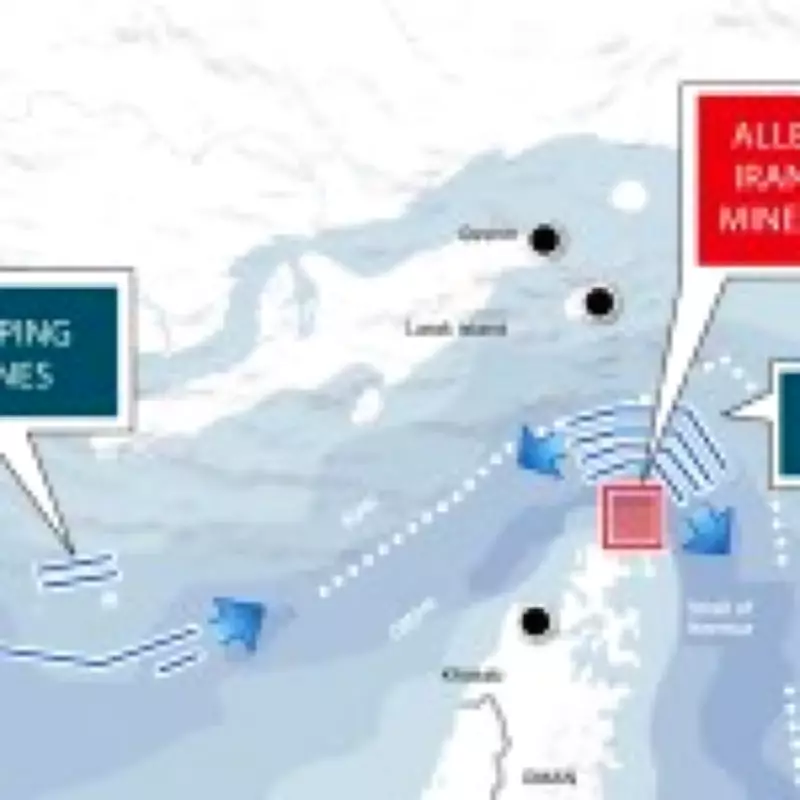
In a provocative move, the Islamic Revolutionary Guard Corps released coordinates indicating where underwater explosives have been planted in the strait. Tehran claims this map provides a safe corridor for oil tankers, but it adds to the uncertainty. Trump declared the passage open last week, but it was closed again after only two tankers managed to transit. Reports suggest Iran may have sought to impose a toll of up to $1 million per ship, further complicating the situation.
Analysts express skepticism about the US's ability to restore normal shipping through military force alone, highlighting unclear operational details and potential dangers to US forces. The US military's Central Command has stated that the blockade will be enforced against vessels of all nations entering or departing Iranian ports and coastal areas, underscoring the high stakes involved.