
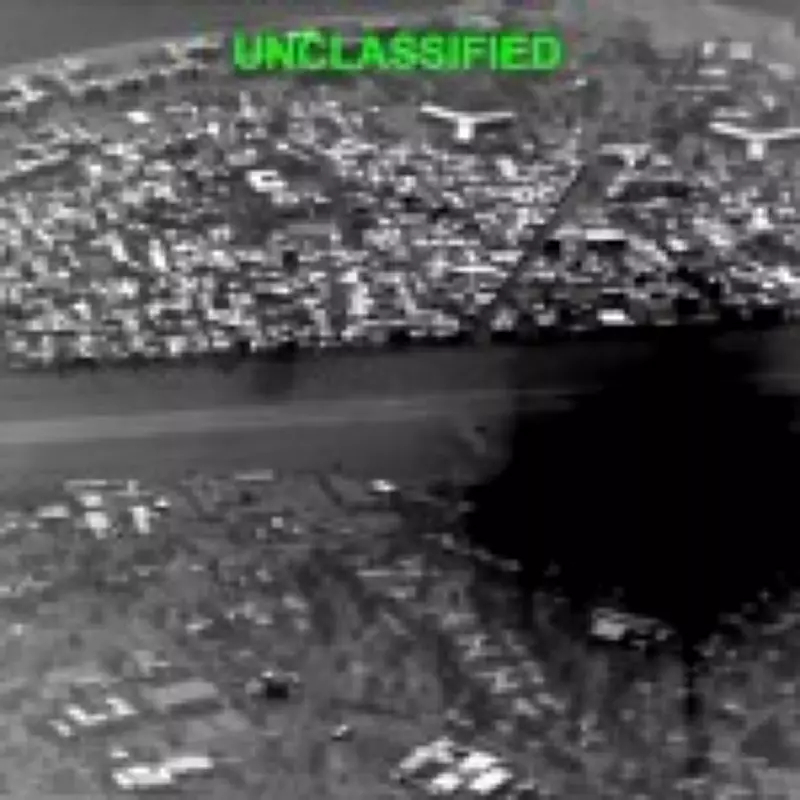
President Donald Trump has declared that United States military forces have "totally obliterated" all military targets on Iran's strategically vital Kharg Island, describing the operation as one of the most powerful bombing raids in Middle Eastern history.
Strategic Oil Hub Targeted
In a series of posts on his Truth Social platform, the US president praised American troops for executing what he called a historic military strike against Iran's primary oil export facility. Kharg Island, located approximately 16 miles off Iran's coast and about 300 miles from the crucial Strait of Hormuz, processes approximately 90 percent of Iran's oil exports, making it the nation's economic crown jewel.
The island, often referred to as the "Forbidden Island" due to its heavy fortification by Iran's Islamic Revolutionary Guard Corps (IRGC), represents one of the most heavily defended energy installations in the region.
Trump's Detailed Announcement
"Moments ago, at my direction, the United States Central Command executed one of the most powerful bombing raids in the History of the Middle East, and totally obliterated every MILITARY target in Iran's crown jewel, Kharg Island," Trump wrote in his initial announcement.
The president added a significant caveat regarding Iran's oil infrastructure: "For reasons of decency, I have chosen NOT to wipe out the Oil Infrastructure on the Island. However, should Iran, or anyone else, do anything to interfere with the Free and Safe Passage of Ships through the Strait of Hormuz, I will immediately reconsider this decision."
Escalating Regional Conflict
In subsequent social media posts, Trump escalated his rhetoric, claiming: "Iran had plans of taking over the entire Middle East, and completely obliterating Israel. JUST LIKE IRAN ITSELF, THOSE PLANS ARE NOW DEAD!"
The bombing raid follows earlier threats from Trump to strike Kharg Island's oil infrastructure unless attacks on vessels in the Strait of Hormuz ceased. This strategic waterway handles approximately one-fifth of global oil shipments, making it one of the world's most critical maritime chokepoints.
Iranian Response and Regional Fallout
The IRGC issued a stern warning prior to the attack, stating that if Iranian energy assets were targeted, the energy infrastructure of US allies throughout the Middle East would be "reduced to ashes." The Iranian military organization further threatened that oil and energy assets of any nations cooperating with the United States would be "immediately destroyed" in response to additional attacks on Iranian energy sites.
Mohammad Bagher Qalibaf, a prominent Iranian political figure, posted on social media that the Iranian regime "will abandon all restraint" if the islands come under attack, holding Trump personally responsible for "the blood of American soldiers."
Global Market Implications
Financial markets closely monitored the situation for any indications that US strikes had damaged Kharg Island's complex network of pipelines, terminals, and storage tanks. Even minor disruptions to operations at this critical facility could significantly tighten global oil supply, adding substantial pressure to already volatile energy markets.
Oil prices have experienced dramatic fluctuations based on Trump's varying comments about the likely duration of the conflict, which began on February 28 with massive US and Israeli bombardments of Iran and rapidly expanded into a broader regional confrontation with far-reaching consequences for worldwide energy markets and stock exchanges.
Regional Escalation Continues
The conflict has spread across multiple fronts in the Middle East. On Saturday, the US embassy in Baghdad, Iraq, was struck by missile fire, with Iraqi security sources confirming smoke rising from the building, though they lacked further details about the attack.
Iran's Revolutionary Guards announced they had conducted additional attacks on Israel in coordination with Lebanon's Hezbollah militia, according to Iran's Tasnim news agency. Lebanon has emerged as an increasingly dangerous flashpoint in the expanding conflict, with Israeli military forces and Hezbollah exchanging strikes in and around Beirut.
On Friday, the Israeli military reported that its air force had struck more than 200 targets across western and central Iran over the preceding 24 hours, including ballistic missile launchers, air-defense systems, and weapons production facilities.
The situation remains highly fluid, with global energy markets bracing for potential supply disruptions and regional powers preparing for possible escalation of hostilities that began with US and Israeli attacks on Iran in late February.




