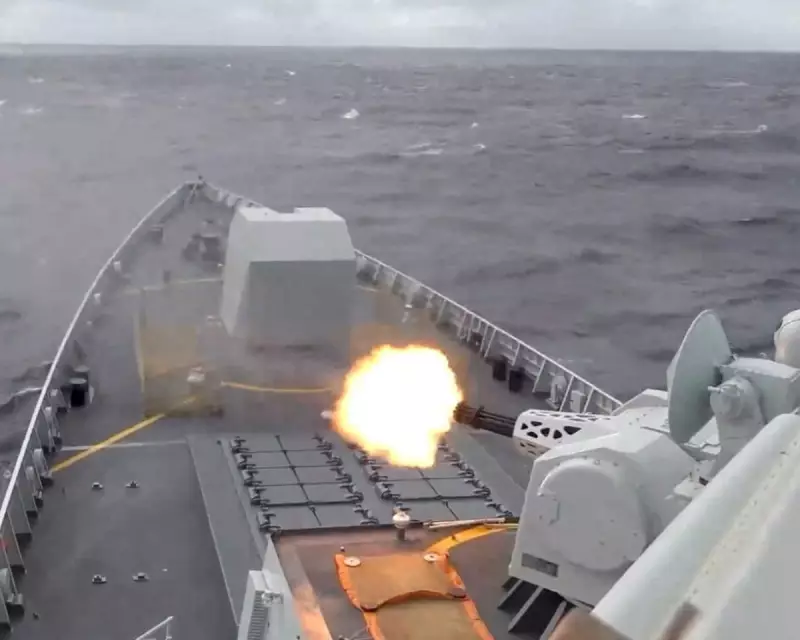
Former United States President Donald Trump has publicly stated he is "not worried" about China's recent live-fire military exercises conducted near Taiwan, striking a notably dismissive tone towards Beijing's show of force.
Trump's Comments on a Tense Military Display
The remarks from the former president, who is campaigning to return to the White House, came in response to questions about the drills held by the People's Liberation Army (PLA). China's military announced it would conduct the live-fire exercises in the Taiwan Strait, a move widely interpreted as a demonstration of strength and a warning against any moves towards formal independence for the self-governing island.
Trump's reaction, characterised by its lack of concern, contrasts sharply with the typically cautious statements from current US administration officials regarding such provocations. When pressed on whether the drills should be a cause for alarm, Trump simply reiterated, "I'm not worried about it." He did not elaborate further on his strategic assessment or what, if any, response he would advocate.
Context of the Chinese Military Exercises
The Chinese military exercises, which took place in late December 2025, involved live-fire drills in sensitive maritime areas close to Taiwan. Beijing has long claimed sovereignty over Taiwan and has not ruled out using force to achieve what it views as reunification. These drills are a recurring tactic used to signal displeasure and exert pressure.
The timing of the drills is significant, occurring amidst a period of heightened global tensions and in the shadow of the upcoming US presidential election. Military analysts note that such actions are designed to test responses and underscore China's capability to control the strategic waterway.
Potential Implications for US Foreign Policy
Trump's comments have immediately sparked debate among foreign policy experts and regional observers. His stance suggests a potential shift in US posture towards Taiwan should he win the November election, possibly moving towards a less confrontational approach with Beijing on this issue, or alternatively, a more unpredictable one.
Critics argue that publicly downplaying such military manoeuvres could be seen as undermining support for Taiwan and emboldening China. Supporters, however, might view it as a pragmatic move to avoid unnecessary escalation. The United States maintains a longstanding policy of "strategic ambiguity," providing Taiwan with the means to defend itself without explicitly guaranteeing military intervention.
The reaction from Taipei has been one of quiet concern, with officials closely monitoring the statements from a key ally. The island's defence ministry consistently monitors Chinese military activities and has reaffirmed its readiness to defend its territory.
As the US election campaign intensifies, Trump's position on China and Taiwan is likely to face further scrutiny. His latest remarks add a new layer of uncertainty to an already volatile geopolitical flashpoint, leaving allies and adversaries alike to ponder the future of cross-strait stability.