
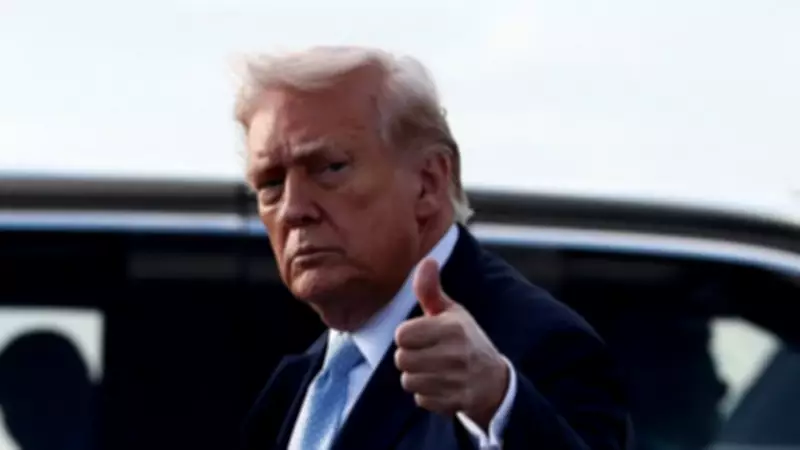
Trump's Language Shift Indicates Possible End to Iran Conflict
In a series of recent statements, President Trump has provided what may be his strongest indication yet that he is considering winding down the ongoing war in Iran. This development comes amid a flurry of overnight updates, though caution is advised given the president's history of changing positions and delivering contradictory messages in recent weeks.
Definitive Statements on Military Achievements
Speaking from the White House south lawn, Trump asserted, "Oh, I think we've won. We've knocked out their navy, their air force. We've knocked out their anti-aircraft. We've knocked out everything. We're roaming free." He followed this with a claim of victory, stating, "We want victory… and that's what we've got." However, his messaging remained somewhat mixed, as he later added, "I don't want to do a ceasefire. You know, you don't do a ceasefire when you're literally obliterating the other side."
Clear Indications from Air Force One
An hour later, while aboard Air Force One, Trump used his Truth Social account to deliver a more definitive signal. He posted, "We are getting very close to meeting our objectives as we consider winding down our great Military efforts in the Middle East with respect to the Terrorist Regime of Iran." This statement raises questions about whether he believes all war aims have been achieved or if he is responding to the global economic consequences sparked by the conflict.
List of Accomplishments and Nuclear Concerns
In his post, Trump outlined five key accomplishments:
- Completely degrading Iranian missile capability, launchers, and related systems.
- Destroying Iran's defense industrial base.
- Eliminating their navy and air force, including anti-aircraft weaponry.
- Preventing Iran from nearing nuclear capability, with the U.S. ready to react if needed.
- Protecting Middle Eastern allies such as Israel, Saudi Arabia, Qatar, the UAE, Bahrain, and Kuwait.
While the first three points suggest extensive military destruction, point four regarding nuclear capability is contentious. Although Iran's nuclear program has likely been set back years, near-weapons-grade nuclear material remains within the country, and the regime persists, potentially more defiant and vengeful.
Dangers of Retaliation and Global Implications
The risk of prolonged, asymmetrical retaliation from Iran is significant, given its history as a sponsor of terrorism and sophisticated sleeper cells. This poses a major challenge for intelligence agencies worldwide. Trump's statement also included a notable shift in responsibility, stating, "The Hormuz Strait will have to be guarded and policed, as necessary, by other Nations who use it - The United States does not! If asked, we will help these Countries in their Hormuz efforts, but it shouldn't be necessary once Iran's threat is eradicated." This effectively places the burden of securing global energy routes on other nations, despite the U.S. role in disrupting the market.
Uncertainty and Future Developments
What comes next depends largely on how the remaining Iranian government responds to Trump's apparent shift. It is crucial to remember that this president frequently alters and contradicts his own statements. Adding to the uncertainty, thousands of additional American troops are already en route to the region. As such, while Trump's language is more definitive than before, suggesting an "off-ramp" from what he terms an "Iran excursion," nothing should be taken for certain in this evolving situation.




