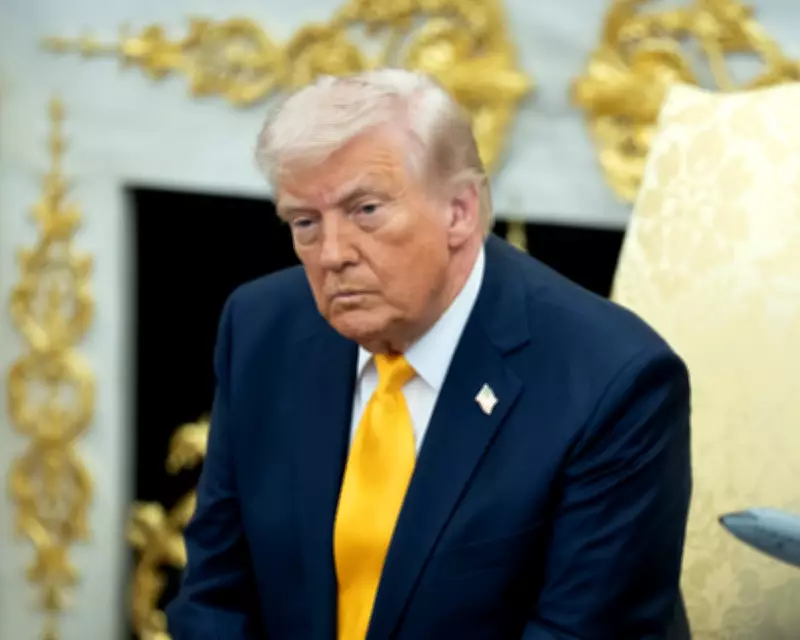
Trump Claims Ignorance of Israeli Gasfield Strike, Contradicting Officials
President Donald Trump has publicly stated he had no prior knowledge of Israel's strike on Iran's largest gasfield, a claim that directly contradicts statements from Israeli officials and exposes growing divisions between the two allies. The attack on the South Pars gasfield, which is part of a reserve shared with Qatar, has angered US allies in the Gulf and prompted Trump to distance himself from the operation.
Oval Office Statements Reveal Strategic Disagreement
Speaking during a bilateral meeting with Japanese Prime Minister Sanae Takaichi at the White House on March 19, 2026, Trump addressed the escalating situation. "I told him: 'Don't do that,' and he won't do that," Trump said, referring to his conversation with Israeli Prime Minister Benjamin Netanyahu following the strikes. "But on occasion he'll do something, and if I don't like it ... and so we're not doing that any more."
The president's comments came during a day that saw multiple developments in the US-Israeli war against Iran, including Trump's controversial reference to Japan's 1941 attack on Pearl Harbor while hosting the Japanese leader.
Israeli Officials Dispute Trump's Version of Events
Israeli Prime Minister Benjamin Netanyahu pushed back against suggestions that Israel had influenced US decision-making regarding the war with Iran. "Does anyone really think that someone can tell President Trump what to do?" Netanyahu questioned, later adding: "I misled no one." His statements directly challenge the narrative that Trump was unaware of Israeli military plans.
The strike on Iran's gas infrastructure has opened what analysts describe as a "Pandora's box" of retaliatory strikes on Gulf energy infrastructure, including pipelines and natural gas processing facilities that serve liquefied natural gas to economies worldwide, particularly in Asia.
Broader War Developments and Domestic Politics
US Defense Secretary Pete Hegseth revealed there is no "timeframe" for ending the war against Iran and did not deny reports that the Pentagon could seek an additional $200 billion in taxpayer funding. Meanwhile, Treasury Secretary Scott Bessent indicated the US may soon remove sanctions on Iranian oil stranded on tankers at sea as Washington seeks to curb prices soaring over Iran's closure of the Strait of Hormuz.
The financial cost of the conflict continues to mount, with analysts at the Center for Strategic and International Studies estimating the US has spent $12.7 billion by the sixth day of fighting, with costs growing by approximately half a billion dollars daily.
Domestic Political Developments
In other Washington news, a key Senate committee advanced Markwayne Mullin's nomination to lead the Department of Homeland Security on a near party-line vote. The Republican senator faced questions about his approach to Trump's immigration enforcement agenda and accusations of encouraging violence during his confirmation hearing.
Additionally, a coalition of 24 states alongside numerous cities and counties has sued the Trump administration over its decision to revoke scientific determinations underpinning US climate regulations. The legal challenge represents one of several domestic controversies unfolding alongside the international conflict.
The war's economic and diplomatic repercussions continue to unfold as the US navigates complex relationships with allies while pursuing military objectives in the region.