Trump Addresses Nation on Iran War, Claims Conflict 'Nearing Completion'
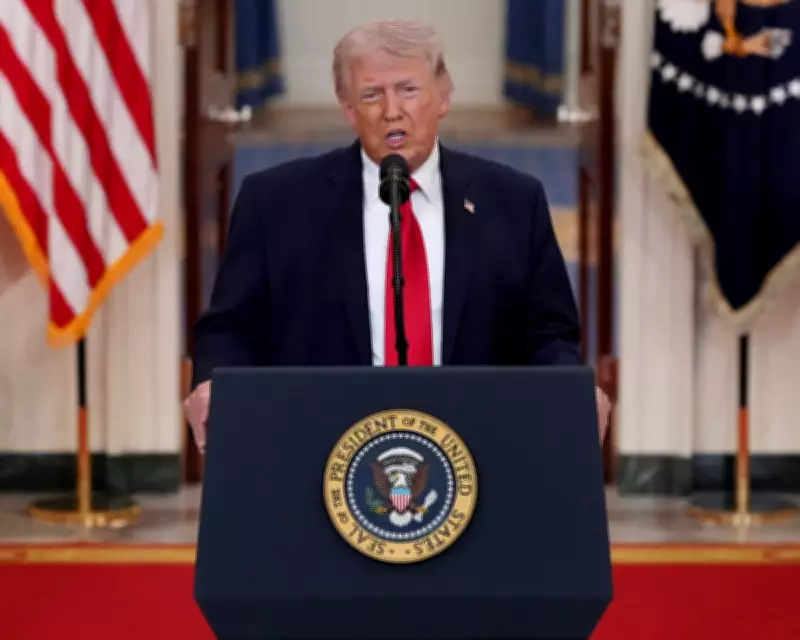
Donald Trump delivered a prime-time address from the White House on Wednesday night, declaring the month-long war in Iran a success that is "nearing completion". Speaking from the Cross Hall, the president argued that the United States has nearly achieved all military objectives in what he termed a "little journey" to Iran, yet provided minimal clarity on how the conflict will be wound down over the next two to three weeks.
Economic Fallout and Market Reactions
Immediately following Trump's 19-minute speech, oil prices surged and Asian stocks traded lower, reflecting investor anxiety over the ongoing closure of the Strait of Hormuz. The president acknowledged economic pain, blaming a short-term rise in gas prices on Iran's actions while reiterating calls for other nations to help secure the critical oil chokepoint. Brent crude jumped 4.9% to $106.16 a barrel, and gold and silver prices dipped, underscoring global market volatility.
Political Criticism and Mixed Signals
Democrats swiftly condemned the address as "incoherent", with Senator Mark Warner stating Trump owed Americans more answers about the conflict's economic impacts. Senator Chris Murphy added that the speech failed to clarify whether the U.S. is escalating or de-escalating. In contrast, Republican Senator Ted Cruz backed Trump, praising his stance, while former congresswoman Marjorie Taylor Green criticized the focus on war without addressing living costs.
Human Toll and Military Actions
The war has resulted in significant casualties, with estimates from the International Federation of Red Cross and Red Crescent societies indicating at least 1,900 deaths and 20,000 injuries in Iran since the conflict began on February 28. In Lebanon, over 1,300 people have been killed, mostly civilians, and Israel reports 19 deaths. U.S. Central Command confirmed that American forces have struck more than 12,300 targets inside Iran as part of Operation Epic Fury, with 13 U.S. service members killed and hundreds wounded.
Diplomatic Complexities and Iranian Response
Trump's administration has sent mixed signals regarding U.S. objectives, with the president claiming Iran sought a ceasefire—a assertion Tehran denied as false. Iranian President Masoud Pezeshkian, in a direct appeal to the American people, questioned the war's justification and suggested it was initiated at Israel's urging. Complicating matters, Trump has lashed out at U.S. allies, hinting at a potential NATO withdrawal and describing the alliance as a "paper tiger" in recent interviews.
Unclear Objectives and Future Implications
With the war in its fifth week, key U.S. goals remain ambiguous. Trump downplayed concerns over Iran's uranium stockpiles, despite previously citing nuclear proliferation as a war justification. Analysts dispute claims that Iran was close to building a nuclear weapon. The president left open the possibility of continued military strikes, including "spot hits" inside Iran, even as he touted the campaign as powerful and brilliant compared to past lengthy conflicts.