
Tehran Residents Describe 'Worst Night' of Aerial Bombardment Amid Escalating Conflict
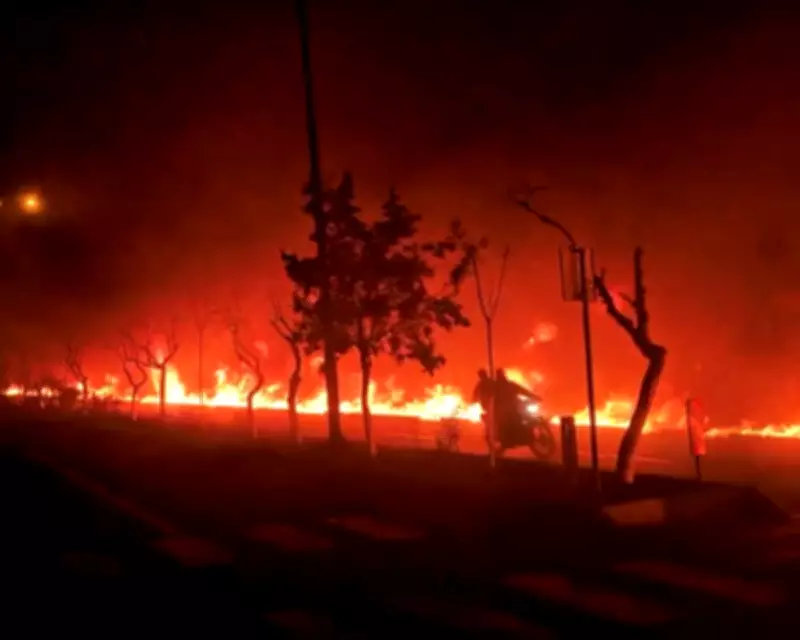
Tehran has endured what residents are calling its most severe night of aerial bombardment since the US-Israel military campaign began, with explosions shaking buildings and fires raging across the Iranian capital. The intense strikes come as US officials deliver mixed messages about the war's timeline, creating uncertainty about further escalation.
Contradictory US Statements on War Duration
US Defense Secretary Pete Hegseth followed former President Donald Trump's suggestion that the war could soon be over with a stark warning of more strikes to come. "We will not stop until the enemy is totally and decisively defeated," Hegseth declared, promising Tuesday would bring the most intense strikes yet against Iran.
This contradiction emerged just hours after Trump told CBS News that "the war is very complete," highlighting divisions within US leadership about the conflict's trajectory. Hegseth later clarified that determining the war's phase was "Trump's decision," emphasizing the former president's continued influence over military strategy.
Civilian Accounts of Destruction and Fear
Niloufar, a Tehran resident speaking under pseudonym for security reasons, described the terrifying experience: "We are under heavy bombardment and I can hear back-to-back explosions. The place they hit has caught fire. They are destroying Iran." The resident reported low-flying jets overhead and buildings shaking from the impact of strikes.
Other Tehran residents reported rolling blackouts and widespread communications failures across Iran. One resident described the city as "the last stop before hell," capturing the desperation felt by those trapped in the bombardment.
Health and Environmental Concerns Mount
The World Health Organization has issued urgent warnings about "black rain" falling after strikes on oil facilities, noting the precipitation could cause serious respiratory problems. WHO spokesperson Christian Lindmeier emphasized the danger of "black rain and the acidic rain coming with it," supporting Iranian authorities' advice for people to remain indoors while air quality remains dangerously poor.
Tehran skies have turned grey with smoke billowing from oil facilities targeted in recent strikes, creating hazardous breathing conditions throughout the capital. Residents report a persistent burning smell of gunpowder in the air and shattered windows from nearby explosions.
Mounting Civilian Casualties Across Region
According to the US-based Human Rights Activists in Iran group, at least 1,245 civilians have been killed in the US-Israel war on Iran, including 194 children. The conflict has spread across the region, with Lebanon reporting at least 486 people killed by Israeli bombing and 11 fatalities in Israel itself. Seven US troops have been confirmed dead in the hostilities.
General Dan Caine, chair of the US joint chiefs of staff, revealed that US forces have hit more than 5,000 sites in Iran, targeting ballistic missile and drone capabilities while attempting to degrade Iran's navy to reopen the strategic Strait of Hormuz.
Iranian Defiance and Regional Escalation
Iranian officials remain defiant despite the bombardment. Ali Larijani, head of Iran's national security council, declared in a social media post that "the nation of Iran does not fear your empty threats," while implying Iran could target Trump personally. "Be careful not to get eliminated yourself," he warned in response to Trump's threat that Iran could be hit "20 times harder" if it blocked oil flow through the Strait of Hormuz.
Iran continued its own attacks on Tuesday, targeting Gulf states and Israel as part of its strategy to inflict economic pain. In Bahrain, a woman was killed and eight more wounded in an Iranian attack on a residential building in Manama. Firefighters in the UAE battled blazes near petrochemical plants after drone strikes, while Saudi Arabia and Kuwait reported intercepting drones over their territories.
Economic Consequences and Global Impact
The conflict is already affecting global markets, with economists warning that continued disruption to Gulf oil production and shipping through the Strait of Hormuz could plunge the world into an energy crisis reminiscent of the 1970s. US consumers are feeling the impact through rising fuel prices, while investors worldwide react to skyrocketing oil costs.
Regional Life Amid Conflict
Despite the bombardment, life continues with surprising normalcy in some Gulf cities. In Dubai, residents still flock to beaches, malls, and rooftop bars, though tourist numbers have declined significantly. Commercial flights have tentatively resumed as UAE airspace partially reopened, even as the country's leaders condemn continuing "blatant Iranian aggression."
Nader Farid, an Egyptian real estate worker in Dubai, noted: "They say it's a war but it's caused no problem for us. The first day was scary when they warned about incoming missiles. But now it's been more than a week and life here just goes on."
Humanitarian Concerns and Displacement
Many Tehran residents have fled to rural areas seeking safety, though older and less mobile individuals remain trapped in the capital. In Lebanon, the conflict continues with Israeli strikes against what it describes as Hezbollah targets, hitting Beirut's southern suburbs and southern regions of the country.
The Lebanese Red Cross condemned an Israeli strike on one of its ambulances in the Tyre district, which injured two emergency workers. Hezbollah continues targeting Israeli troops in southern Lebanon while launching rocket salvoes and drone swarms at northern Israel, prompting consideration of a widened Israeli offensive against the group.
As the conflict enters a dangerous new phase with intensified strikes and contradictory political messages, civilians across the region face mounting humanitarian crises while world leaders grapple with the economic and geopolitical consequences of escalating Middle East hostilities.




