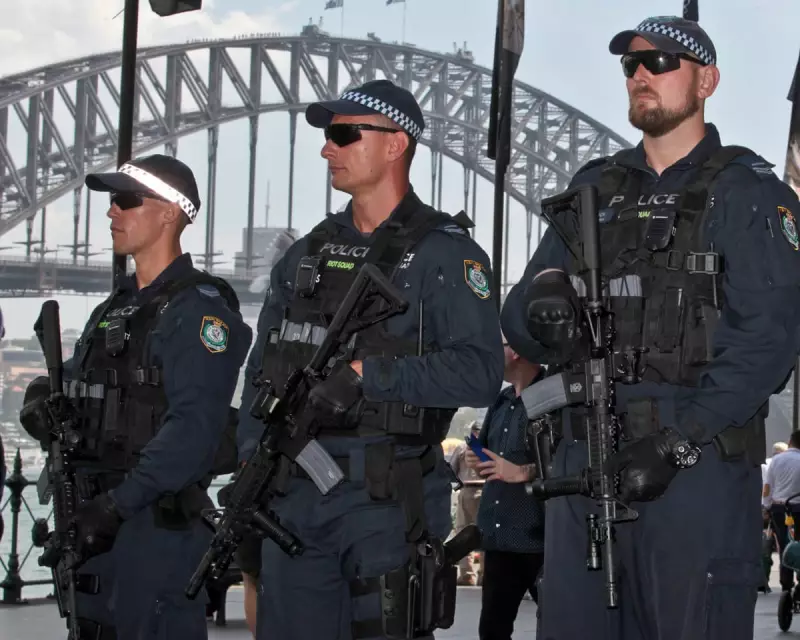
In the wake of the horrific Bondi terror attack on 14 December, the New South Wales government has moved to visibly bolster police presence on Sydney's streets. Premier Chris Minns has authorised officers to carry assault rifles during major events like New Year's Eve and is even considering a role for the Australian Defence Force in urban patrols.
The Push for a 'Massive' Police Response
Premier Chris Minns stated his intention is to leave no ambiguity about the state's responsibility to protect its citizens. "I want the public to be assured that there is a comprehensive and massive police response to these terrible terrorist events," he said. The premier argues that highly visible armed officers are not just about confronting crime, but about making families feel safer in public spaces.
This stance represents a significant shift towards a more militarised style of policing for Sydney. Discussions have also touched on whether the private Community Security Group, which protects Jewish sites, should be armed. While driven by an understandable desire for security after a tragedy, this approach has ignited a serious debate about its effectiveness and societal cost.
The High Cost of Militarised Policing
Critics warn that flooding streets with officers carrying high-powered weapons comes with profound downsides. A core concern is the potential loss of civil liberties for the law-abiding majority, who may face increased orders, searches, and heavy-handed tactics. This style of policing, common in parts of Latin America and seen in some US cities, prioritises deterrence through show of force.
However, evidence for its success is thin. A pivotal 2023 study led by Brown University's Associate Professor Rob Blair examined a militarised intervention in Cali, Colombia, where homicide rates were extremely high. The study found crime dipped only temporarily during military patrols and bounced back immediately after they left, offering little long-term benefit.
Community Policing vs. Armed Response
An alternative model, deeply embedded in Australian policing philosophy, is community-based engagement. This approach focuses on intelligence gathering, building trust within multicultural communities, and proactive crime prevention. It requires officers to be integrated into neighbourhoods, not set apart from them.
Following the Bondi attack, Operation Shelter saw young, approachable officers engaging with locals in cafes and shops in Sydney's eastern suburbs. The question is whether this vital connection and flow of community intelligence would survive if those same officers were patrolling with assault rifles.
Furthermore, arming police changes how they approach volatile situations. A 2020 Deakin University study, 'Primed and Ready', compared police shootings across nations. It found Australia has more fatal police shootings than the UK, where most officers are unarmed. The study's authors noted that an officer with a firearm has the option of lethal force from the outset, whereas an unarmed officer must focus on de-escalation.
Alarmingly, a 2013 study indicated about 42% of fatal police shootings in Australia involved a person with mental health issues. This has led to successful trials like NSW's Pacer program, where mental health experts accompany police to calls, reducing the need for force.
Before embracing a more militarised future, the data suggests a need for caution. The evidence from abroad shows limited crime reduction, while the experience at home indicates armed responses can have tragic consequences, particularly for the vulnerable. The challenge for Sydney is to provide genuine security without sacrificing the community trust and civil liberties that form the bedrock of a free society.