
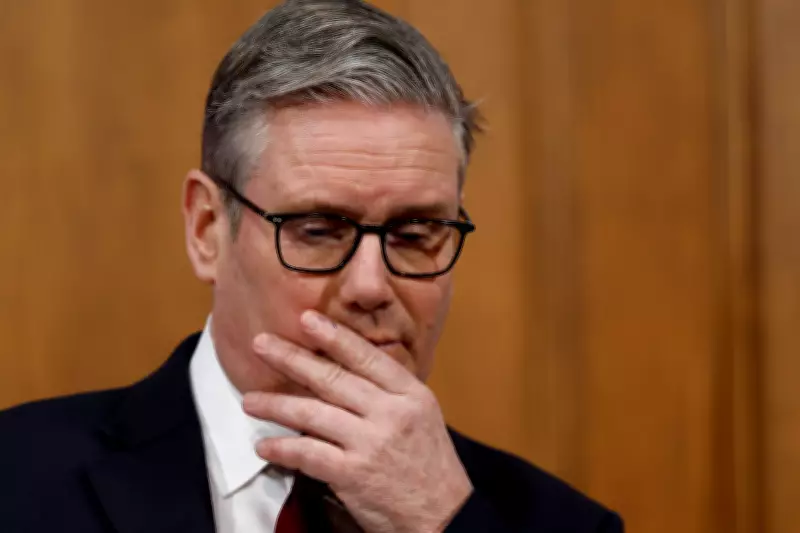
Starmer Pursues 'Viable, Collective Plan' with European Allies for Strait of Hormuz
Prime Minister Sir Keir Starmer has announced he is actively engaged in discussions to formulate a "viable, collective plan" alongside European partners, responding to President Donald Trump's appeal for assistance in the Strait of Hormuz. During a press conference on Monday, Starmer emphasized that the United Kingdom "will not be drawn into the wider war" in the Middle East, indicating no final decision has been reached regarding the deployment of warships to this crucial oil trade corridor, which has experienced significant disruption over the past two weeks.
Navigating Diplomatic and Economic Challenges
Starmer clarified that conversations with European allies are focused on developing a strategy to safeguard vessels traversing the strait, located off the coast of Iran. "We have to open the Strait of Hormuz to ensure stability in the market," he stated, underscoring the economic imperative. The Prime Minister elaborated, "We're working with all of our allies, including our European partners, to bring together a viable collective plan that can restore freedom of navigation in the region as quickly as possible and ease the economic impacts."
He further noted that this initiative is not envisioned as a NATO mission but rather as an alliance of partners, involving collaboration with nations in Europe, the Gulf, and the United States. "It's important that we continue that. It is not straightforward," Starmer admitted, highlighting the complexities of the situation.
International Reactions and Economic Implications
President Trump previously warned in the Financial Times that insufficient support in the strait would be "very bad for the future of NATO." Meanwhile, Japan and Australia have declared they will not dispatch ships to the region, and a Chinese government spokesperson mentioned engaging with "all sides."
The geopolitical tensions have triggered substantial economic repercussions. On the morning of Starmer's address, Brent Crude Oil prices surged to $104 per barrel, marking an increase of over 40 percent since the onset of the conflict. Initial Treasury analysis projected that a 20 percent rise in oil and gas prices could elevate inflation by one percentage point and reduce GDP growth by approximately 0.5 percentage points.
Domestic Measures and Strained US Relations
In his speech, Starmer unveiled a £53 million package aimed at assisting households in rural communities reliant on heating oil. He refrained from introducing a broader subsidy scheme, noting that the next adjustment to the energy price cap is scheduled for June, and fuel duty is set to remain frozen until September. Despite these challenges, Starmer asserted that the government has instilled "stability" into public finances, positioning the UK economy in a "better place than it otherwise would have been."
The UK's handling of the Middle East crisis has, however, strained relations with the US administration. Downing Street confirmed a 15-minute phone conversation between Starmer and Trump on Sunday. Trump has persistently advocated for allies, including the UK, to contribute to protecting ships in the Strait of Hormuz, even as US and Israeli forces conducted strikes on Kharg Island—a hub for about 90 percent of Iran's oil exports—though energy infrastructure was not targeted.
Political and Economic Crossroads
Work and Pensions Secretary Pat McFadden reiterated on Monday that the government is not a "protagonist" in the war. While Trump has criticized the UK for its delayed military response, McFadden suggested that the bilateral relationship hinges on deeper, foundational ties.
The escalation of Middle East hostilities over the weekend sets the stage for pivotal decisions affecting the UK economy. Chancellor Rachel Reeves is poised to deliver a speech on Tuesday outlining Labour's forthcoming growth policies. Additionally, McFadden presented a proposal for an employment subsidy scheme to tackle the rising number of young people not in education, employment, or training.
Amid these developments, the Bank of England's Monetary Policy Committee is anticipated to maintain interest rates in a critical meeting this week, a move that could further destabilize public finances and temper expectations for an economic recovery.




