
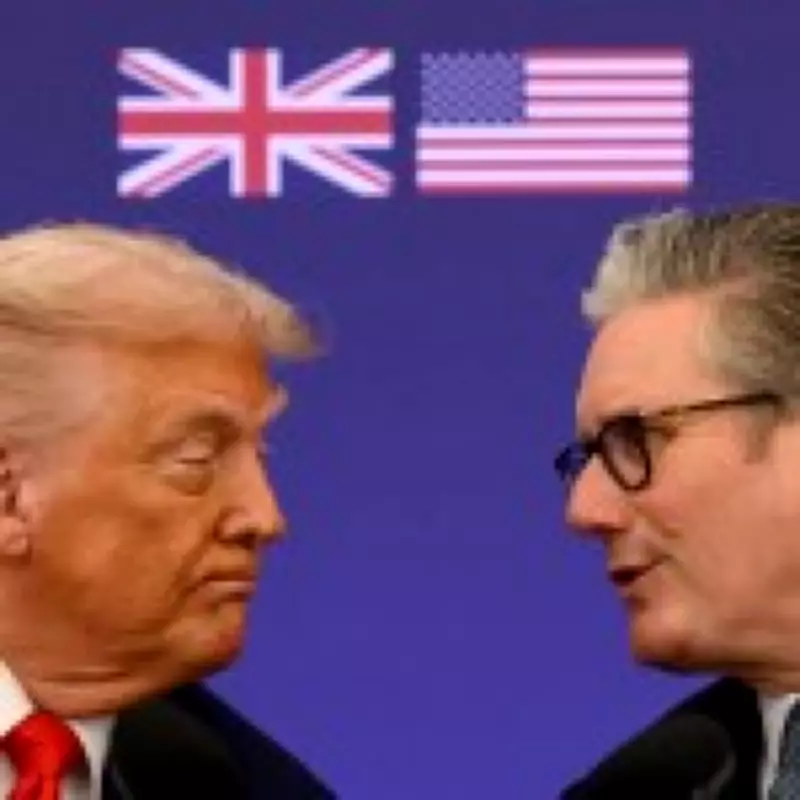
Sir Keir Starmer Defends Initial Refusal of US Request to Use UK Bases for Iran Strikes
Prime Minister Sir Keir Starmer has publicly defended his decision to initially refuse a request from the United States to utilize British military bases for launching strikes against Iran. The refusal, which centered on the use of the Diego Garcia base in the Indian Ocean, drew sharp criticism from US President Donald Trump, who expressed deep disappointment over the delay.
Trump's Criticism and Legal Concerns
President Trump claimed that Sir Keir was "worried about the legality" of the initial US-led strikes that targeted Iran's supreme leadership, resulting in the death of Ayatollah Ali Khamenei. In remarks to The Telegraph, Trump stated, "That's probably never happened between our countries before," emphasizing his frustration with the Prime Minister's hesitation. He added that it "took far too long" for Sir Keir to reconsider and grant permission.
Starmer's Justification and Change in Position
In a statement to the House of Commons, Sir Keir explained his initial stance, referencing the historical lessons from the Iraq War. He asserted, "We all remember the mistakes of Iraq," and stressed that "any UK actions must always have a lawful basis and a viable thought-through plan." The Prime Minister made it clear that his government "does not believe in regime change from the skies," indirectly criticizing the US approach to the conflict.
However, following Iran's retaliatory attacks across the Middle East, which threatened British citizens and interests, Sir Keir reversed his decision. On Sunday, he granted the US permission to use British bases, including RAF Fairford in Gloucestershire, to target Iran's missile launchers and storage facilities. He justified this shift by stating, "It is clear that Iran's outrageous response has become a threat to our people, our interests, and our allies and it cannot be ignored."
Escalating Threats and Security Measures
The situation intensified rapidly, with Iran launching attacks on targets in countries such as the United Arab Emirates, Qatar, and Saudi Arabia. Intelligence reports suggest Tehran could sustain its retaliatory actions for up to a week, raising alarms for approximately 300,000 British nationals in the region. Of these, 102,000 have registered with the Foreign Office as contingency plans, including potential mass evacuations, are being developed.
In a concerning development, hours after Sir Keir's announcement, a drone struck RAF Akrotiri in Cyprus. Defence Secretary John Healey confirmed no casualties and minimal damage, attributing the attack to "dangerous and indiscriminate actions" by Iran and its proxies. Sir Keir clarified that the drone was launched prior to his statement and was not a direct retaliation. Subsequently, Cypriot authorities reported intercepting two additional drones heading toward the base.
Political Reactions and National Interest Debate
The episode has sparked political controversy in the UK. Tory leader Kemi Badenoch accused the Labour government of reluctance due to fears of alienating voters whose "political loyalties are swayed by conflicts in the Middle East, not the British national interest." Meanwhile, Sir Keir maintained that his decisions were deliberate and based solely on Britain's national interest, despite the pressure from the US alliance.
Westminster insiders described the strategic challenge of countering Iran's ballistic missiles, comparing it to trying to knock an "arrow" out of the sky, while the US focus shifted to targeting the "archer"—the launch sites and silos. As the crisis unfolds, the government continues to assess all options to protect British citizens abroad, underscoring the complex balance between international alliances, legal frameworks, and domestic security concerns.




