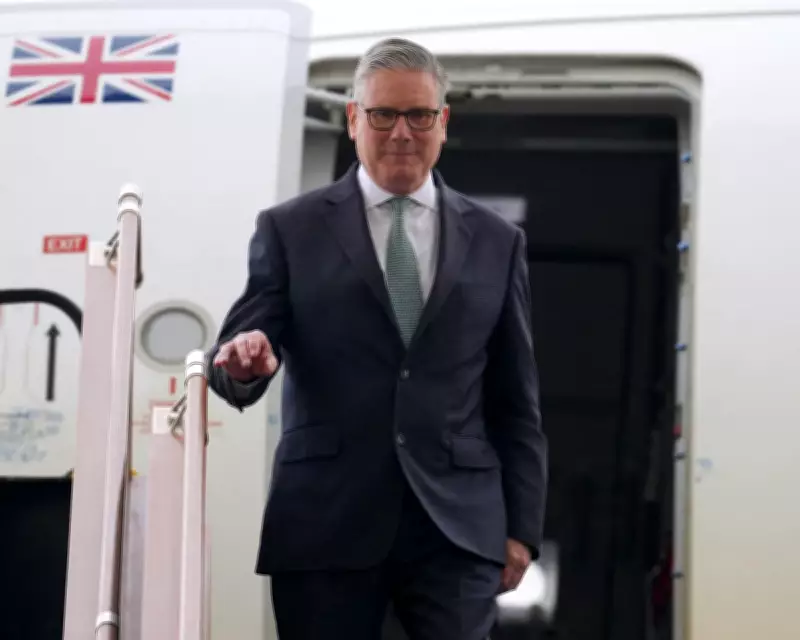
Keir Starmer Denounces Israeli Strikes in Lebanon During Middle East Diplomatic Tour
Prime Minister Keir Starmer has issued a strong condemnation of Israel's ongoing military actions in Lebanon, declaring that such attacks "should not be happening" and must cease immediately. Speaking during a high-stakes visit to the Middle East, which included stops in Saudi Arabia, the United Arab Emirates, and Bahrain, Starmer emphasized the urgent need for a ceasefire extension to include Lebanon, where Israeli bombings have resulted in over 250 fatalities.
UK Prime Minister Advocates for Strategic Reset in Security Policy
In a detailed article published by the Guardian, Starmer outlined his vision for a fundamental transformation in the United Kingdom's approach to national security. He argued that the conflict involving Iran should serve as a critical turning point, prompting Britain to bolster its resilience through increased defence investments and strengthened partnerships with European allies. Starmer highlighted that the UK's response must avoid short-term fixes, instead focusing on long-term stability and preparedness.
Starmer explicitly stated, "From the outset, I was clear Britain would not be drawn into offensive military action. And we were not." He connected this stance to broader efforts to rebuild European alliances and enhance defence capabilities, noting that these measures represent a deliberate shift in strategy aimed at enduring security challenges.
Divergence from US Policy and Stance on Strait of Hormuz
The Prime Minister's remarks underscore a growing diplomatic rift between the UK and the United States under President Donald Trump regarding the Iran conflict. While UK ministers have refrained from directly criticizing Trump, Starmer subtly distanced himself from the US president's rhetoric, particularly Trump's controversial comments about Iran's civilization. Starmer affirmed, "They are not words I would use, ever use, because I come at this with our British values and principles."
Additionally, Starmer and his cabinet have firmly opposed any imposition of tolls or levies on the Strait of Hormuz, a vital maritime passage for global trade. Defence Secretary John Healey reinforced this position, warning that such fees could set a dangerous precedent. Starmer asserted the necessity of "toll-free navigation" to ensure safe and unimpeded commercial shipping through the region.
Emphasis on European Cooperation and Future Implications
In an interview with ITV, Starmer elaborated on the importance of mending ties with the European Union to fortify the UK's economic and security framework. He expressed a clear commitment to deepening collaboration on defence, trade, and energy, stating, "I'm clear in my mind that that means we must be closer to the EU... to strengthen our economy, to make it more resilient."
Foreign Secretary Yvette Cooper echoed these sentiments in a speech at Mansion House, calling for a permanent ceasefire that includes Lebanon and prevents a resurgence of hostilities. She stressed, "There must be no return to conflict," highlighting the UK's support for ongoing negotiations and the full reopening of the Strait of Hormuz.
Starmer concluded by framing the Iran war as a pivotal moment that demands a proactive and cohesive response from Britain and its allies, aiming to define security policies for generations to come.