Saudi Arabia Urges US to Intensify Iran Attacks, Intelligence Source Confirms
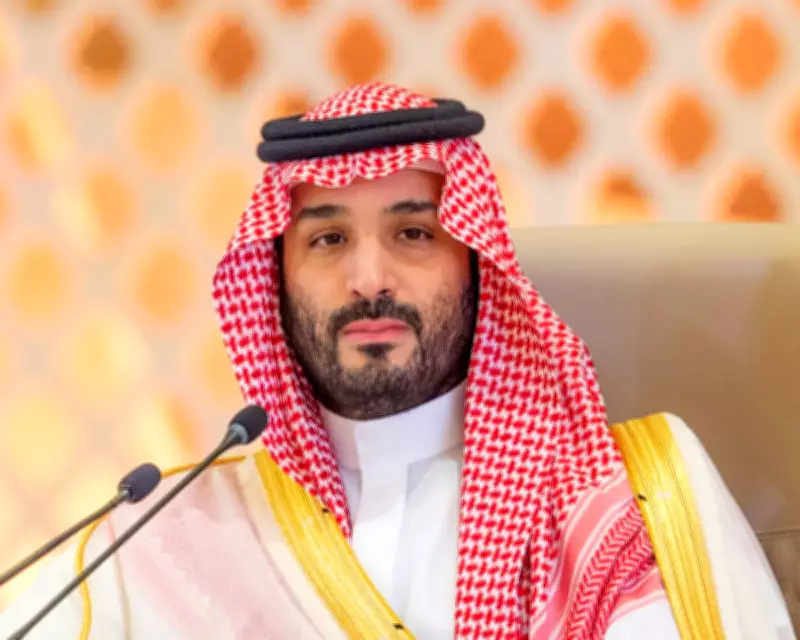
Saudi Arabia has reportedly urged the United States to escalate military actions against Iran, according to a Saudi intelligence source who confirmed details from a New York Times report. The kingdom's de facto leader, Crown Prince Mohammed bin Salman, is said to have advised former President Donald Trump against prematurely ending the ongoing US-Israeli war with Iran, describing the conflict as a historic opportunity to fundamentally reshape the Middle East.
Intelligence Source Details Saudi Position
The Saudi intelligence source revealed that Riyadh is not merely advocating for the continuation of the military campaign but is actively pushing for its intensification. This stance was indirectly acknowledged by Trump himself, who told journalists on Tuesday, "Yeah, he's a warrior. He's fighting with us." referring to the Crown Prince. The nearly four-week-old war has not yet seen direct Saudi military involvement, but analysts suggest this could change if diplomatic efforts led by Pakistan fail to yield results.
Mohammed Alhamed, a Saudi geopolitical analyst, emphasized that Iran's decisions will be crucial. "If Iran engages seriously, there is still a path to contain escalation. If it rejects the conditions and continues its attacks, the threshold for Saudi action will be crossed," he stated. Alhamed added that Saudi Arabia is not acting impulsively but is carefully calibrating its response, preparing for potential escalation while maintaining that Riyadh has not been pushing for war but rather trying to avoid being drawn into it.
Regional Tensions and Economic Vulnerabilities
Saudi Arabia has already faced attacks from Iranian drones as part of Tehran's retaliation for the US-Israeli strike on February 28. A recent drone strike targeted an oil refinery in Yanbu on Saudi Arabia's Red Sea coast, highlighting Iran's capability to threaten the kingdom's economic lifelines. While Saudi Arabia's oil export pipelines to the Red Sea provide some protection against Iran's blockade tactics in the Strait of Hormuz, the Yanbu attack served as a stark warning.
The threat could escalate significantly if Iran's allies in Yemen, the Houthi movement, join the conflict with their missile arsenal. Hesham Alghannam, a Saudi defence expert, noted that Saudi Arabia currently maintains cautious neutrality but warned, "If the Houthis strike Saudi assets, Riyadh may shift toward defensive coalition support or limited retaliation."
Historical Context and Strategic Calculations
Saudi Arabia and Iran, representing Sunni and Shia leadership respectively, have long been regional rivals. Historical tensions were underscored by a leaked US State Department cable from 2008, in which King Abdullah urged the US military to "cut off the head of the snake," referring to Iran's theocratic regime. In recent years, Saudi Arabia had favored negotiated solutions to disputes over Iran's nuclear and missile programs, but the joint US-Israeli attack disrupted these diplomatic efforts.
Khalid Aljabri, a Saudi exile commentator and US-based cardiologist, explained the kingdom's strategic dilemma: "In this scenario, when the war occurs anyway and escalation is happening anyway, a partially degraded Iran, a wounded lion, would be more unpredictable and more dangerous. The policy was don't start the war, but if you start it, finish the job."
Shifting Alliances and Future Implications
Crown Prince Mohammed bin Salman solidified his power by cultivating a close relationship with Trump, but observers argue that Saudi Arabia must now reconsider its reliance on US security guarantees. Ellie Geranmayeh, a senior policy fellow at the European Council on Foreign Relations, commented, "MBS has lost the bet on all his investments over the last several years. He financially invested in Trump and Trump's family and his corporation and his White House, but at the end of the day the views of the Saudis and of the whole Gulf have been sidelined by the wishes of Benjamin Netanyahu."
Following a missile attack on a Saudi oil facility in 2019, which Riyadh blamed on Iran, Prince Mohammed began recalibrating Saudi policy. The US offered verbal support but no tangible reprisals, leading Saudi Arabia to pursue detente with Iran through a surprise diplomatic agreement brokered by China in 2023. Geranmayeh added, "After the US refused to come to their defence, the Saudis pivoted to hug Iran close, in the hope it wouldn't lash out against them in a conflict. Now the war has started and MBS lost the bet that Iran wouldn't retaliate, he has reportedly urged the US to end the Iranian threat once and for all."
While the United Arab Emirates has openly called for Iran's decisive military defeat, Saudi Arabia, with its Red Sea export options still intact, has not overtly demanded more bombing. Active Saudi military participation could provoke severe Iranian retaliation, potentially targeting the Red Sea oil pipeline in collaboration with Houthi forces. Geranmayeh concluded, "Once the bombs stop falling there will be some deep thinking in Riyadh. It is not about pushing the US away but about having more options."