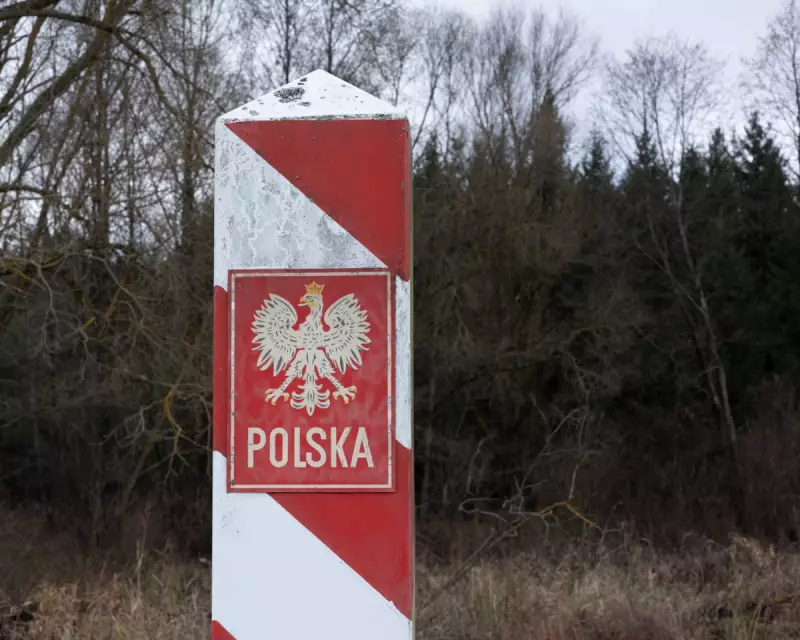
Poland is embarking on a massive €2 billion programme to fortify its eastern frontier with a sophisticated anti-drone defence system, a senior defence official has confirmed. The move comes as a direct response to a significant breach of Polish airspace by Russian unmanned aerial vehicles earlier this year, heightening security fears across the region.
A Layered Defence Against Aerial Intrusion
Deputy Defence Minister Cezary Tomczyk stated that the new system is expected to gain initial operational capabilities within approximately six months, with the full project slated for completion in 24 months. The fortifications will integrate with an older line of border protection and will employ a multi-layered approach to neutralise threats.
This approach will incorporate a mix of machine guns, cannon, missiles, and electronic drone-jamming systems. Tomczyk noted that some elements, like multi-barrel machine guns, are intended for use strictly in war conditions due to the dangers posed by falling debris in peacetime.
The urgency for such measures was underscored in September when more than a dozen suspected Russian drones crossed into Polish territory. The incident forced the temporary closure of airports, scrambled fighter jets, and resulted in property damage from falling debris. Foreign Minister Radosław Sikorski interpreted the attack as a Russian probe, designed "to test us without starting a war."
Fortifying the Eastern Flank Amid Hybrid Threats
Beyond the aerial threat, Poland is simultaneously bolstering its land borders with Belarus and the Russian exclave of Kaliningrad through a separate initiative known as the Eastern Shield. This project is explicitly aimed at deterring any potential ground invasion.
As part of this land-based fortification, Tomczyk revealed that special logistics hubs will be established in every border municipality. These hubs will stock equipment to rapidly seal the border, deployable within hours if needed.
Poland's security posture has intensified dramatically since Russia's full-scale invasion of Ukraine nearly four years ago. The country now allocates 4.7% of its GDP to defence, one of the highest rates in NATO and the European Union. This spending surge funds not only hardware but also ambitious civil defence programmes, including training hundreds of thousands of citizens in survival skills.
A Warning for Europe's Future Security
Deputy Minister Tomczyk framed the current conflict in Ukraine as a buffer for broader European security. "The truth is that as long as Ukraine is defending itself and fighting Russia, Europe is not at risk of war in the conventional, strict sense of the word. What we will face instead are provocations and acts of sabotage," he said.
However, he issued a stark warning about the consequences of a Russian victory. Tomczyk argued that the Kremlin's expansionist ambitions, rooted in a long history of aggression in Eastern Europe, would not stop at Ukraine. He drew a parallel to George Orwell's 1984, suggesting the Russian state could easily redirect its 'enemy' narrative towards other nations to consolidate domestic power.
The colossal €2 billion cost for the anti-drone system will be primarily financed through European Union funds under the SAFE (Security Action for Europe) defence loan programme, supplemented by contributions from the Polish state budget. Tomczyk justified the high expenditure by contrasting it with the alternative, stating that it is preferable to increase defence spending now rather than face the catastrophic costs of a full-scale war later.