Pentagon Accused of Defying Federal Court Order on Journalist Access
The New York Times has formally accused the Pentagon of openly defying a federal judge's ruling that was intended to restore press access to the defense department's headquarters. This legal confrontation centers on what the newspaper describes as an "interim" policy implemented by the Pentagon, which it claims constitutes a deliberate end-run around the court's decision.
Court Order and Pentagon Response
Last Friday, U.S. District Judge Paul Friedman granted an injunction that overturned significant portions of the restrictive "media in-brief" document. This document had prompted nearly all journalists covering the Pentagon to surrender their press badges rather than agree to its terms. Judge Friedman specifically ordered that seven New York Times journalists have their credentials reinstated immediately.
Instead of complying, Pentagon chief spokesperson Sean Parnell announced on Monday night that the department would permanently close the designated workspace for journalists known as the "correspondents' corridor." The Pentagon plans to create a new press workspace in an annexed facility outside the main building. Additionally, the revised policy now mandates that journalists be escorted into the building at all times.
Legal Allegations and Constitutional Concerns
In court filings, lawyers for The New York Times argued that the Pentagon is "contemptuously defying" Judge Friedman's order "both in letter and spirit." The interim policy introduces unprecedented restrictions, including barring reporters with press passes from entering without an escort and establishing new rules governing when journalists can offer anonymity to sources.
"The intent is obvious: the interim policy is an attempted end-run around this court's ruling," the Times charged. The newspaper contends this represents "nothing more than a thinly veiled attempt to flout this court's ruling and prevent journalists and news organizations whose editorial viewpoints defendants dislike from engaging in independent, protected newsgathering and reporting at the Pentagon."
Journalist and Advocacy Group Reactions
The Pentagon Press Association, representing journalists covering the defense department, strongly condemned Parnell's announcement as "a clear violation of the letter and spirit of last week's ruling by a U.S. federal court." The organization stated it is consulting with legal counsel regarding potential next steps.
Seth Stern, director of advocacy for the Freedom of the Press Foundation, supported the Times' position, stating: "The revised policy is not a good faith effort to comply with Judge Friedman's order. It adds mostly meaningless window dressing while retaining the core constitutional violation – subjecting journalists to punishment for doing their jobs."
Background and Broader Implications
This conflict originated last October when dozens of news organizations, including The Guardian, chose to return their press passes rather than sign the original restrictive policy. That policy included vague language about "solicitation" of information from defense employees that made it difficult for journalists to perform their duties effectively.
While the lawsuit was filed by The New York Times, many other news organizations believed the ruling would allow them to regain access to the Pentagon. CNN was among the networks that indicated they would seek to regain press credentials, though one CNN journalist attempting to do so on Monday received no firm guidance from Pentagon officials.
Practical Consequences for Journalism
Barbara Starr, a former CNN Pentagon correspondent, lamented the loss of the correspondents' corridor, noting that its close physical access allowed journalists to quickly obtain updates from military officials during breaking developments. "Working from a remote building outside the Pentagon does not provide that," she observed.
Although Parnell stated the new press room would still be "on Pentagon grounds," the relocation outside the main building represents a significant practical barrier to the rapid information gathering that has characterized Pentagon coverage for decades.
Current Access Disparities
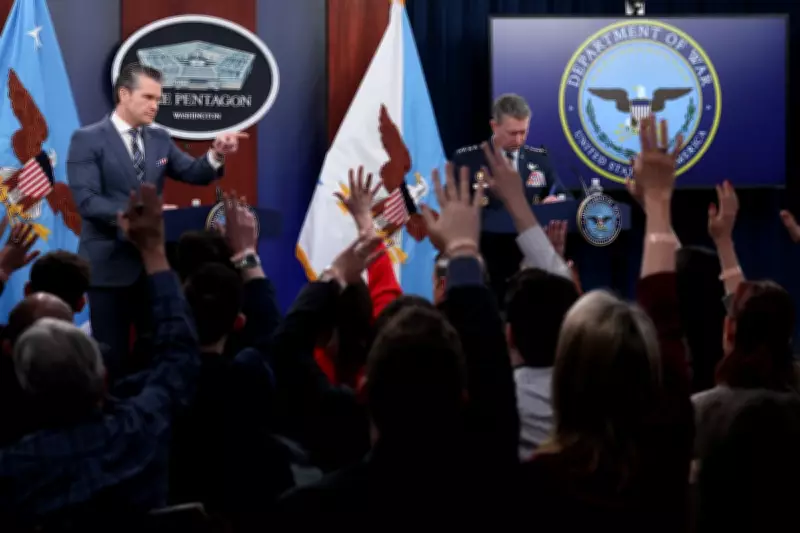
While most journalists from major news organizations no longer have guaranteed Pentagon access, some have been permitted to attend press briefings about Iran conducted by Secretary Pete Hegseth. However, these journalists have reportedly been relegated to the back of briefing rooms, while the majority of questions have come from conservative journalists and pro-MAGA influencers.
The Pentagon has announced plans to appeal Judge Friedman's ruling, setting the stage for continued legal battles over press access and First Amendment protections at the heart of American defense reporting.