
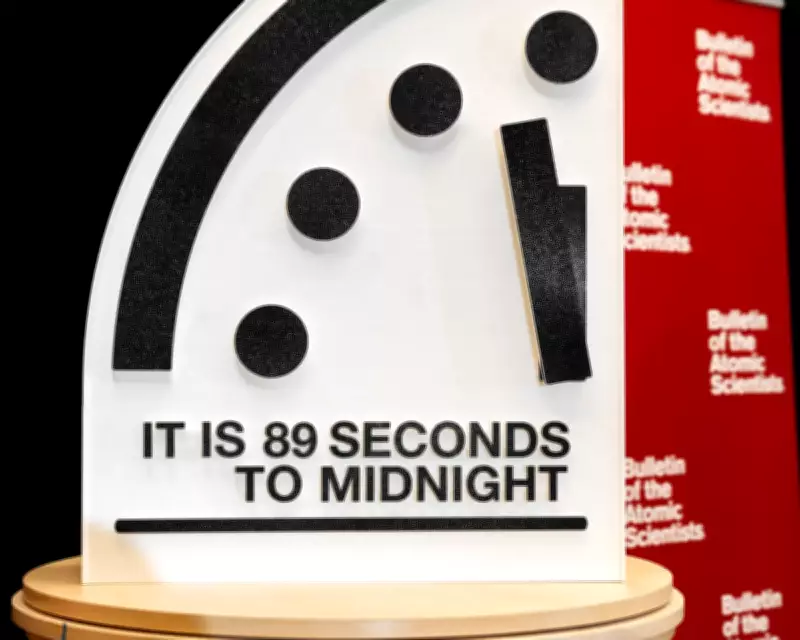
The spectre of nuclear conflict looms larger today than it has in many years, with experts sounding alarms over a rapidly escalating global threat. The Bulletin of Atomic Scientists has recently adjusted its iconic Doomsday Clock to a position alarmingly close to midnight, mirroring the perilous heights of the 1980s Cold War era. This symbolic move underscores a grim reality: the bomb is back, and with it, a surge in political tensions and the proliferation of nuclear capabilities to nations such as Israel, India, Pakistan, and North Korea.
The Collapse of Arms Control and Rising Dangers
With the expiration on 5 February of the New Start treaty, the last major arms control agreement between the United States and Russia, the world faces the prospect of an unconstrained and potentially catastrophic arms race. This treaty had served as a critical guardrail, limiting strategic nuclear weapons, but its lapse removes a key barrier to escalation. In the preceding months, Russian President Vladimir Putin extended an offer to voluntarily maintain the treaty's limits, inviting the US to follow suit, but the White House declined, opting instead to pursue negotiations for an entirely new agreement—a process that could span years.
A Modernisation That Masks Escalation
Current leaders in Washington are advancing what is euphemistically termed a "modernisation" programme, but in reality, it represents a vast enhancement of nuclear capabilities. This includes the development of a new fleet of land-based intercontinental ballistic missiles, updated strategic aircraft, and facilities to produce plutonium components for an estimated 80 new nuclear warheads annually, at a cost running into trillions of dollars. Such actions starkly contrast with the oft-repeated adage that "a nuclear war can never be won and should never be fought," betraying a disconnect between rhetoric and reality.
The Fallacy of Nuclear Deterrence
Nuclear deterrence, long touted as a pillar of peace, has proven to be an unreliable safeguard. It has not prevented major conflicts, such as Russia's war in Ukraine or US engagements in Iraq and Vietnam. Today, the number of armed conflicts worldwide is at an all-time high, undermining the credibility of nuclear weapons as a deterrent. Scholars like Mary Kaldor argue that genuine security can be achieved through non-nuclear means, emphasising the importance of global cooperation, conflict prevention, and diplomatic peacemaking.
The Human Cost and Global Impact
The potential consequences of nuclear war are staggering. Research indicates that a single large bomb detonated over a modern city could kill millions, with radioactive fallout causing widespread genetic damage. In a worst-case scenario, a nuclear exchange between the US and Russia could result in up to 5 billion fatalities, highlighting the indiscriminate and devastating nature of these weapons. This underscores the urgent need to move beyond strategies that rely on the threat of mass annihilation.
A Path Forward: Restraint and Renewed Activism
Despite the bleak outlook, there remains a window to prevent an accelerated arms race. The US could agree to maintain current weapons limits while pursuing negotiations, a step that Moscow has indicated it might still consider. Such mutual restraint could reduce the near-term threat of escalation and create political space for more substantive changes, including support for the UN treaty on the prohibition of nuclear weapons.
To build momentum for these measures, a renewed global peace movement is essential. History shows that arms limitation and disarmament have often been driven by citizen pressure and grassroots activism. In the 1980s, massive protests in Europe and the US played a pivotal role in curbing nuclear stockpiles. Today, a similar bottom-up effort is needed to challenge the status quo and advocate for a safer, nuclear-free world.
As political leaders grapple with these complex issues, the call for action grows louder. The expiration of the New Start treaty marks a critical juncture, one that demands immediate attention and collective effort to avert a future defined by nuclear peril.




