The New South Wales government is actively weighing a significant expansion of firearm permissions for a private Jewish security organisation in the wake of the Bondi Junction terror attack. Premier Chris Minns has confirmed his administration is considering allowing the Community Security Group (CSG) to deploy armed guards at public community events, a move that has sparked debate among policing and legal experts.
What is the Community Security Group?
The Community Security Group (CSG) is a security organisation operated through the NSW Jewish Board of Deputies. It describes itself as a mix of security professionals and trained volunteers. Its primary role is to monitor antisemitic threats, provide security for Jewish schools, synagogues, and events, and record incidents. The group currently assesses the threat level to the community as critical, the highest possible rating.
CSG holds a master license under NSW's Security Industry Act, allowing it to provide licensed security personnel. It already has permission for armed guards to protect approved classes of property, including Jewish schools and synagogues, provided staff have the appropriate Category H firearms license and wear recognisable uniforms.
The Premier's Proposal and Police Response
Premier Chris Minns first raised the possibility of expanding CSG's armed remit in a media interview on 16 December, just two days after the Bondi attack. He indicated discussions had already begun about extending permissions from fixed locations to armed personnel at Jewish community events.
Minns stated such a move would require a clear de-escalation protocol to ensure safety if police were to arrive at a scene where CSG guards were armed. By Monday 18 December, the Premier argued that arming CSG guards in public was a small price to pay for community safety and would act as an extreme deterrent.
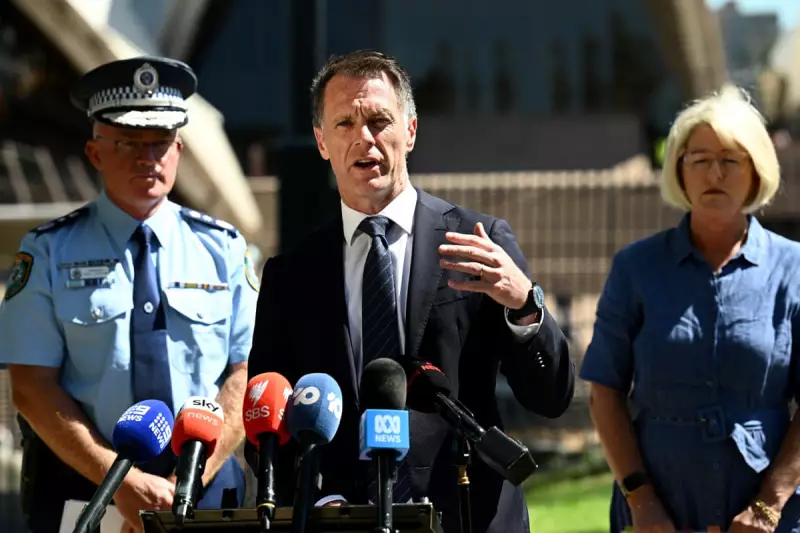
NSW Police Commissioner Mal Lanyon, speaking alongside the Premier, emphasised that no final decision had been made. He reiterated that police should be the primary form of protection for all communities but confirmed ongoing collaboration with CSG.
Expert Concerns and Alternative Solutions
Despite the government's considerations, several policing and legal authorities have expressed serious reservations. David Dixon, Emeritus Professor of Law at UNSW, labelled the potential move an extraordinary abdication of responsibility by the state, highlighting the significant practical problems of deploying armed private security for public order.
Dr Vince Hurley, a criminology lecturer and former NSW police officer, questioned whether armed CSG guards at a crowded event like the Chanukah by the Sea gathering would have improved safety, asking if they would have fired into a crowd.
An alternative model has been suggested by Professor Simon Bronitt from the University of Sydney. He proposed the government could use existing powers to co-opt volunteers from groups like CSG as special constables. This would give them the same powers, training, and oversight as police officers, but under the direct command of the Police Commissioner, a compromise he views as more acceptable.
The proposal remains under active review, with a state royal commission into the Bondi attack expected to influence the final outcome on community security protocols.