
Northern Israelis Defy Conflict, Seek Normalcy Amid Hezbollah Escalation
On a Thursday morning in Metula, Israel's northernmost town, residents gathered over coffee, united by a shared experience: the previous night had been "difficult." Sirens had blared for hours as Hezbollah, the Lebanon-based militant group backed by Iran, launched a barrage of approximately 200 rockets, missiles, and 20 drones targeting northern Israel. This attack, dubbed "Operation Chewed Wheat," marked a sharp escalation in the ongoing conflict, timed to coincide with Iranian missile salvos.
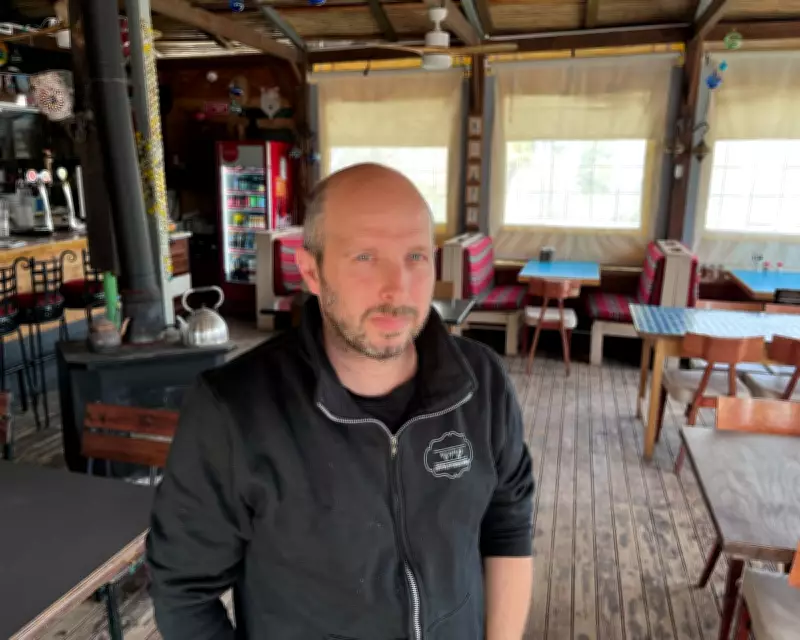
Despite the palpable tension, with warplanes roaring overhead and the distant thud of Israeli artillery, life in Metula displayed a fragile semblance of normality. Miry Menashe, 41, co-owner of the Bela cafe, kept her doors open, stating, "The people of Metula don't run away from rockets." She emphasized the importance of providing a sanctuary for residents and soldiers, offering a place to relax with a beer, coffee, or meal to "keep life going."
Resilience in the Face of Adversity
Shragan Shatil, a 77-year-old resident of 29 years, reflected on the cyclical nature of the violence. "Last night was tough. The last days have been the toughest. It was very bad. There is usually a break afterwards ... then in the evening it starts again ... Now we are drinking coffee in the sun," he said. Many in northern Israel, including tens of thousands evacuated after the Hamas raid in October 2023, share a desire for decisive action. Yaakov Selavan, deputy mayor of the Golan regional council, expressed a common sentiment: residents expect the government and military to "finish the job [with Hezbollah] once and for all," potentially advancing as far as the Litani River in Lebanon.
The conflict has taken a heavy toll, with at least 634 killed and 1,586 injured in Lebanon due to Israeli offensives, and nearly a million displaced. In Israel, 12 have been killed by Iranian missile strikes, with hundreds more injured. The economic impact is severe, particularly in regions reliant on tourism. Selavan noted, "The economy is frozen. We are dependent on tourism. It was just coming back before the war, even international tourism. Now that has gone." Israel's cabinet has approved increased defence spending, raising concerns about long-term economic stability.
Voices from the Frontline
Daniel Dorfman, 43, owner of the Ayuni restaurant in Metula, had just reopened his business before the recent escalation. He echoed official Israeli rhetoric, describing Iran as "the head of the octopus" and "the main cause of terrorism in the Middle East." Dorfman argued, "We have learned lessons over recent years and that is that we must finish the job. Hezbollah need to be disarmed. I don't know how. Clearly the Lebanese government don't have the power to do it."
In Kfar Szold, a border kibbutz near Metula, Ravit Rosenthal, a maths teacher and school principal, spent the night in a shelter and conducted Zoom meetings with 140 staff members. "There is a lot of fatigue, a lot of trauma ... but I believe in our army," she said, emphasizing the need for patience as the military works to eliminate the threat. Pnina Bornstein, head of the kibbutz, underscored the resilience required: "We believe we have to be here for our country. This is the border and we are the defence line for everybody. If you live here, you have to be prepared for life in a conflict zone."
Northern Israel, a mix of affluent kibbutzim and poorer towns like Kiryat Shmona, shows little political opposition to the conflict, despite its devastating effects. The region, historically a bastion of support for Prime Minister Benjamin Netanyahu's rightwing government, faces an uncertain future as Israel contemplates further escalation, including a potential ground invasion of Lebanon. As warplanes continue to patrol the skies, residents cling to hope for a lasting resolution, even as they brace for more difficult nights ahead.




