
Netanyahu's Iran Strategy: From Failed State to Regional Conflict
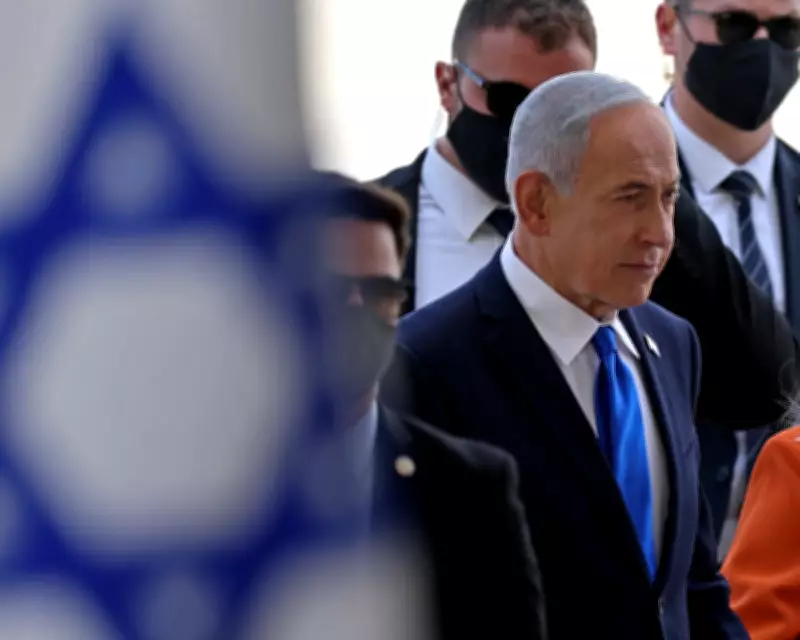
Prime Minister Benjamin Netanyahu arrived to receive Indian Prime Minister Narendra Modi near Tel Aviv on February 25, 2026, marking a diplomatic moment amidst escalating regional tensions. The chaos of a failed state in Iran would be a perfectly acceptable outcome for Netanyahu, according to analysis by Aluf Benn, editor-in-chief of Haaretz. Netanyahu's war on Iran is playing well domestically, but real safety for Israelis requires another leader altogether.
Rabin's Vision Versus Netanyahu's Approach
When Yitzhak Rabin became prime minister of Israel in 1992, he debated whether Iran or Iraq posed the greater threat. Rabin decided that Tehran, with its Islamist ideology, regional proxies, and nuclear ambitions, was the larger danger. His response was to negotiate land-for-peace deals with Israel's immediate neighbors—Palestinians, Jordan, Syria, and Lebanon—following the example of peace with Egypt. Rabin argued that a ring of normalization would strengthen Israeli security and counter radical Islam, believing there was urgency to conclude peace before Iran acquired nuclear weapons. He predicted in early 1993 that Tehran could cross the nuclear threshold within a decade.
Rabin was assassinated in 1995 before fulfilling his strategic design. Benjamin Netanyahu, who took power afterward, amplified Rabin's warning about Iran but flipped the conclusion. Opposing land-for-peace or a Palestinian state, Netanyahu argued that any area evacuated by Israel would become an Iranian-backed terrorist base. He insisted Israel must hold occupied territories in the West Bank, Gaza, the Golan Heights, and southern Lebanon as a "defensive wall."
Iran's Nuclear Ambitions and Regional Proxy Wars
Three decades later, Iran holds hundreds of kilograms of uranium enriched to near-weapons grade, potentially weeks away from a functional bomb. To Israeli policymakers, Iran's nuclear program has become like Samuel Beckett's Godot—always on the verge but never arriving. Netanyahu spent decades warning of the Iranian bomb, often mocked as exaggeration or "chickenshit" by critics, including an Obama administration official who doubted he would strike fortified facilities at Natanz and Fordo.
Even without nuclear weapons, Iran's Ayatollah Ali Khamenei promoted his mission to eliminate "the Zionist regime," surrounding Israel with a "ring of fire" through proxies like Hezbollah and Hamas. These groups turned southern Lebanon and Gaza into launching pads for attacks, as Netanyahu had warned. Despite rhetoric of annihilation, the balance of terror was convenient for both sides: Khamenei consolidated regional power, while Netanyahu avoided peace talks, managed conflict, and focused on building an autocracy in Israel.
Escalation and Regional Fallout
The seeming stability shattered on October 7, 2023, when Hamas invaded Israel without warning its "axis of resistance." Israel's counteroffensive, with American support, led to the destruction of Gaza, defeat of Hezbollah, the fall of Syria's Assad regime, bombing of Iran's nuclear facilities, and land-grabbing in the West Bank. Netanyahu, once called "chickenshit," became a trigger-happy warrior, presiding over territorial expansion in Gaza, Lebanon, Syria, and the West Bank.
On February 28, 2026, Netanyahu raised the stakes by harnessing U.S. President Donald Trump for a campaign to overthrow the Iranian government, starting with Khamenei's assassination after protests in Iran. The war is escalating into a wider regional conflict with global ramifications, supported tacitly by Gulf Arab countries and Europe. Israeli public opinion largely backs the attack on Iran, though some suspect Netanyahu's motives due to his corruption trial and re-election campaign. Trump faces opposition ahead of U.S. midterms, leading Netanyahu to fear a deal with Khamenei's successor that might resurrect Iran's regime with a limited nuclear program.
Long-Term Implications and the Need for Change
Israel would prefer a friendlier Iranian government but could accept a messy failed state like Iraq, Syria, or Libya. Netanyahu would use any outcome to justify land-grabbing and autocracy-building. However, as Rabin foresaw, Israel cannot rely forever on military power and American backing while ignoring conflicts with neighbors. The events of October 7, 2023, were a painful reminder that ignoring Palestinians risks another explosion. The lesson is clear: instead of crushing Palestinians and humiliating neighbors, Israel should use its strength to conclude the ring of peace Rabin envisioned—with recognized borders, Palestinian independence, and dignity for all. But to achieve this, Israel needs a new Rabin.




