The Unassuming Face of Modern Terrorism
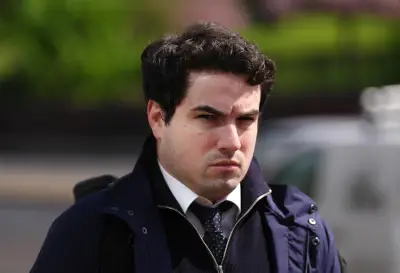
When Michail Chkhikvishvili appeared in a Brooklyn courtroom last week, he resembled an ordinary office IT technician rather than the Hollywood vision of a terrorist mastermind. With his close-cropped hair, black-rimmed glasses and clear-spoken manner, the 23-year-old Georgian neo-Nazi presented a stark contrast to the outlandish and appalling crimes he had planned.
Chkhikvishvili, who called himself "Commander Butcher", pleaded guilty to federal charges of soliciting bombings, school shootings and other acts of hate-motivated violence across the United States. His guilty plea could see him imprisoned for up to 18 years when he is sentenced in March.
A Disturbing Catalogue of Planned Violence
As leader of the aptly named Maniac Murder Cult, an international racist violent extremist group, Chkhikvishvili recruited members to commit violent acts, including plotting a mass casualty attack in New York City. His plans reached their most bizarre with a scheme developed in November 2023 to have individuals dress as Father Christmas and hand out poison-laced candy to racial minorities.
According to court documents, Chkhikvishvili directed an undercover FBI agent to target Jewish schools and Jewish children in Brooklyn with poison. He allegedly wanted the attack to be "a bigger action than Breivik", referencing Anders Behring Breivik, the Norwegian neo-Nazi who killed 77 people in 2011.
The government case revealed that Chkhikvishvili advised using "simple available stuff" to achieve maximum mayhem, specifically recommending using nails in bombs targeting public places. He distributed manuals about creating lethal poisons and gases, including a "Haters Handbook" that outlined strategies for carrying out mass violence, including school shootings and "ethnic cleansing".
The Real-World Consequences of Online Extremism
This manual, together with what prosecutors term "solicitations of violence", is said to have inspired a livestreamed shooting at Antioch High School in Nashville, Tennessee, in January that left one student dead and another injured.
Prosecutors also revealed that Chkhikvishvili solicited Nicholas Welker, also known as "King of Wrath", the leader of the far-right Feuerkrieg Division. Welker pleaded guilty last year to conspiring to make death threats against a Brooklyn-based journalist.
According to court documents, Chkhikvishvili, who travelled to Brooklyn, New York, in 2022, instructed his followers to record their attacks. He told Welker to explain to potential members "what actions should be recorded in good quality; Beating, Arson, Killing... a Brutal Beating, Not Regular."
Luke Baumgartner, research fellow at the Program on Extremism at George Washington University, explains that groups like Maniac Murder Cult represent a nihilist violent extremist category of terrorist threats that US law enforcement is now paying increased attention to. "They look to inspire people to carry out their own individual acts of terror or violence designed to desensitize others to the thought of violence," Baumgartner says.
The Maniac Murder Cult finds its ideological underpinnings in Satanism and Nazism, according to researchers at the Combating Terrorism Center at the United States Military Academy in West Point, New York. A report from the centre noted the group's unique strain of militant accelerationist neo-fascist ideology because it relied on individuals, as opposed to groups, to achieve its goals.
After the court accepted Chkhikvishvili's guilty plea, Attorney General Pam Bondi stated that "violent, nihilistic, racist groups" like the Maniac Murder Cult "are an ongoing threat to the American people - our vigilance will not waver as we protect our citizens."
Gerard Filitti of the Lawfare Project emphasised that the group's antisemitic intent "wasn't just another hate crime - this was a terrorist plot targeting Jewish children." He added that "a guilty plea is only the beginning. We need to dismantle the extremist networks that incubate this ideology."
In a surprising turn, Chkhikvishvili expressed regret in court, telling the judge "I'm going to do better with my life" and explaining that since his arrest in Moldova in May, he had been working out and attending church while in custody at the Metropolitan Detention Center in Brooklyn. He spoke about his depression and anxiety as a teenager and apologised to the communities he had targeted.
This case emerges as authorities investigate a series of attacks in the US, raising pressing questions about online radicalisation and how it conforms to simplistic political definitions. In 2021, the Office for the Director of National Intelligence released an assessment that the "most lethal domestic violent extremist threats" to the US were racially and ethnically motivated violent extremists.
Baumgartner notes that such groups are specifically targeting younger people who may be more susceptible to extremist ideology. "They don't have the development to recognise what they're being exposed to as problematic," he says.
However, Baumgartner suggests the key motivation for many involved may simply be notoriety and the perils of the internet age that lead some young people - nearly always young men - down rabbit holes of isolation and extremism. "They're irony-poisoned internet guys trading in memes and trying to be offensive to get a reaction," he observes, adding that "pretty much everyone can agree that putting these types of people on the stand and behind bars is a good thing regardless of political spectrum."