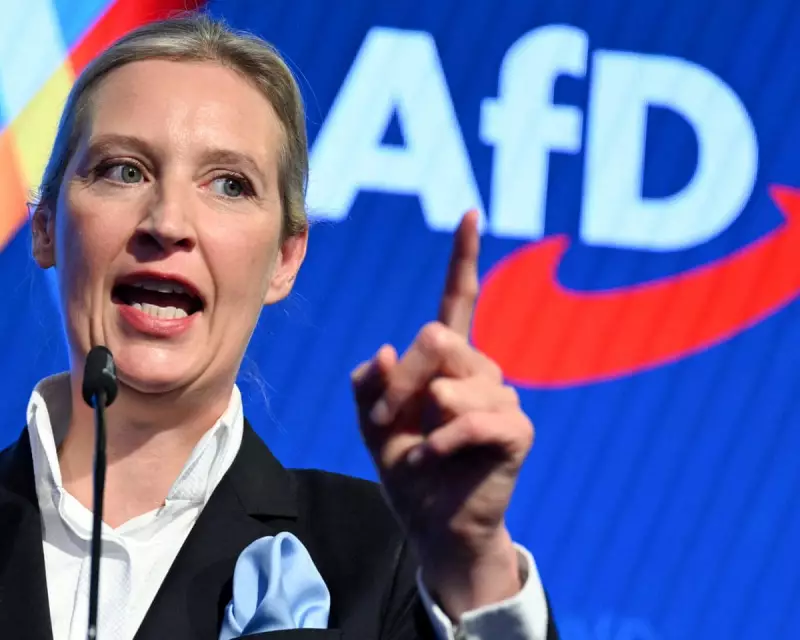
In a significant policy reversal, the prestigious Munich Security Conference (MSC) has extended invitations to lawmakers from Germany's far-right Alternative für Deutschland (AfD) party for its 2026 gathering. The move comes after the party was excluded from the high-profile defence and security forum for the past two years.
A reversal prompted by US criticism
The decision to invite AfD members of parliament was confirmed by conference organisers. It follows scathing public criticism from US Vice-President JD Vance at this year's event in February. Vance used his platform to lambast the AfD's exclusion, accusing Germany of stifling free speech by sidelining the anti-immigration, pro-Kremlin party.
A spokesperson for the MSC declined to elaborate on the reasons for the new approach. They stated that the private foundation which runs the event is "under no obligation to anyone to issue invitations." The spokesperson explained that it was decided to invite MPs from all parties represented in the Bundestag, particularly those serving on the foreign affairs and defence committees, a principle they claim applied before 2024.
Approximately 10 AfD MPs sit on the foreign affairs committee, with a further nine on the defence committee. When asked if Vance's remarks influenced the decision, the spokesperson maintained that "the MSC decides independently on invitations to its events."
Controversial meetings and security concerns
JD Vance had already raised eyebrows during the 2024 conference by meeting with AfD co-leader Alice Weidel on the sidelines, just days before Germany's general election. He notably declined an offer to meet with then-Chancellor Olaf Scholz. Weidel has stated she has not yet received an invitation for 2026, though organisers note the guest list remains incomplete.
The previous ban on the AfD was instituted by the conference's former chair, Christoph Heusgen, a longtime aide to ex-Chancellor Angela Merkel. The MSC is now led on an interim basis by Wolfgang Ischinger, a former German ambassador, while the newly appointed chair, ex-NATO chief Jens Stoltenberg, finishes his term as Norway's finance minister.
The invitation has sparked concern among some German politicians. Alexander Hoffmann, head of the Christian Social Union parliamentary group, warned that inviting the AfD posed a security risk, citing the party's officials' close contacts with Russia and China. "Information also flows there and that's why it would be a security risk," he told the dpa news agency.
Analysts debate the implications
Political observers are divided on the motivation and impact of the MSC's U-turn. Kai Arzheimer, a political scientist at the University of Mainz, suggested the move might be an attempt to avoid further intervention by the US government, or a step towards normalising the party in anticipation of its potential participation in government.
Political consultant Johannes Hillje argued that without an official explanation, the decision "looks like a capitulation to JD Vance." He emphasised that the AfD is more extreme than other Western right-wing populist parties and suggested that if its MPs attend the main conference, they should be barred from sensitive side events where they might access confidential information.
However, Thorsten Benner of the Global Public Policy Institute noted that the MSC routinely hosts a large Chinese delegation and may not see a security threat in including AfD MPs in the main plenary. He suggested the forum's leadership calculated it was smarter not to give Vance and the AfD the opportunity to portray the party as victims of exclusion.
The Guardian understands that the invitation to AfD MPs is for the main conference and not other confidential formats hosted by the MSC.
A heated German political context
The MSC's about-face occurs amid an intense national debate in Germany on how to contain the rising influence of the AfD. The party secured more than one in five votes in the last federal election, becoming the leading opposition force in the Bundestag.
While a "firewall" has so far prevented mainstream parties from cooperating with the AfD at federal or state level, the party leads opinion polls in two regions holding elections in 2026. In a significant development, Germany's domestic intelligence service classified the AfD as a "confirmed right-wing extremist" force in May, though this designation remains under official review.