
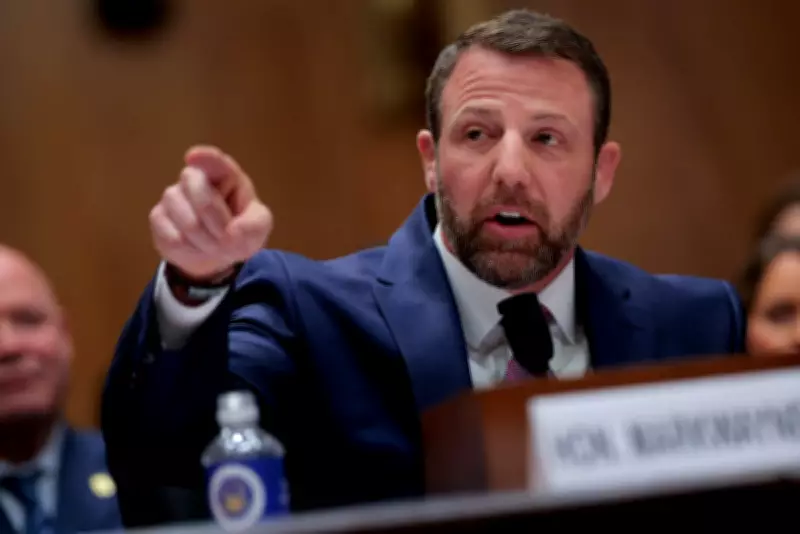
Senate Committee Advances Mullin's Homeland Security Nomination Amid Controversy
A crucial Senate committee has taken a significant step forward in the confirmation process for Markwayne Mullin's nomination to lead the Department of Homeland Security. The vote occurred on Thursday, following a contentious confirmation hearing where the Republican senator faced intense scrutiny regarding his alignment with Donald Trump's immigration enforcement agenda and past incidents involving confrontational behavior.
Near Party-Line Vote Reflects Deep Political Divisions
The Senate Committee on Homeland Security and Governmental Affairs advanced Mullin's nomination with a vote that largely followed party lines. Nearly all eight Republican members supported moving the nomination forward, with the notable exception of committee chair Rand Paul from Kentucky. Paul had previously criticized Mullin for comments related to a 2017 assault on Paul by a neighbor and a more recent 2023 incident where Mullin appeared ready to physically confront a witness during a committee hearing.
On the Democratic side, John Fetterman of Pennsylvania stood alone in supporting Mullin's nomination, while his six Democratic colleagues uniformly opposed the advancement. This voting pattern underscores the deep political divisions surrounding Mullin's potential leadership of the Department of Homeland Security.
Democrats Express Serious Concerns About Nominee's Qualifications
Gary Peters, the committee's top Democrat from Michigan, voiced substantial reservations about Mullin's suitability for the position. "The Department of Homeland Security needs a leader who can restore the trust DHS has broken with the American people, and with this committee," Peters stated before the vote. "At his confirmation hearing yesterday, we saw that, unfortunately, Senator Mullin is not up to that challenge."
Peters specifically criticized Mullin for what he characterized as a lack of transparency during the confirmation process and expressed particular concern about "Senator Mullin's willingness to condone political violence, and the message that that sends across DHS." These concerns were amplified by references to a Senate ethics committee report that found Mullin had "advocated physical violence as a means to resolve political disagreement."
Mullin's Hearing Performance and Policy Positions
During Wednesday's confirmation hearing, Democrats extensively questioned Mullin about his support for Trump administration immigration policies. The first-term senator from Oklahoma, who has publicly endorsed Trump's hardline approach to immigration enforcement, adopted a more diplomatic tone than in previous public appearances. He expressed regret for critical comments he had made about Alex Pretti, one of two U.S. citizens killed by immigration agents in Minneapolis during recent border surge events.
Mullin signaled his intention to maintain a lower public profile for DHS operations compared to outgoing secretary Kristi Noem, but otherwise demonstrated limited divergence from presidential policies. He declined to commit to keeping immigration agents away from polling stations during upcoming elections and avoided answering specific questions about immigration arrests by claiming unfamiliarity with those cases.
One notable commitment Mullin did make involved warrant procedures for immigration enforcement. He stated he would ensure immigration agents obtain judicial warrants before entering homes or businesses, addressing concerns that Immigration and Customs Enforcement officers have been instructed they could conduct searches with only administrative warrants signed by agency supervisors rather than judges.
Path Forward to Full Senate Consideration
With the committee's advancement of his nomination, Mullin's confirmation now moves to consideration by the full Senate. Republicans appear to have sufficient numbers to secure his confirmation, with a vote expected in the coming days. This development represents a significant milestone in the process to install new leadership at the Department of Homeland Security, an agency that plays a crucial role in immigration enforcement, border security, and counterterrorism efforts across the United States.
The nomination process has highlighted ongoing tensions between Republican support for Trump-era immigration policies and Democratic concerns about enforcement methods and the character of potential agency leadership. As the full Senate prepares to vote, the debate over Mullin's nomination continues to reflect broader national divisions regarding immigration policy and homeland security priorities.




