
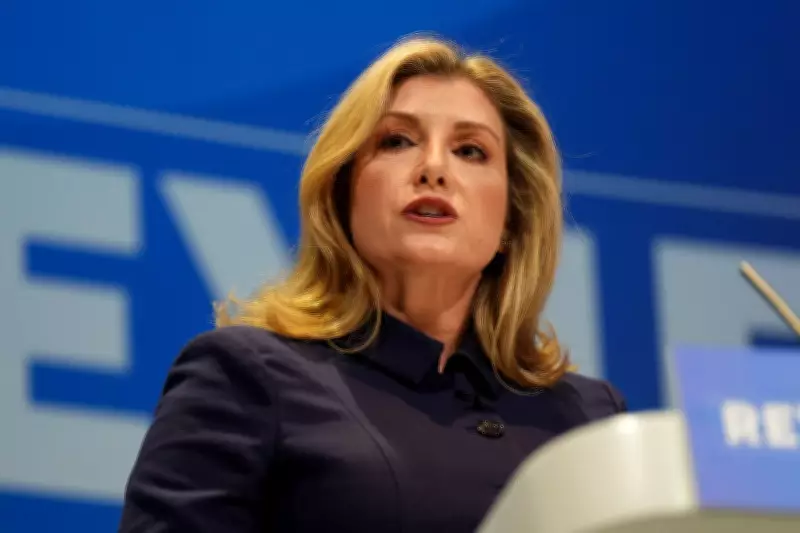
Penny Mordaunt Issues Stark Warning on Defence Funding Crisis
Former defence secretary Penny Mordaunt has delivered a chilling assessment of the UK's defence priorities, suggesting that only the death of serving British soldiers would compel the government to "wake up" and allocate additional funding to military spending. In an exclusive interview with City AM, the senior Conservative figure launched a scathing critique of Prime Minister Keir Starmer's approach to national security, arguing that current spending plans are dangerously inadequate given escalating global threats.
Defence Spending Plans 'Out of Kilter' with Reality
Mordaunt asserted that the government's defence spending strategy is "out of kilter" with the immediate dangers facing the nation, specifically citing the ongoing Iran war and persistent cyber attacks from Chinese state-backed hackers. "If [Starmer]'s not going to do that in these circumstances where our armed forces personnel are in harm's way, where one of our sovereign bases has been under attack, and we've been very limited in what we can do to defend ourselves, what is it going to take?" she questioned during the interview.
The former defence secretary painted a grim picture of what might be required to spur government action: "I think that it will only be, on all current evidence, large numbers of our armed forces, all British citizens, being killed. I do think that is the only thing that is going to wake up this government and get the Prime Minister to deliver on what he said he's going to do."
Funding Targets and Political Challenges
Current defence spending stands at approximately 2.3 percent of GDP, with plans to increase this to 3.5 percent by 2035. However, Sir Keir Starmer has emphasized the need to identify funding sources before committing to specific plans, stating the government must know "where the money's coming from." Mordaunt has urgently called for the publication of the long-awaited Defence Investment Plan, which would outline procurement and military project funding over the next decade.
The financial challenge is substantial. The Office for Budget Responsibility estimates that reaching the NATO target of 3.5 percent would require an additional £40 billion in today's money. Both the OBR and NATO have indicated that UK defence expenditure is lagging behind planned increases, creating a significant capability gap.
Public Opinion and Political History
Despite the funding challenges, public support for increased defence spending appears strong. A recent poll of 1,000 British citizens revealed that 66 percent believe defence spending should be higher. When asked how this should be funded, respondents suggested various approaches:
- 26 percent supported cutting overseas aid spending
- 20 percent favored increasing taxes on businesses
- 14 percent would reduce welfare benefits
- Only 7 percent supported raising individual taxes
Mordaunt argued that the British public has become more "situationally aware" due to recent conflicts and would support prioritizing defence spending. "[The public is] prepared to give the government full encourage to move everything aside and actually really double down on defence," she stated.
Historical Context and Internal Government Dynamics
Mordaunt's criticism comes with historical perspective. During her tenure in the previous Conservative government, defence spending fell to just below two percent of GDP in 2018. While defending Tory efforts to "reshape what was a complete mess of programs that didn't make any sense," she acknowledged insufficient progress on strengthening cyber security, energy security, and critical infrastructure.
The former defence secretary also revealed that during the 2019 leadership contest following Theresa May's resignation, she supported Jeremy Hunt over Boris Johnson based on Hunt's promise to raise defence spending to three percent. However, she suggested Hunt was unable to fulfill this commitment after becoming Chancellor in 2019, facing resistance from Rishi Sunak regarding substantial defence investment increases.
Current Government Dynamics and Future Implications
Last week, Prime Minister Starmer appeared to intervene in funding disputes between the Treasury and Ministry of Defence, though details remain unclear. Mordaunt expressed frustration with the government's continued hesitation: "Even in a crisis like this, we still don't see the government coming forward and saying, 'right, we're going to turn on the taps and modernize.'"
The political challenge for Starmer is multifaceted. He must balance defence needs against competing priorities in health, welfare, and education, while avoiding either deep spending cuts in these areas or substantial tax increases that could prove politically unpopular. Mordaunt's stark warning highlights the growing tension between national security requirements and fiscal constraints, suggesting that only catastrophic events might force the government's hand on defence funding decisions.




