France to Expand Nuclear Arsenal for First Time in 34 Years
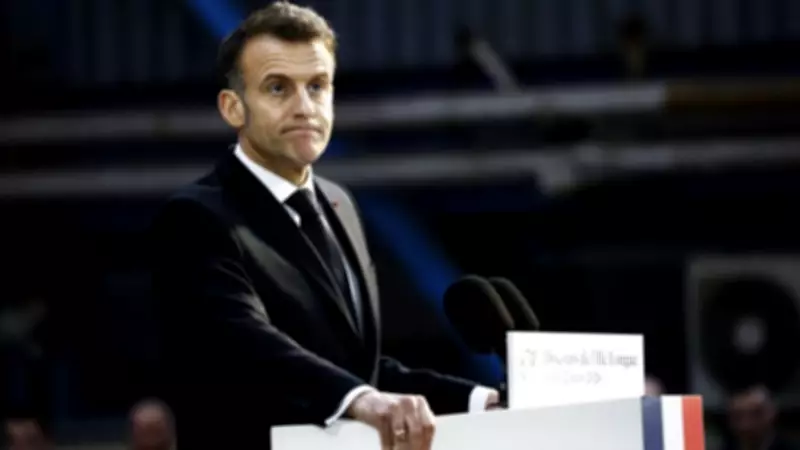
French President Emmanuel Macron has declared a significant expansion of France's nuclear arsenal, marking the first increase in warhead numbers since 1992. In a speech delivered at the Ile Longue naval base in northwestern France, Macron asserted that "to be free, one needs to be feared" on the global stage, framing the move as essential for European independence amid rising geopolitical tensions.
New Strategic Posture and Allied Cooperation
The announcement includes a groundbreaking shift in nuclear policy: France will permit the temporary deployment of its nuclear-armed aircraft to allied nations for the first time in history. Macron emphasized that while elements of strategic air forces could be stationed with partners, ultimate decision-making authority would remain exclusively with France. This development comes as Britain, Germany, Poland, the Netherlands, Belgium, Greece, Sweden, and Denmark engage in ongoing discussions about collective deterrence strategies.
Macron revealed that France would welcome European partners to participate in nuclear deterrence exercises, a move that has garnered support across the continent. In a joint statement with German Chancellor Friedrich Merz, the leaders committed to deepening integration in deterrence measures starting this year. This collaboration will include German conventional forces participating in French nuclear exercises and joint visits to strategic military sites.
Regional Reactions and International Criticism
Polish Prime Minister Donald Tusk responded positively, stating on social media that "we are arming up together with our friends so that our enemies will never dare to attack us." Similarly, Dutch Defence Minister Dilan Yesilgoz-Zegerius and Foreign Minister Tom Berendsen clarified in a letter to parliament that their strategic talks with France on nuclear deterrence serve as a supplement to, not a replacement for, NATO's existing collective defence capabilities.
However, the announcement has drawn sharp condemnation from disarmament advocates. The International Campaign to Abolish Nuclear Weapons, recipient of the 2017 Nobel Peace Prize, denounced Macron's decision as "a direct threat to the peace and security of the region, and the world." Executive Director Melissa Parke criticized the move, highlighting that France already allocated $6 billion to nuclear weapons in 2024 and warning that this expansion could trigger an unaffordable nuclear arms race.
Arsenal Details and Strategic Context
While Macron confirmed the increase in warheads, he did not specify the exact number to be added to France's current stockpile, which remains below 300. The President justified the expansion by stating his responsibility to ensure France's deterrence maintains "its assured destructive power," capable of inflicting irreversible damage on any adversary. He explicitly ruled out the possibility of German Air Force planes carrying French nuclear bombs, an idea previously suggested by Chancellor Merz.
This strategic shift occurs against a backdrop of growing European uncertainty about American security commitments following Donald Trump's return to the White House. In response, France and Britain adopted a joint declaration in July allowing for coordination between their independent nuclear forces. Macron's speech, planned before recent conflicts in Iran, underscores France's position as the European Union's sole nuclear power post-Brexit and reflects broader efforts to bolster continental security architecture through enhanced military cooperation.