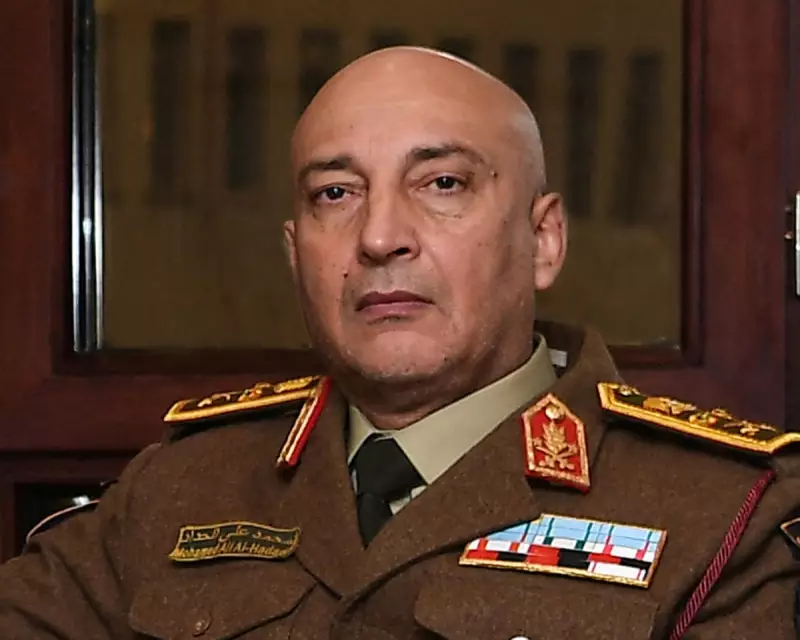
The chief of staff of the Libyan army, General Mohammed Ali Ahmed al-Haddad, has been killed alongside four others in a plane crash shortly after departing from Turkey's capital, Ankara.
Details of the Fatal Flight
The Libyan Prime Minister, Abdul Hamid Dbeibah, confirmed the tragic news on Tuesday evening. He stated that General al-Haddad and his delegation were returning from an official trip when their aircraft went down. The prime minister described the loss as "grave" and "a great loss for the nation, for the military institution, and for all the people."
Turkish Interior Minister Ali Yerlikaya provided a timeline on social media platform X. He reported that the Dassault Falcon 50-type private jet took off from Ankara's Esenboğa airport at 17:10 GMT, bound for Tripoli. Radio contact was lost at 17:52 GMT. Authorities later located the wreckage near Kesikkavak village in Ankara's Haymana district.
Minister Yerlikaya added that the jet had issued a request for an emergency landing over Haymana, but no further contact was established. The cause of the crash remains under investigation.
Victims and Official Visit
Prime Minister Dbeibah named the other victims on board the flight. They included:
- The commander of Libya's ground forces.
- The director of the military manufacturing authority.
- An adviser to the chief of staff.
- A photographer from the chief of staff's office.
The crash occurred following an official visit where General al-Haddad met with Turkey's Defence Minister, Yasar Güler, and the chief of the Turkish general staff, Selçuk Bayraktaroğlu. The Turkish defence ministry had announced the meetings earlier, highlighting ongoing military cooperation.
Geopolitical Context and Turkey's Role
This incident comes at a sensitive time in Turkey-Libya relations. Just one day before the crash, Turkey's parliament voted to extend the mandate for its military personnel in Libya by another two years.
Turkey, a Nato member, has been a key supporter of Libya's Tripoli-based Government of National Unity, which is recognised internationally. Its involvement includes:
- Sending military personnel for training and support in 2020.
- Signing a controversial maritime boundary accord with Libya, disputed by Egypt and Greece.
- Agreeing to a preliminary energy exploration deal in 2022, also opposed by regional neighbours.
Recently, Ankara has pursued a "One Libya" policy, increasing diplomatic contacts with factions in eastern Libya as well, signalling a potential broadening of its engagement.
The loss of General al-Haddad represents a significant blow to Libya's internationally recognised government and its military structure, amid the country's complex and ongoing political fragmentation.