War Robs Lebanese of Final Goodbyes, Forcing Temporary Burials
In Lebanon, the dead are traditionally granted one last journey through their hometowns, carried aloft by loved ones before being laid to rest in ancestral soil. However, the escalating conflict in southern Lebanon has brutally disrupted these sacred rites, compelling families to bury their dead in temporary mass graves far from home.
Traditional Rites Abandoned Amid Invasion
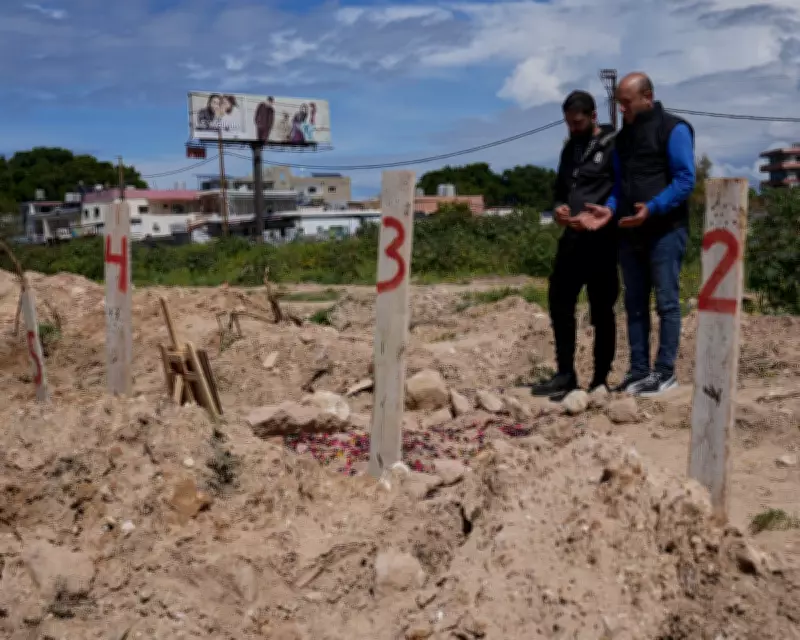
As Israel expands its ground invasion into southern Lebanon, families have been forced to abandon centuries-old funeral customs. Instead of solemn processions through familiar streets, the deceased are now interred in hastily dug ditches in cities like Tyre, located farther north. These temporary graves are marked only by simple wooden boards with numbers spray-painted in red, a stark departure from the personalized epitaphs of peacetime.
Rabih Koubaissi, who has remained in Tyre to oversee burials despite Israeli evacuation orders and airstrikes, explains the profound emotional toll. "It's very difficult. Families are being forced to bury their loved ones twice," he says, highlighting the pain of this unprecedented situation.
Islamic Jurisprudence Adapts to War's Harsh Realities
In Islam, bodies are typically washed, wrapped in a white shroud, and placed directly into the ground without a casket, with exhumation strongly discouraged. However, the brutality of war has necessitated adaptations. Koubaissi notes that Islamic jurisprudence includes a technicality called wadiaa, meaning "deposit," which allows for burial in a casket during exceptional circumstances like conflict. This permits the casket—not the body—to be exhumed later for reburial.
"A Muslim can be buried in any Muslim cemetery. But people have emotional attachment – they want their loved ones buried in their ancestral land. It reflects belonging, heritage and presence," Koubaissi emphasizes, underscoring the deep cultural significance of final resting places.
War's Brutality Disrupts Every Step of Burial Process
The conflict has made even basic burial procedures impossible at times. Koubaissi recounts harrowing scenes: "Sometimes we just receive pieces of bodies. In those cases, we just collect what we can, place them in a shroud and a body bag, and then put them in the coffin." The inability to properly wash and prepare the dead adds another layer of trauma for grieving families.
Hecham Reda, a medic from the border village of Aita al-Chaab, tearfully remembers his friend Hadi, killed in a swift, brutal strike. "Hadi was always with us, putting out fires, carrying the martyrs. In this war, he didn't have time," Reda says, expressing fears that he may never get to bury his friend in their homeland.
Fears of Indefinite Occupation and Ruined Cemeteries
Statements from Israeli officials about potentially occupying the area south of the Litani River indefinitely have sparked fears that reburial in ancestral homes could be delayed for months or even years. Even if Israeli forces withdraw, the prospect of returning to devastated villages looms large.
After the 13-month war between Hezbollah and Israel ended in November 2024, residents of Dhayra rushed to rebury two villagers temporarily interred in Tyre. They found their village graveyard destroyed by Israeli bulldozers and the local mosque in ruins, forcing them to use an alternative burial site.
Temporary Graves See Few Visitors as Families Flee
Most families have been compelled to leave Tyre as airstrikes intensify, leaving the temporary graves largely unattended. A young couple who remained in the city recently visited one of the sites, tending to flowers at the graves of two young men from Al-Qlailah—the only graves adorned with photographs of the departed.
As Koubaissi overlooks the rows of temporary graves, airstrikes thud in the distance. He no longer flinches at the sound. "The hardest part is when families ask you how their loved ones looked," he confesses. "They cannot see them, but I have seen them. You can't lie to them, but you can't tell the truth either. So you try to comfort them."
Reflecting on the cyclical nature of conflict, he adds, "It's a very heavy feeling. We hadn't even recovered from the last war before entering this one." The temporary graves stand as somber symbols of a war that has stolen not only lives but also the dignity of final farewells.