
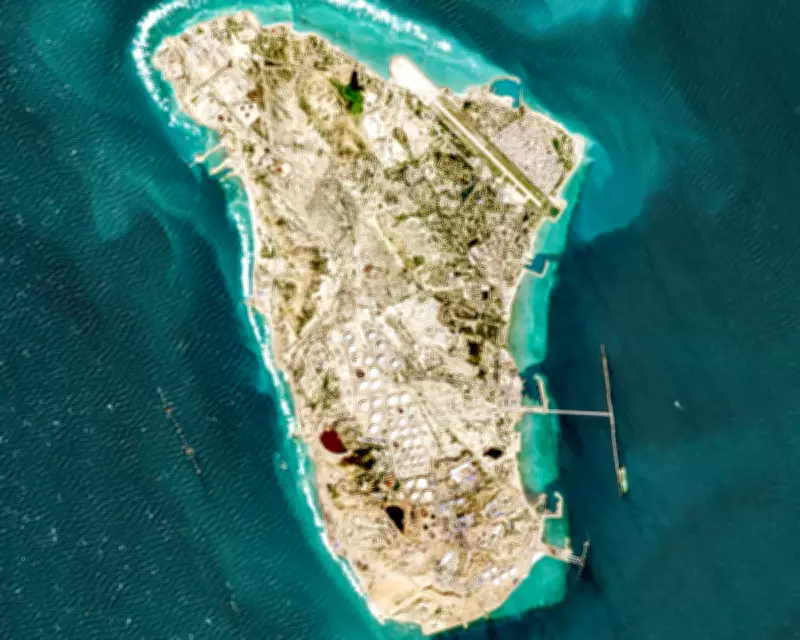
Why Iran's Critical Kharg Island Oil Terminal Stays Unharmed Amid US-Israel Strikes
Kharg Island, a vital hub responsible for 90% of Iran's oil exports, has surprisingly avoided destruction throughout the ongoing US-Israel bombing campaign. This strategic coral island in the Persian Gulf remains a focal point of economic sensitivity, as experts caution that any attack could trigger a sustained surge in already elevated global oil prices.
The High Stakes of Targeting Iran's Oil Lifeline
Neil Quilliam from Chatham House warns that an assault on Kharg Island could propel oil prices from $120 to $150 per barrel. "It's too vital for global energy markets," he emphasizes, noting that such an action would effectively halt Iran's daily crude exports entirely. The interconnected nature of global markets means this disruption would reverberate worldwide, especially with the Strait of Hormuz already closed due to fears of Iranian retaliation, keeping oil prices nearly $20 higher per barrel.
Despite extensive US strikes on 5,000 targets in Iran, the oil infrastructure, including Kharg, has been spared. Israel's air force did target two refineries and depots recently, causing dramatic black smoke over Tehran, but no attacks have followed. Kharg Island, established by Amoco and seized in 1979, features deep-water access ideal for large tankers, with satellite images showing extensive loading jetties.
Economic and Political Ramifications of an Attack
Kharg typically processes 1.3 to 1.6 million barrels of oil daily, though Iran ramped this up to 3 million barrels in anticipation of attacks, according to JP Morgan. An additional 18 million barrels are stored as backup. Michael Rubin, a former Pentagon adviser, argues that crippling Kharg could economically destabilize Iran by cutting off oil revenue. "If they can't sell their own oil, they can't make payroll," he states.
However, Lynette Nusbacher, a former British army intelligence officer, warns that destroying Kharg risks causing an "economy-shaping increase in oil price" that wouldn't drop quickly. The complex infrastructure could take years to repair, and such an attack might abandon any pretense of fostering a better future for Iran by depriving a successor regime of crucial income.
Challenges of Seizing or Bombing the Island
Media reports hint at White House interest in seizing Kharg, but experts doubt its feasibility. A seizure would require a large, sustained military operation, potentially leading to a standoff where Iran can't export and the US can't produce oil, sending markets into a tailspin. Quilliam notes this could be self-defeating, as it separates Iran's production from export capabilities.
Most of Iran's oil from Kharg goes to China, but a permanent supply loss would impact global prices, compounded by 3.5 million barrels daily offline from Iraq due to Hormuz closures. The strategic decision to avoid Kharg reflects broader concerns about escalating conflicts and economic fallout in an already volatile region.




