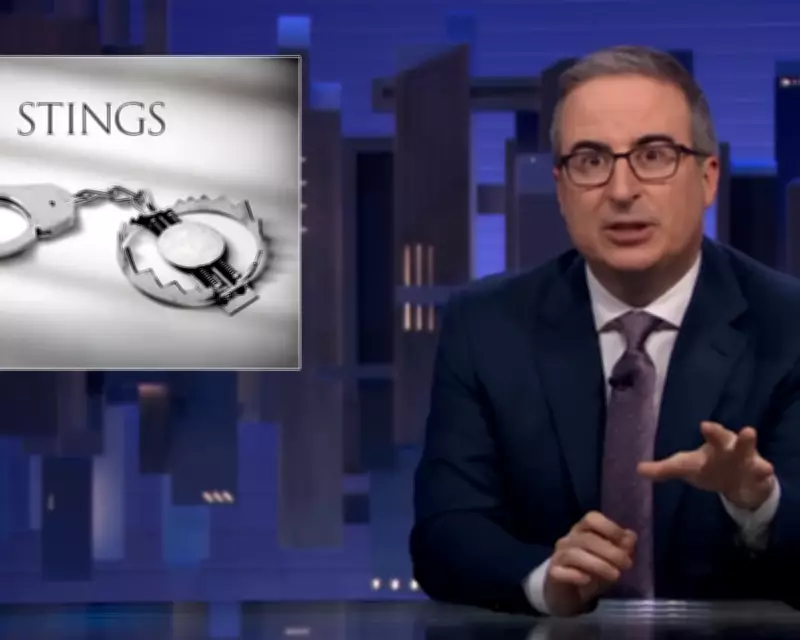
John Oliver Takes Aim at Police Stings in Scathing Critique
In a recent episode of his HBO show Last Week Tonight, comedian and host John Oliver launched a sharp critique of police stings, asserting that these operations "might actually be doing more harm than good." Oliver delved into the history and impact of stings, which have become a staple of law enforcement over the past four decades, designed to combat crimes such as drug dealing, tax fraud, and prostitution.
The Questionable Rise of Police Stings
Oliver explained that police stings gained momentum in the 1970s, shifting law enforcement from "reacting to crime to trying to prevent it." This change was largely driven by Supreme Court rulings that restricted coercion, leading police to adopt deception as a primary tactic. The appeal was clear: catching individuals on tape facilitated straightforward prosecutions. However, Oliver highlighted that legal restrictions on these stings have been minimal, allowing for nearly limitless deception.
He cited examples like predator stings, where law enforcement contacts adult men on dating sites to fabricate crimes that would not otherwise exist. "While the crimes in these operations can be made up, the punishments can be very real," Oliver warned. Similarly, stash house stings involve undercover agents recruiting people to rob fictitious drug-filled houses, often resulting in harsh sentences due to mandatory minimum laws.
High Bar for Entrapment and Targeting Vulnerable Communities
Despite many stings sounding like entrapment, Oliver noted that the legal bar for proving entrapment is incredibly high. Courts often argue that individuals are predisposed to commit the crimes, making convictions easier. He pointed out that these operations frequently target low-income communities, minorities, and people with mental illnesses or disabilities, luring them with financial rewards.
Oliver also addressed the use of confidential informants, "people they convince to go undercover on their behalf," which can pressure untrained civilians to fabricate information. This has led to dangerous outcomes, including assaults and murders, yet the full extent remains hidden due to limited disclosure.
Counter-Terrorism Stings and Broader Implications
In the aftermath of 9/11, counter-terrorism stings targeted Muslim communities, achieving high conviction rates but often lacking genuine terrorism connections. Oliver concluded that police stings have created a legacy of fake crimes from manufactured criminals, resulting in severe real-world punishments. He criticized them as a tool for police to rack up arrests and create an illusion of addressing crime, rather than effective law enforcement.
"As it stands, police seem utterly addicted to stings," Oliver said. "Making up imaginary crimes and arresting people for them isn't law enforcement, it is theatre." His analysis calls for a reevaluation of these tactics, emphasizing their potential harm over any perceived benefits.