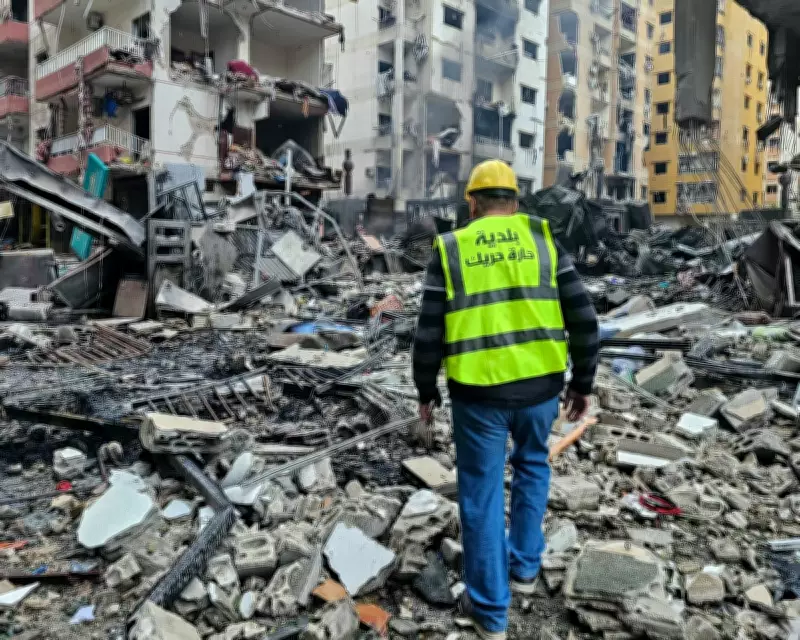
Israel's Expanded Lebanon Ground Campaign Intensifies Occupation Concerns
Israel's declaration on Monday of a ground campaign expansion into new areas of southern Lebanon is fueling significant fears of a prolonged occupation among hundreds of thousands of displaced Lebanese civilians. The announcement has triggered alarm among international observers and local residents who recall Israel's previous occupation of southern Lebanon from 1982 to 2000.
Defense Minister's Statement Raises Alarm
Israeli Defense Minister Israel Katz issued a statement that drew direct comparisons with military operations in Gaza, warning that displaced Lebanese would not be permitted to return to their homes until Israeli border security was guaranteed. "Hundreds of thousands of Shi'ite residents of southern Lebanon who have evacuated or are evacuating their homes in southern Lebanon and Beirut will not return to areas south of the Litani line until the safety of northern residents is ensured," Katz declared.
He further stated that Prime Minister Benjamin Netanyahu had jointly instructed the Israel Defense Forces to "destroy the terror infrastructure in the contact villages near the border in Lebanon, just as was done against Hamas in Rafah, Beit Hanoun and the terror tunnels in Gaza."
Escalating Conflict and Humanitarian Crisis
The current conflict began when Hezbollah launched rocket attacks against Israel on March 2, prompting an extensive Israeli military campaign across Lebanon. This escalation has already surpassed the parameters of the previous 13-month Israel-Hezbollah war of 2023-24, with reports indicating more than 800 fatalities and approximately 1 million people displaced from wide areas of the country.
Ramzi Kaiss, a Lebanon researcher for Human Rights Watch, expressed grave concern about Katz's statement, noting that "preventing civilians from returning to their homes in an area that is nearly 10% of Lebanon's territory, until some vague 'safety' standard is secured, would be unlawful and further raises the risk of forced displacement, which would be a war crime."
Historical Occupation Fears Resurface
For residents of villages south of the Litani River, the defense minister's remarks have revived traumatic memories of Israel's previous occupation. Abbas Awadeh, a displaced member of the Naqoura municipality, voiced widespread apprehension: "God forbid we return to the days of the previous border-strip occupation. We're afraid of that, honestly. It took us years before we were able to return to Naqoura. To return to that would be very difficult."
Virtually all residents have fled Naqoura, a beach resort town on the Lebanese-Israeli border, following Israeli military displacement orders issued on March 4. The IDF had instructed all residents south of the Litani to move north temporarily before conducting strikes on what it identified as Hezbollah targets, subsequently issuing two additional sweeping displacement orders in different Lebanese regions.
New Security Doctrine Emerges
Professor Yagil Levy, head of the Open University Institute for the Study of Civil-Military Relations in Israel, analyzed the strategic shift: "The ground operation in southern Lebanon is an expression of Israel's new security doctrine in the aftermath of October 7. It is unfolding the renewed occupation of parts of southern Lebanon. Yet Israel is not returning to the years 1982–2000, when it occupied part of Lebanon but was dragged into a guerrilla war whose casualties forced it to withdraw. This time, it seizes territory and removes the population, thereby ensuring full freedom of action and reducing the risk of guerrilla operations emerging from villages."
Levy further explained that this approach mirrors tactics employed in Gaza, where Israel established a security perimeter covering approximately half the territory, and noted that "now the idea of the perimeter is also being applied in Lebanon."
Selective Displacement Patterns
Despite comprehensive displacement orders, the Israeli military has not forced evacuation in all border villages. Certain communities, particularly those with significant Christian populations, have received assurances they can remain. This selective approach parallels aspects of the 1982 occupation, when Israel permitted residents of specific Christian or Sunni villages to stay and even issued work permits for employment within Israel proper.
Seven villages in the eastern Lebanese-Israeli border region known as the Arqoub area decided to remain after receiving calls from Israeli military officials. Qassem al-Adiri, mayor of Kfar Shouba, recounted: "They said: 'Don't leave your homes, don't go anywhere, don't get involved and don't allow any strangers to come close to you.'"
Similar communications reached municipal officials in Rmeish, a Maronite Christian village on the western border, with assurances of safety provided no Hezbollah fighters entered the community. Following these calls, displaced individuals sheltering in the town were asked to depart.
International Response and Diplomatic Implications
The leaders of five Western nations issued a joint statement on Monday evening warning against a large-scale Israeli ground operation in Lebanon. Representatives from Canada, France, Germany, Italy, and the United Kingdom declared that "a significant Israeli ground offensive would have devastating humanitarian consequences and could lead to a protracted conflict."
Analysts suggest Israel's expanding military operations in southern Lebanon appear increasingly aimed at reshaping the regional balance of power before any diplomatic settlement. While international efforts to halt hostilities continue, Israel's territorial advances may provide greater negotiation leverage by establishing new facts on the ground.
Within Israel's governing coalition, far-right figures have increasingly advocated for harsher military action against Hezbollah, with some proposing the creation of a security buffer zone inside southern Lebanon. Finance Minister Bezalel Smotrich warned earlier this month that Beirut's southern suburbs could face destruction comparable to Khan Younis in Gaza.
As the humanitarian crisis deepens, with many displaced Lebanese sleeping on streets and struggling to secure basic necessities, the prospect of prolonged displacement represents the worst fear for affected communities. The evolving situation continues to draw international scrutiny amid growing concerns about potential war crimes and regional destabilization.