
Israel Claims Michigan Synagogue Attacker's Brother Was Hezbollah Commander
The Israeli military has made a significant claim regarding the recent attack on a Michigan synagogue, stating that the brother of the assailant was a high-ranking Hezbollah commander. This revelation adds a complex international dimension to what initially appeared as a domestic incident of violence.
IDF Statement on Social Media
In a statement posted on social media platform X, the Israel Defense Forces (IDF) asserted that Ibrahim Mohamad Ghazali, brother of Temple Israel attacker Ayman Mohamad Ghazali, served as a Hezbollah commander within a specialized branch of the Badr unit. According to the IDF, Ibrahim Ghazali was responsible for managing weapons in a unit that has launched "hundreds of rockets toward Israeli civilians."
The military further claimed that Ibrahim Ghazali "was eliminated in an Israeli air force strike on a Hezbollah military structure last week." This statement connects the Michigan attack directly to ongoing Middle East conflicts.
The Michigan Synagogue Attack
Ayman Ghazali, a naturalized U.S. citizen originally from Lebanon, carried out the attack on Temple Israel in West Bloomfield Township, Michigan, on Thursday. According to authorities, Ghazali drove his Ford F-150 truck into the synagogue building, which had previously strengthened its security measures in response to rising antisemitic incidents and attacks on places of worship.
Inside the building, Ghazali opened fire through his windshield in a hallway. An armed private security guard immediately responded, shooting back at the attacker. During the confrontation, the truck's engine caught fire, igniting "several jugs" of gasoline and fireworks that were in the vehicle's bed.
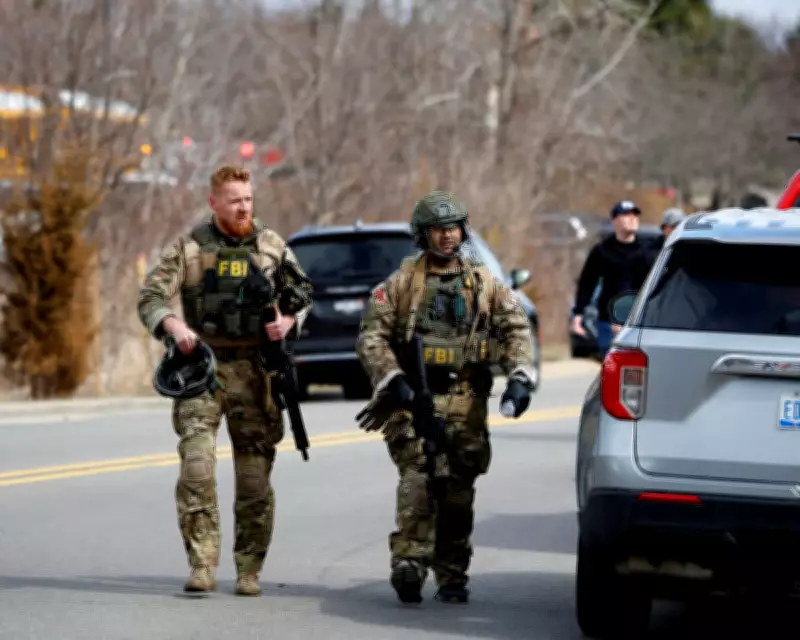
The FBI's Detroit field office confirmed that Ghazali ultimately shot himself to death during the confrontation. One security guard was injured in the exchange of gunfire, but remarkably, none of the 103 children and nearly 50 teachers, clergy, and staff members inside the building sustained injuries.
Family Connections and Motivations
According to Imam Hassan Qazwini of the Islamic Institute of America, Ayman Ghazali had attended a memorial service for his slain family members at a mosque in Dearborn Heights, Michigan, on March 8. The family members killed in the March 5 Israeli airstrike in Lebanon included Ibrahim Ghazali, Ayman's two children, and another brother.
A Hezbollah official reportedly confirmed to the New York Times that the Michigan synagogue attack was revenge for these family losses, though the official neither confirmed nor denied the IDF's specific claim about Ibrahim Ghazali's Hezbollah affiliation.
Escalating Regional Conflict
The March 5 Israeli airstrike targeted what the IDF described as a Hezbollah "military structure" in the eastern Lebanese town of Mashgharah, where weapons were allegedly stored and operatives were present. Lebanese officials reported that the strike hit a three-story building and seriously wounded Ibrahim Ghazali's wife.
Fighting between Israeli and Hezbollah forces has intensified significantly since late February, when conflict between the U.S., Israel, and Iran escalated following the death of Iranian supreme leader Ayatollah Ali Khamenei in a missile strike. Hezbollah responded with rocket attacks into Israel on March 2, triggering Israeli airstrikes that Lebanon's health ministry estimates have killed approximately 800 people.
U.S. Security Concerns
The Michigan attack has raised serious concerns about revenge actions within the United States stemming from Middle East turmoil. Following Thursday's attack, Michigan Senator Elissa Slotkin credited heightened security measures at Temple Israel for preventing what could have been a catastrophic loss of life.
"If they had not done their job almost perfectly we would be talking about an immense tragedy here today with children gone," said Slotkin, a Democrat. Michigan Governor Gretchen Whitmer added, "These heroes threw themselves in harm's way, engaging a suspect."
On Sunday, Democratic U.S. Representative Adam Smith of Washington state told ABC's This Week that the potential for politically motivated lone wolf attacks on American soil has been "exacerbated" by the conflict in the Middle East.
"We'd be wrong to say it sparked it," Smith said, alluding to prior terrorist attacks in the U.S. "But we need to be prepared for those." Smith, the top Democrat on the House Armed Services Committee, emphasized that "this war and this conflict is without question spreading right now."
The incident highlights growing concerns about international conflicts spilling over into domestic violence within the United States, particularly targeting religious institutions that have become increasingly vigilant about security threats.




