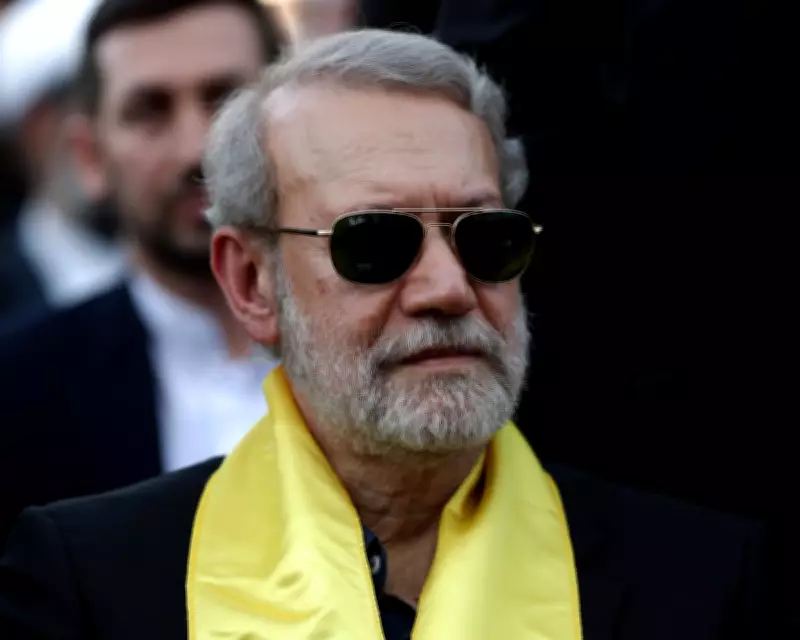
Israel Announces Elimination of Iranian Security Chief in Overnight Strikes
Israeli defense officials have declared the successful targeting and elimination of Ali Larijani, Iran's national security chief, during overnight airstrikes conducted against Iranian positions. This claim, if independently verified, would represent the most significant loss for Tehran's political leadership since the conflict's inception, marking Larijani as the highest-ranking Iranian official reportedly killed since Supreme Leader Ali Khamenei's death on the war's opening day.
Pivotal Figure Removed During Critical Juncture
The potential death of Ali Larijani would extract a central architect from Iran's political and security apparatus at a moment of extreme regional tension. As secretary of Iran's Supreme National Security Council, Larijani effectively directed the political strategy behind Tehran's war efforts, making his reported elimination a potentially devastating blow to Iranian command structures.
Israeli Defense Minister Israel Katz confirmed the operation in a Tuesday statement, announcing that separate strikes had also eliminated Basij paramilitary force commander Gholamreza Soleimani alongside other senior paramilitary figures. Katz's declaration framed these actions as continuing Israel's campaign against what he termed "the axis of evil."
Intelligence Capabilities and Strategic Implications
The twin eliminations, pending confirmation, demonstrate Israel's maintained intelligence penetration regarding the movements of Iran's senior leadership within Tehran itself. This operational intelligence, combined with apparent airspace dominance, enables precision strikes against high-value targets at will.
Larijani's complex role bridged Iran's military and political spheres uniquely. Initially perceived as a pragmatic negotiator who helped shape Iran's nuclear diplomacy with Western powers, his stance hardened considerably as tensions with Israel and the United States escalated in recent months. Following Khamenei's death, Larijani delivered defiant messages promising forceful retaliation against Iranian adversaries.
Background and Recent Activities
Born in Najaf, Iraq in 1958 and educated in Tehran, Ali Larijani ascended through Iran's political hierarchy following the Islamic Revolution, serving in multiple high-profile positions including culture minister, head of state broadcasting, and parliamentary speaker for over a decade. As chief nuclear negotiator, he played instrumental roles in shaping Iran's international engagements, ultimately supporting the 2015 nuclear agreement.
In the days preceding his reported death, Larijani appeared publicly during Tehran's annual Quds Day rally. He recently issued statements appealing for Muslim world support of Iran's struggle while challenging Gulf State leaders regarding their continued hosting of U.S. military facilities used against Iranian interests.
Expanding Conflict and Regional Impact
The U.S.-Israeli military campaign against Iran has now entered its third week with no apparent resolution in sight. Current estimates indicate at least 2,000 fatalities, while the strategically vital Strait of Hormuz remains largely closed to shipping traffic. This maritime blockade affects approximately twenty percent of global oil and liquefied natural gas flows, with U.S. allies reportedly resisting calls to assist in reopening the critical waterway.
Israeli officials detailed that intelligence received Monday afternoon indicated Larijani's expected arrival at one of several apartments he utilized as secure locations. The strike reportedly occurred while he was present with his son, with senior Israeli sources expressing confidence in the operation's lethal outcome.
Escalating Toll and Broader Context
Should Larijani's death be confirmed, the number of senior Iranian officials eliminated by Israeli operations since the conflict's beginning would increase to ten individuals. This list includes five additional senior military commanders alongside other key figures such as Ali Shamkhani, a close adviser to the former supreme leader.
Throughout Tuesday, residents reported massive explosions across Tehran and multiple Iranian cities including Ahvaz, Isfahan, and Shiraz, indicating continued intensive aerial bombardment. The United States had previously offered substantial financial rewards for information regarding senior Iranian military and intelligence figures, including Larijani, identifying him among ten individuals linked to Iran's Islamic Revolutionary Guard Corps.
Iranian state media published a handwritten note attributed to Larijani commemorating sailors killed in a U.S. naval attack, though this communication likely predated the Israeli strikes. Tehran has yet to issue any official confirmation or commentary regarding the status of its national security chief following Israel's declarations.