
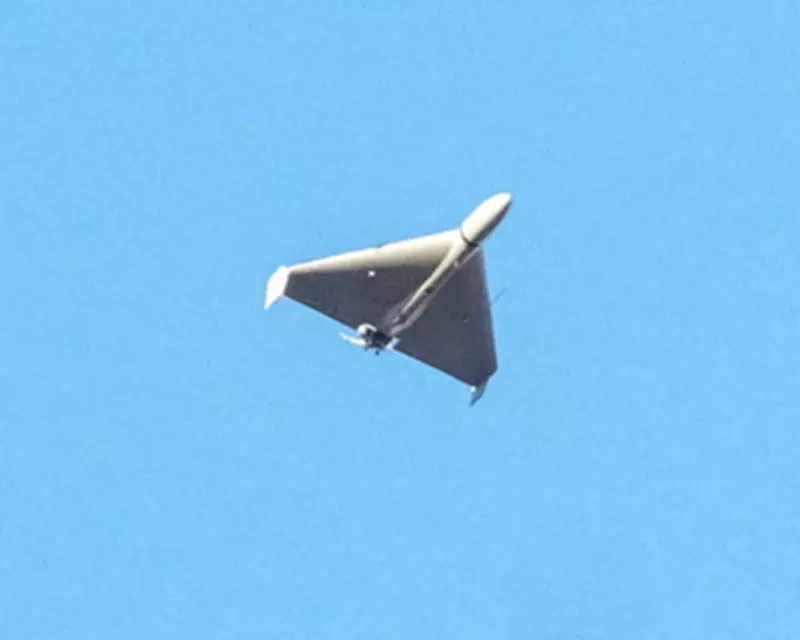
Iran's Shahed 136 Drones Unleashed Across Middle East, Targeting US Allies
In a dramatic escalation of regional tensions, Iran has unleashed hundreds of Shahed 136 unmanned aerial vehicles aimed at targets across the Middle East over the past 48 hours. These bulky and noisy drones, costing around $50,000 each, have struck buildings in Bahrain, Kuwait, the United Arab Emirates, and other Gulf locations, as Tehran seeks to intimidate and impose costs on regional allies of the United States.
Drone Attacks on Civilian and Military Targets
A chilling video from Bahrain captures a delta-wing drone flying towards a tower block at night, its lawnmower-like engine grumble clearly audible, before it slams terrifyingly into the building. Fiery debris cascades beyond the balcony window, suggesting the apartment may not have survived a direct hit. More than 1,000 drones, a high proportion of which are likely Shahed 136s, have targeted Iran's Gulf neighbors since the US and Israel first attacked Tehran on Saturday morning.
On Monday afternoon, the UAE reported it had been attacked by 689 drones and had downed 645, meaning 44 drones, a little over 6% of the total, penetrated its defenses. A second video from Bahrain clearly shows a single delta-winged drone flying above the heart of the naval base housing the US Fifth Fleet, before swooping down successfully to smash into and destroy a radar dome. Shahed strikes have also been reported in Kuwait and the UAE, and probably at an RAF base in Akrotiri, Cyprus.
Characteristics and Capabilities of the Shahed 136
The Shahed 136 drones are 3.5 meters long with a wingspan of 2.5 meters. Their relatively low cost and ease of manufacture, particularly compared with ballistic missiles, means they are likely to remain a feature of the conflict for some time. Most Shahed 136s are relatively slow, though faster jet engine variants have been seen in Ukraine, and can carry an explosive payload of about 50kg, enough to damage a skyscraper but not bring it down. However, their noise, large size, and final terminal dive readily provoke terror.
Their range extends up to 1,250 miles (2,000km), and they are typically preprogrammed on complex flight paths, traveling low above ground to evade radar detection. There is growing evidence in Ukraine that they can be remotely piloted by operators, allowing last-minute course changes.
Historical Context and Global Impact
Shahed 136s were designed towards the end of the last decade in Iran and were definitively first spotted in July 2021, in an attack on an Israeli-owned oil tanker, Mercer Street, which killed a Briton and a Romanian. They may have also been used earlier, in September 2019, against Saudi oil installations at Abqaiq and Khurais. Originally designed by Shahed Aviation Industries Research Center, an Iranian company the US says is subordinate to the Islamic Revolutionary Guard Corps, the drones became widespread due to their use by Russia in the war in Ukraine from autumn 2022.
Initially exported, Iran later shared the design to allow Russia to manufacture large numbers at a factory in Yelabuga, on the Volga River. Russia typically attacks Ukraine using coordinated swarms of up to 800 Shahed 136s, similar-looking Gebera decoys, and a small number of cruise and ballistic missiles, in an effort to overwhelm Kyiv's air defenses. However, most videos of Shaheds in the Gulf this weekend show isolated drones that have penetrated air defenses rather than an attacking swarm.
Strategic Implications and Future Threats
In Ukraine, Shaheds have been most effective at hitting static targets, notably utility infrastructure, leading to a national electricity and heating crisis this winter, affecting hundreds of thousands of homes. Iran may replicate this tactic: on Monday morning, the Ras Tanura refinery, the largest in Saudi Arabia, was damaged after a drone attack caused a blaze, forcing it to close. Though the weapon used was not confirmed to be a Shahed, it had the same explosive effect.
This new wave of drone attacks underscores the growing threat posed by inexpensive, mass-produced unmanned aerial vehicles in modern warfare, as Iran flexes its military capabilities to challenge US influence in the Middle East.




