
Iranian Projectile Hits Near Australian Airbase in UAE, No Australian Personnel Injured
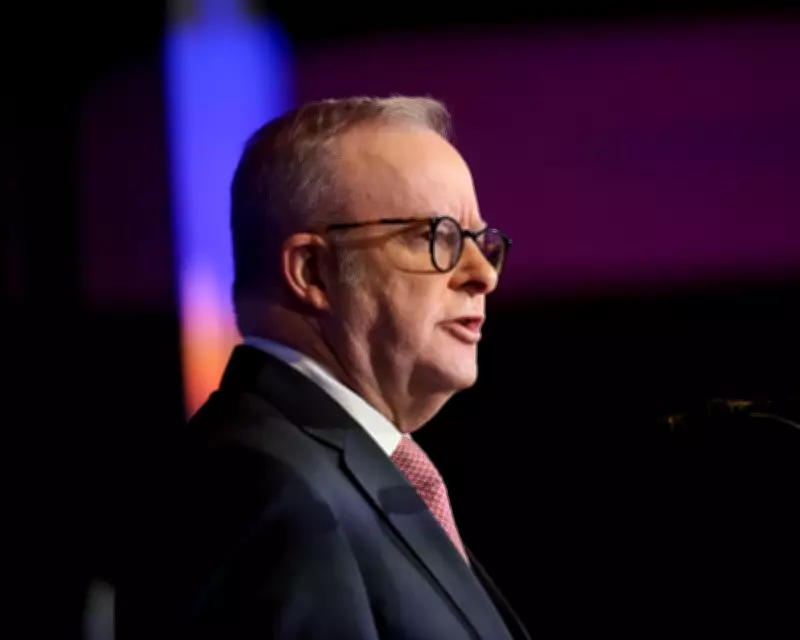
Prime Minister Anthony Albanese has confirmed that an Iranian projectile struck near Australia's headquarters at the Al Minhad airbase in the United Arab Emirates early Wednesday morning Australian Eastern Daylight Time. The attack damaged an accommodation block and a medical facility, but no Australian Defence Force personnel were injured in the incident.
Albanese: 'Iranian Regime Engaging in Random Attacks Across Region'
Speaking to reporters, Albanese stated that 'the Iranian regime is engaging in random attacks right across the region' but could not confirm whether the Al Minhad base was specifically targeted. When directly asked if Australia was now at war with Iran, the prime minister responded with a firm 'no' and declined to elaborate further.
The projectile reportedly struck a road leading to the base, sparking a fire that caused the damage to nearby facilities. This marks the second time the same base has been hit during the ongoing Middle East conflict, following a previous drone strike earlier in the hostilities.
Australia's Military Presence in the UAE
Australia has maintained a reduced military presence at Al Minhad airbase since concluding operations in Afghanistan. Defence officials confirmed last year that approximately 50 core ADF staff are stationed at the base, with total Australian personnel numbers ranging between 70 and 80 at any given time.
In response to escalating tensions, the federal government announced last week it would deploy a specialist surveillance aircraft and stocks of air-to-air missiles to the UAE to protect Australian citizens in the Gulf state. Tehran has targeted the UAE in retaliation for US and Israeli bombings of Iran.
Trump's Controversial Comments Spark Bipartisan Criticism
The confirmation of the latest strike came as Albanese declined to criticise former US President Donald Trump, who claimed in a social media post that the United States 'never needed help from allies – including Australia' to fight the war in Iran. Trump asserted that the US, as 'the Most Powerful Country Anywhere in the World,' does not require assistance from NATO allies, Japan, Australia, or South Korea.
In contrast, Liberal frontbencher and former soldier Andrew Hastie delivered a rare direct rebuke of the former president, describing Trump's outburst as 'petulant' and stating 'that's not how you treat allies.' Hastie, a veteran of the Afghanistan conflict and former Special Air Service soldier, emphasized the importance of reciprocity in international alliances.
Australia Declines Naval Deployment Request
The Australian government confirmed on Tuesday that it would not send warships to the Strait of Hormuz and had not received a formal request to do so. The strategic waterway has been effectively closed by Iran in retaliation against US and Israeli strikes, causing the largest oil supply disruption in history and sending global commodity prices soaring.
Trump had been demanding that US allies deploy naval assets to help unblock the strait, but most NATO countries reportedly informed Washington they would not provide direct assistance.
Political Reactions and Alliance Concerns
Hastie expressed confidence that the Australia-US alliance would withstand the tensions of the Trump administration, noting that 'this is a president who is very unique in American history.' However, he acknowledged that the US had not consulted Australia before launching attacks in the region.
Former Prime Minister Malcolm Turnbull, a longtime critic of Trump, argued that the president's remarks demonstrate he 'doesn't respect' his allies and emphasized the need for Australia to exercise greater independence in foreign policy. Treasurer Jim Chalmers brushed off Trump's comments, reiterating that Australia had not received a formal request for naval assistance.
As regional tensions continue to escalate, the Australian government maintains its position of supporting defensive operations in the UAE while carefully navigating the complex diplomatic landscape of Middle Eastern conflicts.




