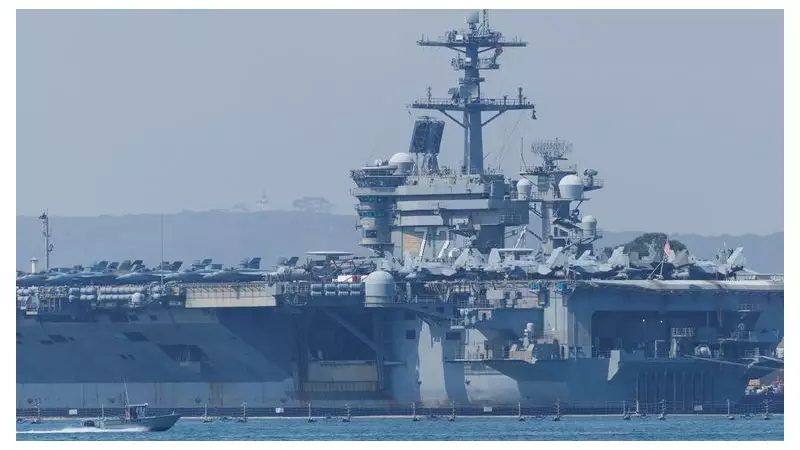
A senior Iranian official has declared that the country will interpret any military strike as "an all-out war against us", issuing this grave warning ahead of the anticipated arrival of a substantial United States naval force in the Middle East. This escalation follows former President Donald Trump's recent statement confirming that an American "armada" is en route to the region, though he expressed hope that its deployment would not necessitate active engagement.
Heightened Military Alert in Iran
The anonymous Iranian official, speaking to Reuters, acknowledged the significant US military buildup, stating, "This military buildup - we hope it is not intended for real confrontation - but our military is ready for the worst-case scenario. This is why everything is on high alert in Iran." The official emphasised that Iran's armed forces are on maximum readiness, prepared to respond decisively to any perceived aggression.
A Stark Warning of Retaliation
In a clear and uncompromising message, the official elaborated on Iran's position: "This time we will treat any attack - limited, unlimited, surgical, kinetic, whatever they call it - as an all-out war against us, and we will respond in the hardest way possible to settle this." The official further asserted, "If the Americans violate Iran's sovereignty and territorial integrity, we will respond," though specific details of potential Iranian countermeasures were not disclosed.
Trump's Announcement and Regional Context
Donald Trump made his comments about the US naval deployment on Thursday, renewing warnings to Tehran against continuing its crackdown on domestic protesters or reviving its nuclear weapons programme. This development occurs nearly two weeks after Trump publicly encouraged Iranian demonstrators, promising that "help is on the way", following reports that thousands have been killed by Iranian security forces during recent unrest.
Historical Precedents of US Military Buildups
The United States has a history of augmenting its military presence in the Middle East during periods of increased tension, actions often characterised as defensive posturing. However, last year witnessed a major US military buildup preceding airstrikes against Iran's nuclear facilities in June 2025. A similar pattern was observed in the Caribbean towards the end of the previous year, prior to US military intervention in Venezuela that resulted in the capture of President Nicolas Maduro.
The current situation remains volatile, with the USS Abraham Lincoln aircraft carrier and accompanying guided-missile destroyers scheduled to arrive in the region imminently. This deployment underscores the ongoing geopolitical friction between the United States and Iran, raising concerns about the potential for a significant military confrontation in the strategically vital Middle East.