Iran Conflict Intensifies, Posing Grave Threats to World Stability
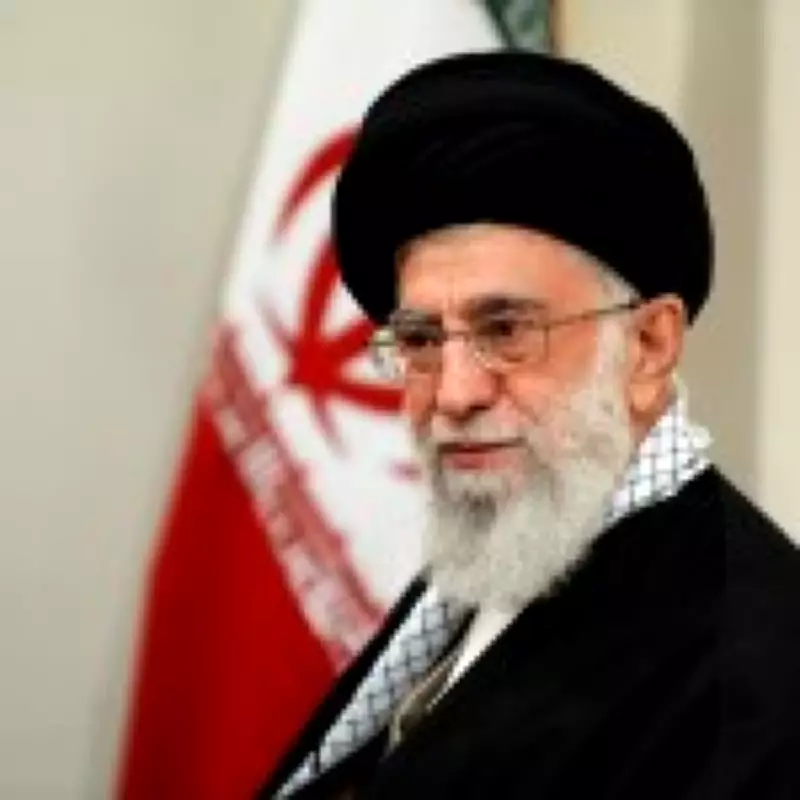
The war in the Middle East escalated dramatically today as Israel and the United States launched severe strikes against Iran. This response followed Iranian attacks on Israel, other Arab states, and critical global oil and natural gas production targets. The intensity of these assaults, coupled with the death of Iranian Supreme Leader Ayatollah Ali Khamenei and an unclear exit strategy, sets the stage for a potentially extended and devastating conflict.
Iran's Threats Materialize, Regional Turmoil Deepens
Iran had long warned that any attack would plunge the region into total war, targeting Israel, Gulf Arab states, and the vital flow of crude oil essential to global energy markets. The regime has now fulfilled this promise, creating widespread chaos that experts fear could fundamentally disrupt the international world order as we know it.
Dr. Robert Johnson, a Senior Research Fellow at Pembroke College in Oxford and Director of the Oxford Strategy, Statecraft, and Technology Centre, discussed the global implications with Metro. He noted that while questions of legality and international decorum arise, President Trump seems intent on establishing new norms, a sentiment echoed by Russia and China.
Shifting International Norms and Nuclear Concerns
'Two of the three most significant states in the world are talking about reorganising international affairs,' Dr. Johnson stated. 'The Europeans, the British, and many UN General Assembly members are struggling to adapt to this new approach, which prioritises national interests first.'
However, Dr. Johnson highlighted that nuclear proliferation remains an unchallenged international norm. 'Iran was, as far as we can see, in breach of that. Certain programs, like the Natanz nuclear program, were underway. You would not bury a normal civilian nuclear program under a mountain; that is clearly a military installation,' he explained.
Russia and China's Hypocritical Stances
Russia and China, traditional allies of Iran, have condemned US intervention in the Middle East. Dr. Johnson pointed out the hypocrisy in Russia's criticism of 'another unprovoked act of armed aggression,' given its illegal invasion of Ukraine in 2022. China has called for a ceasefire and resumed negotiations, but its heavy reliance on Gulf fuel supplies adds complexity.
'In Beijing, they'll be thinking that if the Americans are this unpredictable, they don't know how the U.S. would react to a move against Taiwan,' Dr. Johnson said. 'Rather than giving China a license to operate against Taiwan, I suspect they will calculate that the risk is too high while President Trump is in power.'
UK and Europe Face Greater Risks Than America
While China and Russia confront potential energy supply losses, Dr. Johnson warned of 'greater risks' for the UK and Europe compared to the US. He referenced the 1973 oil shock in Britain, when OPEC Arab members halted shipments to nations supporting Israel during the Yom Kippur War, leading to a three-day work week, job losses, and industry shutdowns.
'There is a risk that a prolonged war could do that again, particularly when the UK government has decided to tax its own North Sea energy companies at a rate of 78%,' Dr. Johnson added. 'The economics of this are as important as the military operations.'
During the Iran-Iraq War in the 1980s, oil prices fell as companies underwrote damages to maintain flow. Dr. Johnson noted, 'It is very hard for Iran to close the Straits of Hormuz; they couldn't do it in the 1980s, and they will struggle to do it again. The Houthis have shown you can interfere with Red Sea traffic, but you can't stop it entirely.'
Long-Term Implications and Western Shortsightedness
'The West is not thinking long-term. We need to ask: what is the long-term power relationship in the Gulf? If the Iranian Republic collapses and is replaced by a democracy, it would be a beneficial outcome: secure oil flow, less militarisation, and no threat of nuclear weapons,' Dr. Johnson explained.
'Israel would calm down, and Iran would no longer sponsor proxy forces. If the Republic fails, these Iranian proxies will have fewer munitions, less supply, and no ideological inspiration or advisors.'
Even if Iranian proxies like the Houthis, Hezbollah, and Iraqi militias survive a potential collapse, they will face significant obstacles. For instance, the Palestinian Liberation Organisation continued after cutting ties with Tehran. However, Dr. Johnson cautioned, 'If the Islamic regime survives, they will use these instruments as tools for their policy even more than before. We would see them return to full strength over time, leading to a dreadful cycle of conflict afflicting the Middle East.'