Ceasefire Announcement Brings Relief and Strategic Shifts in Iran Conflict
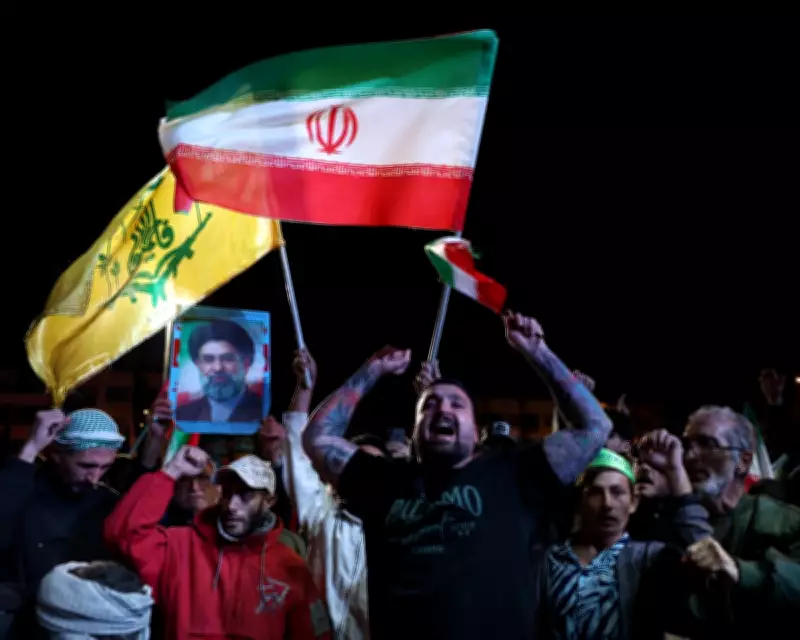
The announcement of a two-week ceasefire has provided a temporary respite in the recent conflict between the United States, Israel, and Iran. While President Donald Trump has seized the moment to proclaim a new era of peace and the reopening of the Strait of Hormuz, analysts suggest that Iran emerges from the hostilities with a significantly strengthened position as peace talks are set to commence.
Iran's Strategic Advantages Post-Ceasefire
The Tehran regime enters the negotiations planned for Friday in Pakistan with notable advantages. Despite suffering losses, including the death of its supreme leader, Iran remains intact and retains a critical stockpile of highly enriched uranium (HEU). This uranium, originally a central point of contention with the US and its allies, now serves as a powerful bargaining chip in upcoming discussions.
Furthermore, Iran has demonstrated its capacity to control the Strait of Hormuz, a vital global shipping lane. By closing the strait during the conflict, Tehran showcased its ability to disrupt international trade and hold the world economy to ransom. The ceasefire agreement includes provisions for Iranian armed forces to oversee passage through the waterway, potentially establishing Tehran as a gatekeeper and toll collector.
Trump's Immediate Gains and Long-Term Challenges
President Trump achieved immediate gratification through the ceasefire announcement. His dramatic rhetoric, which included threats of civilizational destruction followed by claims of peace progress, allowed him to remain at the center of international attention. The president's words influenced global markets, with oil prices dropping and stocks showing signs of recovery, demonstrating his continued impact on short-term economic indicators.
However, the actual terms of the ceasefire remain ambiguous and subject to conflicting interpretations. While Pakistan's Prime Minister Shehbaz Sharif stated the ceasefire covers "everywhere including Lebanon," Israeli Prime Minister Benjamin Netanyahu quickly contradicted this, vowing to continue military operations along Israel's northern border.
The Strait of Hormuz: A New Economic Reality
Reports from the region indicate Tehran plans to implement a proposal to share control of the Strait of Hormuz with Oman, collecting tolls estimated at $2 million per ship. This represents a significant departure from the pre-war status quo, where the strait operated as a free waterway. The new arrangement would provide Iran with a substantial new revenue stream while cementing its strategic importance.
This uncertainty creates challenges for global shipping. While hundreds of vessels trapped in the Gulf during the conflict will likely seek to depart, fewer ships may enter through Hormuz due to concerns about potential entrapment or violations of US sanctions through toll payments to Iran.
Negotiation Dynamics and Red Lines
The upcoming peace talks will occur under fundamentally changed circumstances. Iran arrives having demonstrated its resilience against concerted military pressure, with its forces continuing to engage adversaries until the ceasefire declaration. The regime's 10-point peace plan, which Trump referenced as "a workable basis on which to negotiate," includes conditions previously considered beyond Washington's red lines: lifting all sanctions, payment of war reparations, and acceptance of Iran's right to enrich uranium.
Trump attempted to reframe the ceasefire terms more favorably in subsequent statements, emphasizing his own 15-point plan and claiming agreement on many points. He specifically highlighted that there would be "no enrichment of uranium" and mentioned cooperation to address Iran's HEU stockpile, which he referred to as "Nuclear 'Dust.'"
Divergent Interpretations and Domestic Considerations
Notably, the Tehran government included the right to enrich uranium in the Farsi version of ceasefire terms but omitted it from English translations. This discrepancy suggests the provision serves domestic political purposes, allowing the regime to claim victory to its population while maintaining negotiating flexibility internationally.
Iran's possession of approximately 440kg of HEU—theoretically enough for a dozen nuclear warheads—provides substantial leverage in negotiations. Prior to the conflict, during talks ended by the US-Israeli attack on February 28th, Tehran had reportedly been willing to surrender this stockpile. The war has thus paradoxically strengthened Iran's position on this critical issue.
Broader Implications and Future Negotiations
The United States enters post-conflict negotiations in a weaker position than before hostilities began. Iran has proven its capacity to withstand significant military pressure while developing new means to inflict economic pain through control of vital shipping lanes. The Trump administration faces the challenge of negotiating with an adversary that has demonstrated both resilience and strategic creativity.
As talks approach in Islamabad, the shadow of Iran's enhanced role in the Strait of Hormuz looms large. While US delegates may employ tough rhetoric and threaten walkouts, they do so with the knowledge that Tehran possesses proven capabilities to disrupt global energy markets and exert pressure through economic channels. The ceasefire represents not an end to tensions, but rather the beginning of a new phase of diplomatic maneuvering under altered power dynamics.