Iran's Shoot-Down of US F-15 Fighter Serves as Stark Warning in Ongoing Conflict
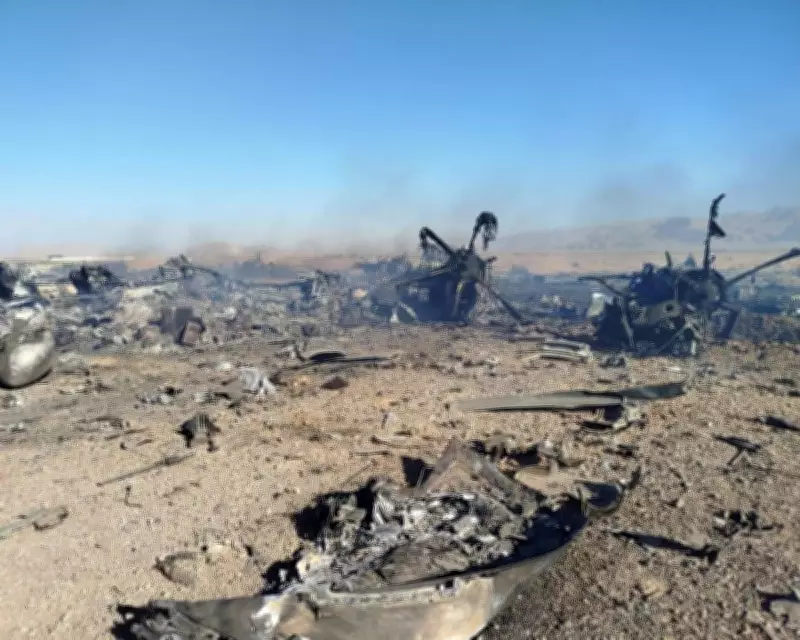
Imagery released by Iranian media on Sunday shows the wreckage of a C-130J Hercules, highlighting the aftermath of a dramatic 48-hour incident that saw a US F-15E Strike Eagle fighter jet brought down. This event, while resulting in the successful rescue of both crew members, delivers a potent reminder that Iran retains the capability to fight back and impose significant costs on the United States, despite overwhelming US-Israeli air superiority.
Propaganda Coup Versus Military Reality
While former President Donald Trump is likely to frame the crew rescue as a propaganda triumph, the downing of the F-15E exposes vulnerabilities in the US military campaign. The aircraft, valued at approximately $31 million with potential replacement costs soaring to $100 million, was shot down under unclear circumstances—marking the first such loss to hostile forces since 2003 during the Iraq War. This rarity amplifies its impact, challenging the perception of absolute air dominance as US and Israeli forces conduct an estimated 300 to 500 daily bombing sorties over Iran.
The rescue operation itself proved far more perilous than the original mission. Utilizing an abandoned Iranian airstrip south of Isfahan as a forward base, two modified C-130 Hercules transporters, each priced at nearly $115 million, became immobilized and were subsequently destroyed by US forces to prevent capture. Additional aircraft were deployed to extract the wounded second crew member, and an HH-60 Pave Hawk helicopter sustained damage from gunfire. Total losses in this single episode likely exceed $250 million, underscoring the high stakes of such missions.
Strategic Implications and Historical Echoes
Militarily, the loss of aircraft is an accepted aspect of warfare, with the US inventory including 218 F-15E Strike Eagles and 55 C-130s in special forces command prior to the conflict. However, the political necessity of a full-scale rescue cannot be overstated. Preventing Iranian capture of US personnel was critical to avoid a scenario reminiscent of the 1979-80 US embassy hostage crisis, which severely damaged President Jimmy Carter's administration. Trump emphasized this commitment publicly, vowing never to abandon American warfighters—a principle that, while admirable, entails ongoing risk and expense.
Iranian forces failed to locate the downed crew or contest the US use of the Isfahan airbase, possibly deterred by Reaper drones monitoring the area. Yet, the loss of the C-130 transports highlights the broader dangers of potential ground operations. Questions arise about the feasibility of US special forces seizing 440kg of highly enriched uranium believed hidden underground in Isfahan and transporting it without major incident, given the demonstrated risks.
Asymmetric Warfare and Propaganda Dynamics
Despite enduring over 15,000 airstrikes, Iran can leverage relatively minor US or Israeli losses into propaganda victories precisely because they are infrequent. In asymmetric conflicts, the weaker side need only succeed occasionally to achieve symbolic impact. This incident serves as a cautionary tale for US policymakers considering escalated military actions, reinforcing that Iran remains an undefeated adversary capable of inflicting tangible costs. As the conflict persists, such episodes may shape strategic calculations, balancing operational gains against the potential for unexpected setbacks.