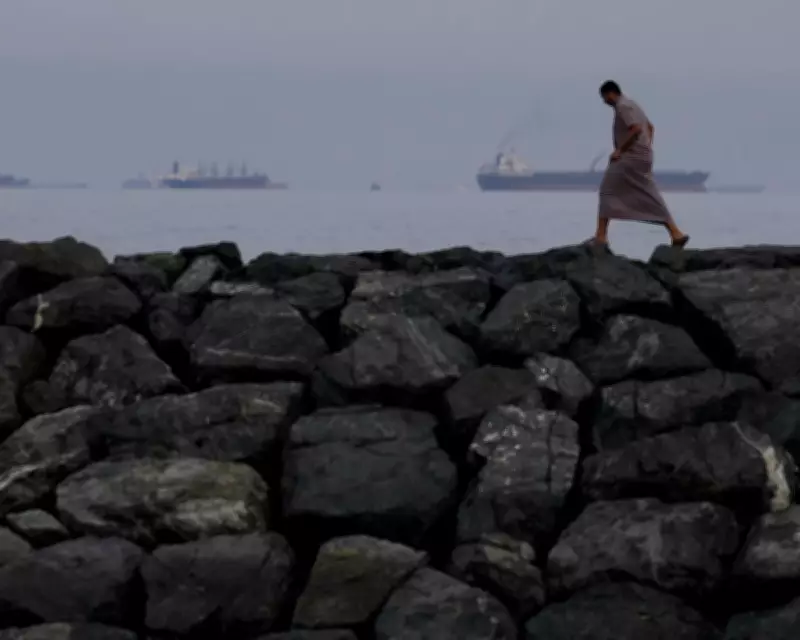
In a stark development that underscores the complexities of the Middle East crisis, US officials have reported that Iran is unable to locate the mines it deployed in the Strait of Hormuz, a critical waterway for global oil supplies. According to a New York Times report citing American authorities, Iran laid explosives erratically last month and may not have marked all their positions, leaving the country incapable of removing them and allowing increased maritime traffic.
Impact on Global Energy and Truce Negotiations
The virtual closure of the Strait of Hormuz, which handles approximately one-fifth of the world's oil, has triggered a severe energy crisis, sending fuel prices soaring and exacerbating inflation worldwide. This situation has placed significant pressure on US President Donald Trump domestically, as negotiators from the US and Iran convened in Islamabad over the weekend to discuss a final truce to end the war. Trump has demanded the complete and immediate reopening of the strait for the current pause in fighting to continue, making the demining issue a potential stumbling block in the talks.
Mining Operations and Maritime Threats
Iran initiated the mining of the strait using small boats after the US and Israel declared war against the country, a move that largely evaded US monitoring efforts. This has resulted in uncertainty about the exact location and number of mines present. Maritime traffic has nearly halted due to these explosives, compounded by threats from Iranian drones and missiles targeting ships. A senior Revolutionary Guards official warned on 2 March that Iran would set ablaze any vessels attempting to traverse the waterway, though a limited number of ships from friendly nations have been permitted passage after paying tolls.
Challenges in Demining and Diplomatic Tensions
US officials suggest that some mines may have drifted from their original placements, further complicating removal efforts. Neither Iran nor the US possesses the capacity to quickly demine the strait, especially after the US destroyed much of Iran's naval forces. Iranian Foreign Minister Abbas Araghchi previously stated that reopening the strait would require "due consideration of technical limitations," which US officials interpret as an acknowledgment of the demining challenges.
Additionally, the strait's closure persists as Iran insists that a two-week ceasefire include Lebanon, a point of contention with the US. While Iran and mediator Pakistan assert that the US was aware of this condition, US Vice-President JD Vance has cited a "misunderstanding" over Lebanon, highlighting ongoing diplomatic friction.
Broader Economic Consequences
The soaring oil prices resulting from the strait's closure and destruction of Middle Eastern energy infrastructure have worsened global inflation, with economists warning that the full effects are yet to be realized. This crisis is expected to increase global poverty as the cost of basic goods rises across the board, underscoring the far-reaching implications of the conflict in the region.