Iran-Backed Militias Escalate Regional Attacks as Iraq Emerges as Critical Battlefront
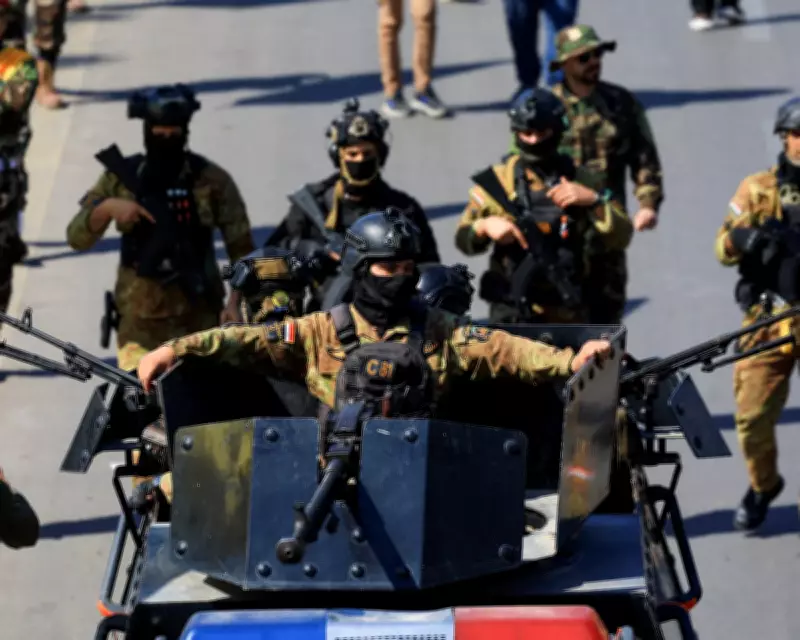
Iranian-supported militia groups across the Middle East are dramatically intensifying their offensive operations against Israel, the United States, and allied nations. This surge in violence represents a direct retaliation against the ongoing joint US-Israeli military campaign targeting Tehran's influence networks. As this conflict draws additional armed factions into its orbit, analysts warn of escalating chaos and potential widespread violence throughout the region.
Iraq Transforms into Central Proxy Battleground
Iraq has rapidly emerged as a pivotal front in this new and frequently clandestine confrontation. Since hostilities intensified last Saturday, militia forces operating within Iraq have launched dozens of separate attacks. These operations have specifically targeted Israeli interests and US military installations located in both Jordan and Iraq itself. In recent days, these militant groups have expanded their focus to include critical infrastructure belonging to Iranian-Kurdish opposition organizations based in Iraq's semi-autonomous Kurdish northern territories.
According to regional security analysts and well-informed former intelligence officials, Israel and the United States are actively working to degrade the operational capabilities of pro-Iranian militias in Iraq through coordinated airstrikes and special forces ground operations. This represents a significant escalation in tactics beyond previous engagements.
Historical Context and Current Dynamics
Since the 2003 US-led invasion, Iraq has consistently served as a proxy battleground between American interests, their regional allies, and Iranian influence. However, Iraq's current political leadership has made concerted efforts to avoid direct entanglement in this renewed conflict. The militias themselves are primarily recruited from Iraq's majority Shia population and operate under direct command from senior officers within Iran's Islamic Revolutionary Guard Corps (IRGC).
In a clear indication of an intensifying regional proxy war, Washington officials recently suggested they were considering mobilizing opposition Iranian Kurdish forces, potentially for operations in Iran's northwestern territories. This development signals a possible expansion of the conflict's geographical scope.
Recent Attacks and Militia Operations
Several Iran-backed armed factions have publicly claimed responsibility for attacks targeting the US military base at Erbil International Airport in northern Iraq over recent days. Additional drone and missile launches have originated from sites within Iran's western desert regions, striking targets in neighboring Jordan. Meanwhile, militia elements operating in southern Iraq fired a missile into Kuwaiti territory, demonstrating their expanding reach.
On Thursday, multiple militia groups issued a joint statement explicitly warning European nations against joining the conflict. The statement contained direct threats against European "forces and bases in Iraq and the region," indicating growing international dimensions to the confrontation.
Specific Incidents and Casualties
Iraq's state-run news agency reported that security forces successfully thwarted an attempted missile launch from Basra province in southern Iraq. The missiles were reportedly intended for "a neighboring country," and authorities seized a mobile launch platform carrying two prepared missiles. Separately, an Israeli military spokesperson confirmed on Wednesday that drones had been launched toward Israel from Iraqi territory, though in "not significant numbers."
Michael Knights, an Iraq expert at the New York-based strategic advisory Horizon Engage, noted that Iran-backed Iraqi groups are actively determining how to maintain relevance and respond effectively to recent developments, including the killing of Ayatollah Ali Khamenei. In what appears to be a clandestine counteroffensive, militia bases south of Baghdad and near the southern cities of Nasariya and Basra have come under attack from small "suicide drones." These strikes reportedly killed fifteen fighters, predominantly from Kataib Hezbollah, the most powerful among Iraq-based pro-Iran groups.
Knights observed: "There are short-range drone systems being used in Iraq that can't have been flown all the way from Israel. We saw exactly this during the last war between Iran and Israel and it suggests some kind of covert action underway on the ground. There is a lot of proxy war happening."
Kataib Hezbollah Casualties and Infrastructure Damage
On Thursday, Kataib Hezbollah officially announced that one of its commanders had been killed in a strike in southern Iraq the previous day. Two faction sources told Agence France-Presse that a strike had hit a vehicle near the group's main southern Iraq base, initially killing two fighters before the toll rose to three, including the commander. The group's Jurf al-Nasr base has endured repeated attacks since the weekend began.
Additional reports indicate large explosions at militia bases in Iraq's western Anbar province. There have also been multiple unexplained blasts that have disabled Iraqi government radar systems responsible for monitoring air traffic through Iraqi airspace. Two former senior Israeli intelligence officials declined to comment specifically on these explosions but acknowledged that suggestions of Israeli intelligence or special forces involvement were "credible." A third source suggested US forces might potentially be involved.
Iran's Regional Network and Current Challenges
Iran has invested decades building a coalition of militant groups stretching from the Indian Ocean to the Mediterranean Sea. This network serves both to deter attacks against Iran itself and to project Iranian influence across the broader region. Israel has launched a comprehensive offensive in Lebanon after Hezbollah, Lebanon's major Islamist movement with close Iranian ties, joined the conflict. Hezbollah has not only attacked Israel but also launched a drone toward a British military base in Cyprus.
However, this so-called "axis of resistance" has suffered significant weakening through successive Israeli offensives since Hamas, one of its member groups, launched its surprise attack into Israel on October 7, 2023, triggering the current series of regional wars. Both Hamas, the Palestinian militant Islamist movement, and Yemen's Houthi rebels maintain close ties with Tehran but have thus far remained on the sidelines of the present conflict.
Analyst Perspectives and Strategic Calculations
Renad Mansour, a senior research fellow focused on the Middle East at Chatham House, commented: "It's very much about survival. And survival to them is based on calculations that aren't necessarily about Iran's survival." Phillip Smyth, a US-based independent analyst specializing in Iran's allies and proxies, suggested Tehran might be holding the Houthis "in reserve" while noting that the movement's leaders might also be "hedging their bets in case the Iranian regime collapses."
In another indication of potential US utilization of proxies recruited from Iran's ethnic minorities to weaken the Iranian regime, reports have emerged of attacks by an armed group affiliated with separatist movements among Iran's Arab community. These attacks targeted Islamic Revolutionary Guard Corps installations in southwestern Iran. A strike on an IRGC base in Ahwaz, an Iranian city near the Iraqi border, was claimed by an apparently newly formed group calling itself the "Ahwaz Falcons."