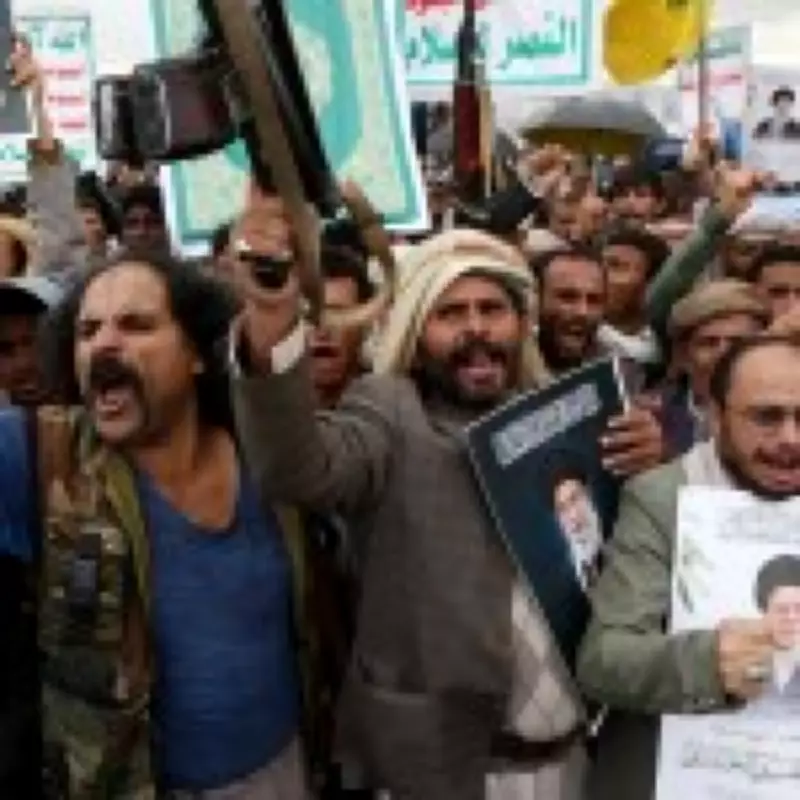
Houthi Rebels Enter Middle East Conflict with Missile Attack on Israel
Yemen's Houthi rebels have officially joined the escalating conflict in the Middle East by launching a missile targeted at Israel. This action represents the first direct involvement of the Houthi faction in the war, which commenced one month ago following the initiation of Operation Epic Fury by the United States and Israel. Since then, the region has been engulfed in continuous strikes, with former President Donald Trump focusing on Tehran while Iran retaliates against US military bases.
A military spokesman for the Houthis declared their readiness to enter the war on behalf of Iran, responding to recent US and Israeli attacks on power and nuclear facilities. This is not the Houthis' inaugural foray into regional hostilities. Two years prior, the breakaway group repeatedly deployed drones and missiles against commercial vessels, asserting they were targeting Israeli ships in solidarity with Palestine.
Who Are the Houthi Rebels?
The Houthi movement is a political and military organization adhering to Zaydism, a minority strand of Islam, and derives its name from an ancient Arab tribe in northern Yemen. Amid the instability that followed the Arab Spring, they captured the Yemeni capital, Sana'a, in 2014, igniting one of the deadliest civil wars in recent history, which persists to this day.
Yemen's internationally recognized government, supported by a Saudi-led coalition and backed by British arms supplies, faces the Houthis, who now control nearly all of northern Yemen. Both sides have been accused of committing war crimes and atrocities against civilians, contributing to severe humanitarian crises. The conflict has resulted in over 150,000 deaths and widespread devastation across the country.
Historical Involvement in Conflict
Houthi forces previously engaged in conflict two years ago during the Israel-Hamas war, launching numerous drone and missile strikes on commercial vessels. Their stated objective was to hinder Israeli ships from navigating the Arab and Red Seas in support of Palestine. However, most targets were international trading ships, including a British-owned vessel operated by a Japanese firm with a global crew, which the Houthis hijacked in November of that year.
More recently, a Houthi spokesperson has labeled any ship bound for Israel as a legitimate target. The United Nations shipping watchdog has confirmed that the Houthis continue to attack vessels with no connections to Israel, exacerbating regional tensions.
Iranian Backing and Regional Implications
The Houthis receive substantial support from Iran, which increased its aid in 2014 as the civil war erupted. Iran's theocratic government, following the Shia branch of Islam, aligns with the Houthis' Zaydist beliefs. Iran has provided training, sophisticated weapons, and military technology to the militants, allegedly with assistance from Lebanon's Hezbollah terrorist group.
The West has accused Iran of orchestrating the Red Sea attacks two years ago and directing the Houthis and other Middle Eastern militias to strike Israel, allegations that Iran denies. A UN Panel of Experts on Yemen found that Iran failed to prevent the supply of ballistic missiles used by the Houthis against various vessels.
Britain has maintained a delicate stance on Yemen's civil war over the past decade, supplying weapons to the Saudi-led coalition while navigating complex diplomatic waters. Fears are mounting that the Houthis' entry into the conflict could escalate into a full-scale regional war, with ongoing airstrikes and retaliatory threats heightening the risk of broader instability.