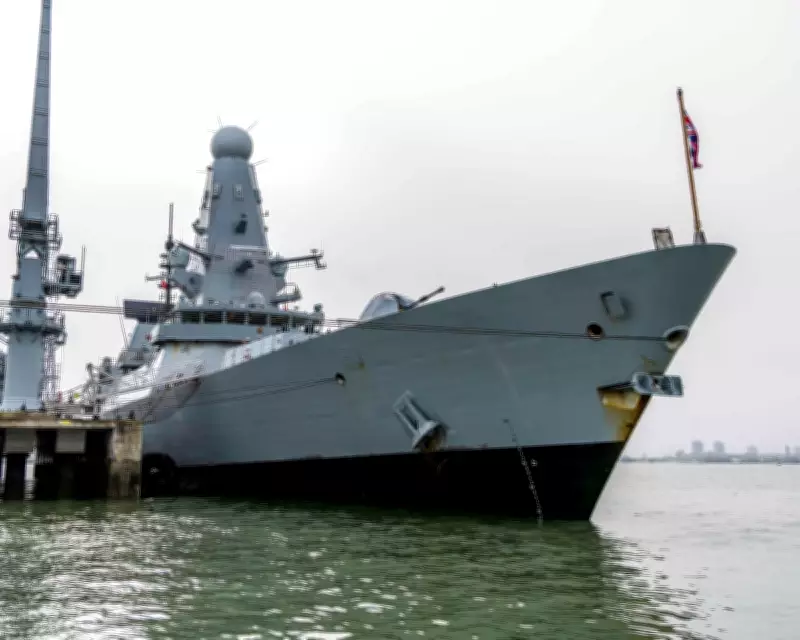
HMS Dragon's Delayed Deployment Raises Alarm Over UK Military Capacity
The Royal Navy destroyer HMS Dragon arrived in the eastern Mediterranean three weeks after an Iranian-made drone struck the British base at RAF Akrotiri, only to dock immediately due to problems with its onboard water systems. This delayed and troubled deployment has sparked serious concerns about the United Kingdom's military readiness and geopolitical position during the ongoing Middle East crisis.
The Fractured Special Relationship
Prime Minister Keir Starmer's relationship with US President Donald Trump has deteriorated dramatically since the conflict began. Despite initial efforts to cultivate positive ties, including an "unprecedented" second state visit invitation to the king, Trump has repeatedly mocked Starmer's leadership and the UK's military capabilities. The US president has dismissed Starmer as "no Winston Churchill" and accused him of seeking to "join wars after we've already won."
Starmer has quietly distanced himself from Trump while maintaining that the intelligence-sharing relationship between their nations remains strong. "Sharing intelligence every day to keep our people safe – that is the special relationship in action," Starmer stated, adding that "hanging on to President Trump's latest words is not the special relationship in action."
Military Readiness Under Scrutiny
Defence experts argue that the conflict has exposed significant weaknesses in British military capacity. Matthew Savill, director of military sciences at the Royal United Services Institute thinktank, noted that HMS Dragon's delayed arrival reveals "one of the military's big problems is giving the government contingency options."
The former First Sea Lord, Admiral Lord West of Spithead, has declared the navy to be in its most "parlous state" for sixty years, describing it as too small, underfunded, and unable to adequately protect the nation. The UK's fleet of destroyers and frigates has dwindled dramatically from fifty-one at the end of the Cold War to just thirteen today.
While the UK currently spends 2.4% of GDP on defence, with Labour promising to increase this to 2.5% by April 2027, military figures have long warned of a "rhetoric to reality gap" where Britain presents itself as a global military power without the necessary resources to back this claim.
Britain's Vulnerability to Energy Shocks
Even if the Strait of Hormuz reopens immediately, energy analysts warn that the Middle East conflict will likely exacerbate cost of living pressures for British households. Goldman Sachs has cautioned that fuel prices could rise to 2022 levels, while sustained disruption to global gas supplies might increase the UK's energy bill cap by £900 to £2,500 annually.
The UK's susceptibility to energy price shocks stems from growing import dependency. According to recent Department of Energy statistics, Britain sourced 75.2% of its primary energy needs from fossil fuels in 2024, with net import dependency reaching 43.8%. Despite increasing renewable energy production, the nation remains far from self-sufficient in energy.
Political Repercussions and Leadership Dynamics
Prime Minister Starmer's decision not to immediately support US military action in Iran appears to have strengthened his political position temporarily. A YouGov survey found sixty percent of Britons opposed to military involvement, with only a quarter in favour. Labour's Emily Thornberry, chair of the foreign affairs committee, suggested the crisis "could be the making of" Starmer.
Meanwhile, opposition leaders have faced criticism for inconsistent messaging. Conservative leader Kemi Badenoch initially advocated closer alliance with the US, warning that "we are in this war whether they like it or not," before softening her stance. Reform UK leader Nigel Farage similarly shifted position, eventually arguing that Britain should not join Trump's war since the military could not "offer anything of value" to America or Israel.
One senior Conservative reflected on the political confusion: "We have just looked confused and the messaging has been terrible. But most of us on the right do actually believe Starmer was completely wrong not to support Trump at the beginning."
The delayed deployment of HMS Dragon serves as a tangible symbol of broader challenges facing the United Kingdom as it navigates complex geopolitical tensions, military resource constraints, and domestic political pressures during an increasingly volatile international crisis.